
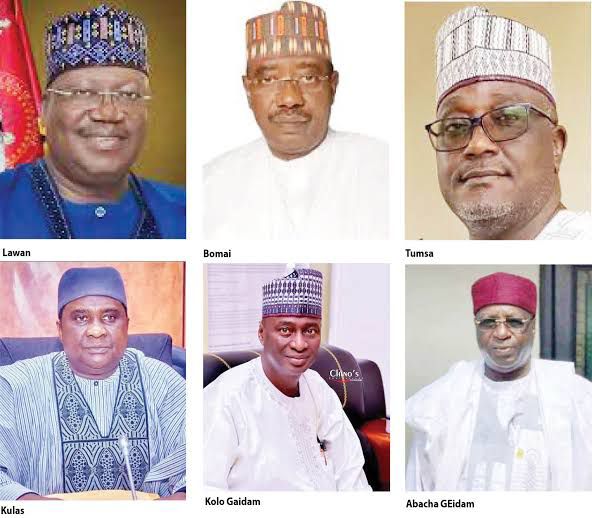
As the 2027 governorship race gathers momentum in Yobe State, debates around zoning, merit, and political influence are shaping conversations across the state’s three senatorial districts—Zone A (Yobe East), Zone B (Yobe South), and Zone C (Yobe North).
Yobe’s political tradition has long favored rotational leadership among these zones to promote balance and inclusion. With the incumbent governor, Mai Mala Buni, hailing from Zone A, expectations are mounting that power should shift to Zone B in the next electoral cycle.
Emerging Contenders and Zoning Expectations.
Among the prominent aspirants are Ibrahim Mohammed Bomai and Abubakar D. Aliyu, both from Zone B, alongside Musa Mustapha from Zone A.
Political observers note that Zone B, which accounts for a significant portion of the state’s population, is increasingly vocal about its turn to produce the next governor. Many stakeholders argue that adherence to zoning could strengthen party unity and improve voter turnout.
Influence of Political Structures
A key factor in the unfolding succession battle is the continued influence of former governor Ibrahim Gaidam, who played a decisive role in the emergence of Governor Buni in 2019. Now serving as Minister of Police Affairs, Gaidam remains a powerful figure in the state’s political structure.
Analysts suggest that longstanding alliances and political networks could again shape the outcome of the primaries, raising concerns about fairness and internal democracy within the ruling All Progressives Congress (APC).
Allegations of Nepotism and Power Consolidation
Concerns over nepotism have also surfaced, with speculation that political succession may favor individuals with close personal or familial ties to the current power bloc. Critics argue that such a scenario could undermine merit-based leadership selection and deepen divisions within the party.
There are also indications of alternative strategies within the ruling camp, including possible support for figures from other zones, such as the Secretary to the State Government, Baba Mallam Wali, from Zone C.
Development Concerns and Governance Record
Beyond politics, governance and development remain central to voter concerns. Despite being created in 1991 under Ibrahim Babangida, Yobe State continues to face developmental challenges compared to some states established later.
Stakeholders have raised issues around infrastructure, economic growth, and social services, emphasizing the need for leadership that prioritizes performance and accountability.
Ethnic Diversity and Calls for Inclusiveness
Yobe State is home to diverse ethnic groups, including Kanuri, Fulani, Hausa, Bade, Ngizim, Karai-Karai, and others.
Observers warn that any perception of ethnic favoritism could heighten tensions and weaken governance structures.
Experts stress that inclusive leadership will be critical in maintaining unity and ensuring equitable development across the state.
APC Faces Critical Test
As the primaries approach, the APC faces the challenge of managing internal dynamics while maintaining cohesion.
Political analysts believe that transparency, fairness, and respect for zoning arrangements could be decisive factors in securing electoral success.
Ultimately, the party’s ability to present a credible candidate—one who commands public trust and demonstrates capacity—will determine its prospects in 2027.
The Road Ahead
With political activities intensifying, stakeholders are calling on party leaders to uphold democratic principles and avoid actions that could trigger divisions. The coming months are expected to be crucial as alliances shift and aspirants consolidate support across the state.
For many residents, the priority remains clear: a leader capable of delivering tangible development, fostering unity, and steering Yobe State toward a more prosperous future.