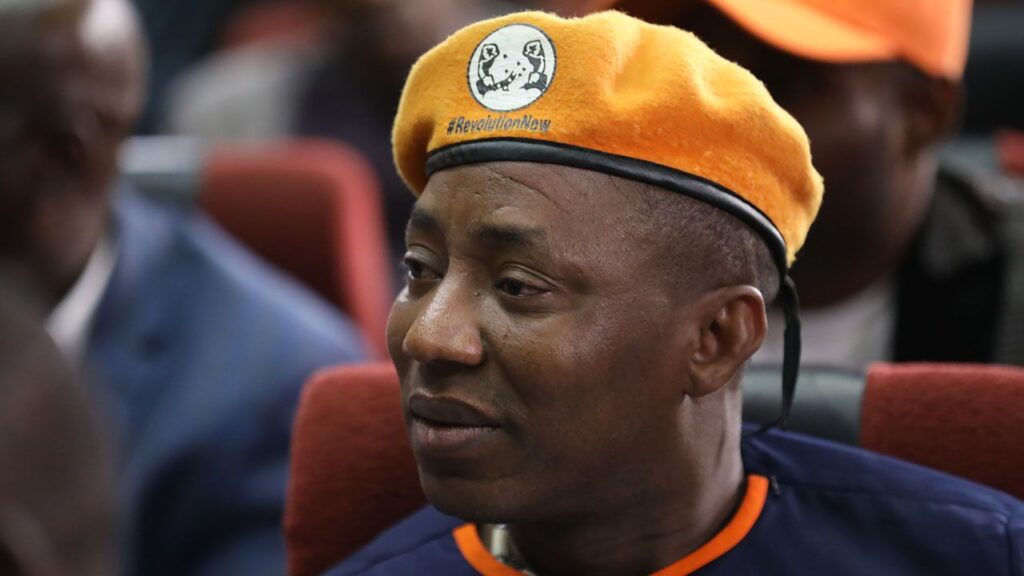
Human rights activist and former presidential candidate, Omoyele Sowore, has suffered a setback in his ongoing legal battle with the Department of State Services (DSS), after the Federal High Court in Abuja dismissed his no-case submission in the alleged cyberbullying trial involving President Bola Ahmed Tinubu.
Justice Mohammed Garba Umar delivered the ruling on Friday, holding that the prosecution had established a prima facie case against Sowore, thereby requiring him to enter his defence in the two-count charge filed against him by the DSS.
The DSS had arraigned Sowore over comments made on his social media platform, particularly on X (formerly Twitter), where he allegedly described President Tinubu as a “criminal.” The agency accused the activist of cyberbullying and making statements capable of causing public unrest.
During the proceedings, Sowore’s legal team urged the court to dismiss the charges, arguing that the prosecution failed to establish sufficient evidence linking him to the alleged offences. The defence also prayed the court to discharge and acquit the activist, insisting that the case lacked merit.
However, Justice Umar ruled otherwise, stating that the evidence presented by the DSS was enough to connect Sowore with the allegations at this stage of the trial. According to the judge, the court found that the prosecution successfully established elements of the offences to warrant the defendant to open his defence.
The ruling means Sowore will now be required to respond formally to the allegations and present evidence in his defence as the trial progresses.
The case has continued to generate reactions across Nigeria’s political and civil society space, with supporters of Sowore describing the trial as an attack on free speech, while others argue that public figures must be held accountable for statements made online.
Legal analysts say the matter could further test the boundaries between freedom of expression and cybercrime regulations in Nigeria, especially regarding criticism of public office holders on social media platforms.
The development comes amid growing debates over the application of the Cybercrimes Act in Nigeria and concerns from rights groups about its potential use against journalists, activists, and opposition voices.