
The Federal Government has announced an immediate ban on sand mining within a 10-kilometre radius of the River Niger to curb environmental damage and protect the structural integrity of major bridges spanning the river.
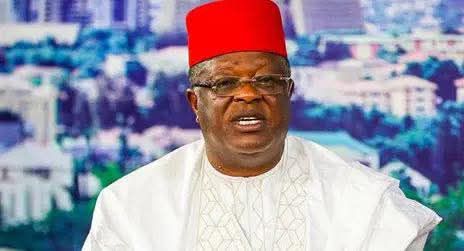
The decision was disclosed by the Minister of Works, Senator David Umahi, at the inauguration of a CCTV Monitoring Centre for the Second Niger Bridge in Asaba, Delta State. He said the measure was approved by the Federal Executive Council (FEC) as part of broader efforts to preserve critical national infrastructure and address the dangers posed by uncontrolled sand dredging.
Risks to Bridges and Ecosystem
Umahi warned that persistent sand mining along the River Niger weakens riverbeds, accelerates erosion, and threatens bridge foundations. He noted that both the First and Second Niger Bridges—key transport links connecting the South-East, South-South, and other regions—are at risk if such activities continue unchecked.
According to him, expert evaluations have shown that excessive sand extraction could undermine engineering protections built into the bridges, potentially resulting in expensive repairs or even structural failure.
“Sand mining around these bridges is unacceptable. These assets must be preserved for current and future generations,” he said.
Strict Enforcement Ordered
To ensure compliance, the minister instructed the Nigeria Police Force in Delta State to enforce the ban immediately and arrest violators operating within the restricted zone. He stressed that offenders would be prosecuted, adding that the policy is aimed at preventing infrastructure disasters rather than undermining livelihoods.
CCTV Centre Enhances Monitoring
The newly commissioned CCTV monitoring centre will provide real-time surveillance of the Second Niger Bridge and surrounding routes, improving responses to security threats, accidents, and infrastructure violations. Umahi added that the system would reduce reliance on physical checkpoints, easing traffic flow and improving safety for road users.
Community Response
Community stakeholders welcomed the ban, describing it as a timely step to protect the environment and preserve the River Niger ecosystem. However, some leaders called on the Federal Government to introduce alternative livelihood programmes for residents who depend on sand mining.
They also urged faster completion of access and bypass roads linking the Second Niger Bridge to major commercial routes in Anambra and Delta States to fully harness the project’s economic benefits.
Balancing Growth and Sustainability
Analysts say the move reflects a renewed commitment to sustainable infrastructure management, noting that long-term economic growth depends on balancing development with environmental protection. They emphasized that effective enforcement, alongside cooperation with state governments and local communities, will be crucial to preventing illegal sand mining from resurfacing elsewhere along the river.
The River Niger remains one of Nigeria’s most vital waterways, supporting transportation, trade, and livelihoods across several states.



This is just another way of siphoning public funds.