
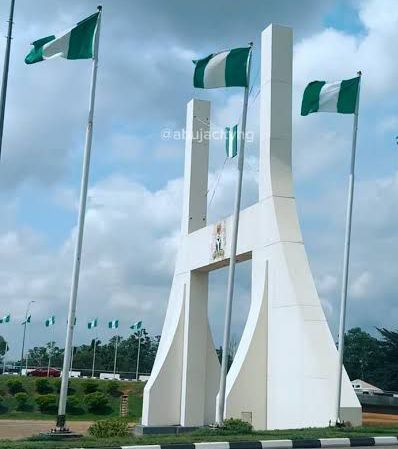
A coalition of indigenous groups and residents of the Federal Capital Territory (FCT) has renewed calls for the creation of Abuja as Nigeria’s 37th state, proposing Gwagwalada Area Council as its capital.
The demand was formally presented at the inaugural meeting of the FCT Stakeholders’ Assembly held in Gwagwalada, where leaders emphasised that their agitation is a collective, class-driven struggle against long-standing systemic marginalisation, rather than an ethnic contest.
Speaking at the event, President of the Assembly, Aliyu Daniel Kwali, described the choice of Gwagwalada as both symbolic and strategic.
While Garki is officially recognised as Nigeria’s capital city, Kwali said Gwagwalada represents the historical and cultural heart of the proposed State of Abuja.
He explained that the gathering was intended to send a clear message to Nigerians, the Federal Government and the international community that the original inhabitants and residents of the FCT are united and determined to end decades of exclusion.
Kwali reaffirmed the Assembly’s resolve to secure statehood for Abuja, insisting that Gwagwalada should serve as its rightful capital.
He noted that the FCT Stakeholders’ Assembly is a non-profit, non-partisan civil society organisation committed to promoting the civic, constitutional and political rights of FCT natives and residents.
Addressing concerns about collaboration with non-indigenous residents, Kwali rejected exclusionary views, describing them as outdated and no longer reflective of the mindset of younger generations of original inhabitants.
In a notable shift in tone, he framed the agitation primarily as a fight against economic and political disenfranchisement rather than ethnic or religious discrimination.
According to him, the marginalisation of FCT natives is rooted in structural inequalities embedded in Nigeria’s political and economic systems, similar to those that have left even resource-rich regions such as the Niger Delta underdeveloped.
He stressed that the struggle is not directed at ordinary Nigerians but at constitutional and administrative frameworks that deny FCT residents meaningful participation in governance.
Kwali called for broad-based alliances and constructive engagement on issues such as land rights, cultural heritage protection and the establishment of a second-tier democratic government for the FCT, comparable to what exists in other states.
Also speaking, Rev. Barr. Aboki Zhawa offered a constitutional and philosophical justification for the demand for statehood.
He recalled that Abuja was conceived as a neutral federal capital but argued that its original inhabitants have been uniquely disadvantaged, lacking any other homeland they can truly call their own.
Zhawa urged constitutional reforms to guarantee justice, equity and full citizenship rights for FCT natives and long-term residents, in line with provisions enjoyed by citizens in other states.
He specifically called for the abolition of the indigene-settler dichotomy, citing Section 42(1) of the 1999 Constitution, and advocated citizenship-based inclusion as the foundation for national unity.
According to him, fair application of zoning principles would ease tensions, promote inclusion and foster a stronger sense of belonging among the FCT’s diverse communities.
He expressed hope that the FCT could become a model of peaceful coexistence, justice and mutual respect for the rest of the country.
The inaugural assembly marked a significant escalation in the long-running campaign for FCT statehood, now firmly anchored on demands for economic justice, constitutional reform and inclusive citizenship.