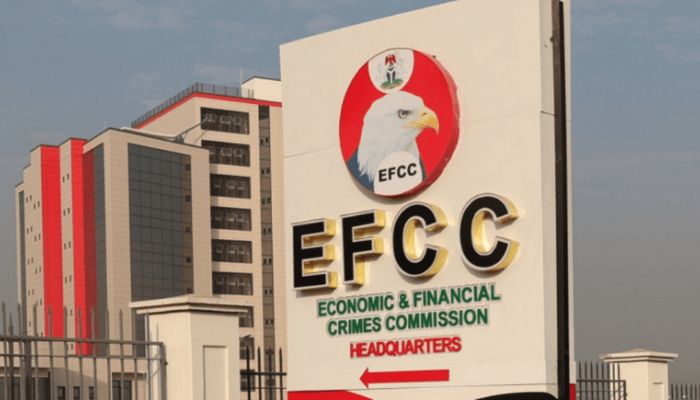
The Economic and Financial Crimes Commission (EFCC) has urged regulators to suspend and prosecute deposit money banks, fintech companies and microfinance banks found to be complicit in large-scale financial frauds that have cost Nigerians billions of naira.
The call was made by the Director of Public Affairs of the Commission, Mr. Wilson Uwujaren, in Abuja on the sidelines of a media briefing on systemic negligence and compromise within parts of the financial sector.
Uwujaren disclosed that investigations by the EFCC uncovered extensive infractions involving an N18.7 billion investment scam and cryptocurrency-related transactions valued at N162 billion. He alleged that one new-generation commercial bank, six fintech firms and several microfinance banks aided fraudsters in laundering illicit proceeds.
According to him, it was alarming that crypto transactions amounting to N162 billion were processed through a single new-generation bank without adequate due diligence. He further revealed that one customer operated as many as 960 accounts in the same bank, all of which were allegedly deployed for fraudulent activities.
Uwujaren said the institutions involved blatantly breached established banking procedures, enabling criminals to convert illicit funds into digital assets and transfer them to secure destinations.
He stressed that the EFCC is calling on relevant regulatory authorities to enforce strict compliance with financial regulations, particularly in the areas of Know Your Customer (KYC), Customer Due Diligence (CDD) and Suspicious Transaction Reports (STRs).
“Any deposit money bank, fintech or microfinance bank found to be aiding and abetting fraudsters should be suspended and handed over to the EFCC for comprehensive investigation and possible prosecution,” he said.
Uwujaren explained that the N18.7 billion investment frauds fell into two broad categories. The first involved a syndicate that used an airline discount scheme to deceive unsuspecting victims, while the second centred on a company identified as Fred and Farid Investment Limited, also known as FF Investment, which allegedly lured Nigerians into a fake investment scheme.