
Nigeria has been officially removed from the European Union’s list of high-risk third countries under the Anti-Money Laundering and Countering the Financing of Terrorism (AML/CFT) framework, marking a major milestone in the country’s financial system reforms.
The decision is contained in the European Commission Delegated Regulation (EU) C (2025) 8460, adopted on Dec. 4, 2025, in line with updates from the Financial Action Task Force (FATF) October 2025 Plenary, and will take effect from Jan. 29, 2026.
The regulation also confirmed the delisting of Burkina Faso, Mali, Mozambique, South Africa and Tanzania from the EU high-risk list after the countries successfully exited the FATF list of Jurisdictions under Increased Monitoring, having addressed identified strategic AML/CFT deficiencies.
The European Commission acknowledged that Nigeria and the other delisted countries strengthened the effectiveness of their AML/CFT regimes, closed key technical and operational gaps, and fulfilled commitments under their FATF Action Plans, leading to their removal from the FATF grey list in June and October 2025.
Nigeria’s removal reflects what observers described as strong political will and leadership under President Bola Ahmed Tinubu, GCFR, whose administration prioritised financial system integrity, inter-agency coordination and compliance with international standards.
The achievement was also attributed to sustained collaboration among the National Assembly, law enforcement agencies, regulators, supervisors, the judiciary, the private sector and development partners.
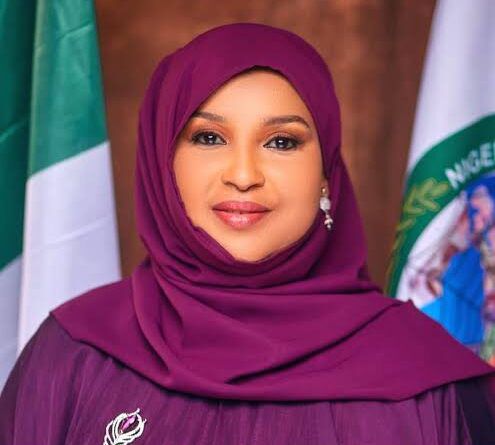
Reacting to the development, the Chief Executive Officer of the Nigerian Financial Intelligence Unit (NFIU), Mrs Hafsat Abubakar Bakari, described the decision as a significant affirmation of Nigeria’s collective reform efforts.
“This decision represents an important external validation of Nigeria’s steady progress in strengthening its AML/CFT/CPF framework. It demonstrates that consistent reforms, effective coordination and strong national ownership can translate into tangible international outcomes,” Bakari said.
She explained that Nigeria’s removal from the EU high-risk list means that financial transactions between Nigeria and EU member states will no longer be subject to enhanced due diligence requirements associated with high-risk jurisdictions.
According to her, this is expected to ease compliance burdens, support smoother cross-border financial flows and enhance Nigeria’s attractiveness for trade, investment and financial partnerships with Europe.
Bakari added that beyond the immediate economic benefits, the delisting strengthens international confidence in Nigeria’s financial system and underscores the country’s standing as a cooperative and responsible participant in the global financial architecture.
“This achievement is the product of collective national effort. While we welcome this progress, it also places a clear responsibility on all stakeholders to sustain momentum, guard against complacency and continue strengthening our systems in response to evolving financial crime risks,” she said.
She reaffirmed the NFIU’s commitment to continuous engagement with the FATF, the Inter-Governmental Action Group against Money Laundering in West Africa (GIABA), the European Union and other international partners.
The NFIU is Nigeria’s national centre for the receipt, analysis and dissemination of financial intelligence related to money laundering, terrorist financing and related offences, and is a member of the Egmont Group of Financial Intelligence Units.