
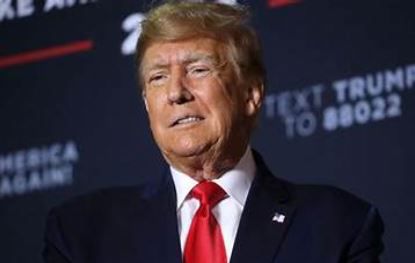
United States President Donald Trump has acknowledged for the first time that Muslims are also victims of killings in Nigeria, marking a shift from his earlier assertions that Christians were the primary targets of violence in the country.
Trump made the admission in an interview with The New York Times, where he said that no single religion was exclusively affected by the insecurity in Nigeria, though he maintained that Christians were the majority of victims.
“I think that Muslims are being killed also in Nigeria. But it’s mostly Christians,” Trump was quoted as saying.
The U.S. President had previously drawn criticism for repeatedly claiming that Christians were being targeted in Nigeria, a position that Nigerian authorities and several international observers said did not fully reflect the complex security situation on the ground.
Speaking further on the Christmas Day attacks on terror targets in Nigeria, Trump suggested that the United States could carry out additional military strikes if violence persists.
“I’d love to make it a one-time strike … But if they continue to kill Christians, it will be a many-time strike,” he said.
When confronted with comments by his own Africa adviser, who reportedly stated that Islamic State and Boko Haram militants had killed more Muslims than Christians, Trump reiterated his position.
“I think that Muslims are being killed also in Nigeria. But it’s mostly Christians,” he said.
In late October, Trump warned that Christianity was facing what he described as an “existential threat” in Nigeria and threatened possible U.S. military intervention, accusing the Nigerian government of failing to protect Christian communities.
The U.S. President had also redesignated Nigeria as a Country of Particular Concern, citing alleged religious persecution and weakness on the part of the government in safeguarding lives.
In response, the Federal Government of Nigeria dispatched a high-powered delegation to the United States to present a comprehensive briefing on the country’s security challenges and efforts to address them.
Following the visit, senior U.S. officials also travelled to Nigeria to obtain first-hand assessments of the security situation and ongoing counterterrorism measures.