
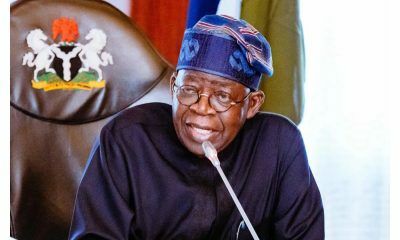
The Nigeria First Project Initiative (NFPI), a group advocating national unity and integration, has dismissed claims that Northern Nigeria is being marginalised under the administration of President Bola Ahmed Tinubu, describing such assertions as unfounded and lacking credible evidence.
In a statement jointly signed by its National Coordinator, Hamza Umar Saulawa, and Director of Research and Documentation, Bishir Dauda, the group argued that available records and ongoing government projects contradict the narrative of marginalisation often promoted by opposition figures and some sections of the media.
Infrastructure Development Counters Marginalisation Claims
According to NFPI, several major infrastructure projects across Northern Nigeria demonstrate the federal government’s commitment to balanced development. These include the Abuja–Kaduna–Zaria–Kano Expressway, the Kano–Maradi Railway project, and multiple road reconstruction efforts across the region.
The group also highlighted the Sokoto–Badagry Superhighway as a key initiative that has not received as much public attention as the Lagos–Calabar Coastal Highway, despite significant progress recorded.
Political Representation Remains Strong
NFPI further noted that the North continues to hold strategic political positions within the current administration. These include the offices of the Vice President, Speaker of the House of Representatives, Deputy Senate President, and the National Chairman of the ruling All Progressives Congress (APC).
In addition, the group emphasized that several key ministerial positions—such as defence, agriculture, housing, health, and information—are occupied by individuals from the northern region, alongside numerous appointments into advisory and executive roles.
Economic Policies Benefiting All Regions
Addressing broader economic concerns, the group stated that recent reforms by the Tinubu administration are yielding nationwide benefits. Policies such as the unification of the foreign exchange market, removal of fuel subsidies, and ongoing tax reforms have reportedly led to increased revenue allocations through the Federal Account Allocation Committee (FAAC).
“These reforms have enabled states across the federation to meet salary obligations, clear pension backlogs, and invest in infrastructure and social services,” the statement noted.
Security and Governance Reforms
On security, NFPI commended the administration’s push for constitutional amendments aimed at establishing state police, which it believes will strengthen Nigeria’s security architecture.
The group also referenced the Supreme Court ruling supporting local government financial autonomy, describing it as a landmark achievement that allows direct funding to grassroots administrations, thereby improving service delivery and development at the local level.
Call for Balanced Perspective
While reaffirming that development in the North should not rely solely on federal interventions, the group urged stakeholders to adopt a more balanced and fact-based perspective on governance issues.
“In a nutshell, the policies and programmes of the Tinubu administration are designed to benefit all regions, including the North. Claims of marginalisation do not reflect the reality on ground,” Saulawa stated.