
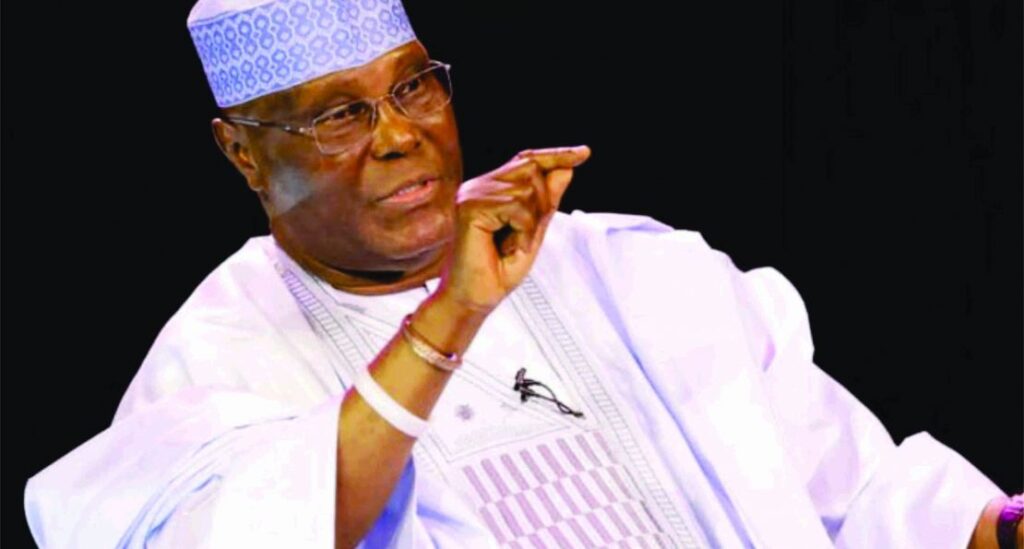
A renewed political clash has erupted ahead of the 2027 general elections, as allies of former Vice President Atiku Abubakar strongly rejected claims by presidential aide Bayo Onanuga that President Bola Ahmed Tinubu should complete an eight-year tenure based on Nigeria’s informal power rotation arrangement.
The controversy centers on the long-standing but unwritten North-South zoning principle in Nigerian politics, which has again taken center stage as political actors position themselves for 2027.
Presidency Defends Power Rotation
Speaking after a recent media appearance by Atiku, Onanuga argued that the South should retain power until 2031, following the two-term tenure of former President Muhammadu Buhari from the North. He maintained that President Tinubu deserves a second term to complete what he described as a “balanced” power rotation cycle.
The presidency’s position reflects a broader argument within the ruling camp that respecting zoning promotes national unity and political stability in Nigeria’s diverse landscape.
Atiku Camp Rejects “Eight-Year Entitlement”
However, Atiku’s camp has dismissed the claim as unconstitutional and undemocratic. In a strongly worded statement, Phrank Shaibu, spokesperson to the former vice president, insisted that no political convention can override the Nigerian Constitution.
According to Shaibu, democracy does not guarantee any leader an automatic second term, stressing that electoral victory must always be determined by the will of the people.
“No one owns Nigeria. Power rotation is a political understanding, not a constitutional right,” he said.
He further accused the presidency of attempting to intimidate opposition figures and reshape democratic narratives to its advantage.
Debate Over 2023 Election and Governance
Shaibu also revisited the outcome of the 2023 presidential election, arguing that zoning was not the deciding factor. Instead, he alleged that the process was marred by irregularities and institutional compromise—claims that have remained contentious in Nigeria’s political discourse.
In addition, he criticized references to late President Umaru Musa Yar’Adua in the zoning debate, describing such arguments as inappropriate and politically motivated.
Opposition Dynamics and 2027 Outlook
The Atiku camp also dismissed suggestions from pro-government voices regarding opposition disunity, particularly comments about Labour Party figure Peter Obi. Shaibu described such remarks as signs of anxiety within the ruling camp over a possible opposition coalition.
Political analysts note that the exchange highlights growing tensions as early alignments and narratives begin to shape the 2027 elections. Key issues likely to dominate the race include economic performance, inflation, governance, and national unity.
Power Rotation vs Constitutional Democracy
At the heart of the debate is a fundamental question: should Nigeria’s informal zoning system take precedence over open democratic competition?
While proponents argue that rotation ensures inclusivity in a multi-ethnic nation, critics insist that it undermines meritocracy and voter choice.
What Lies Ahead
With political rhetoric intensifying, the coming months are expected to see increased coalition-building, strategic alliances, and policy-driven campaigns. Ultimately, the decision on leadership will rest with Nigerian voters.