
By Digma Zubairu
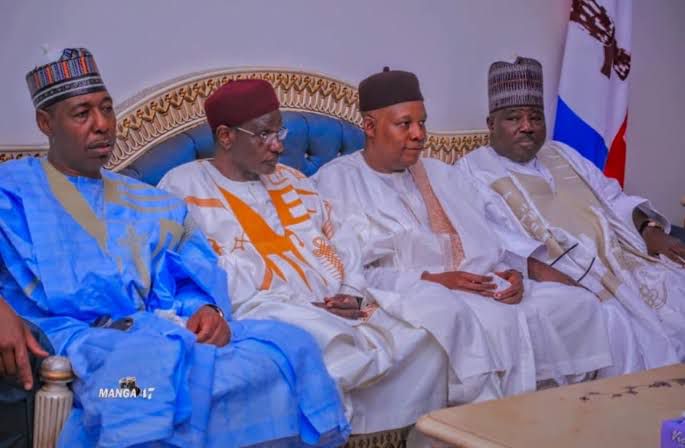
As the APC governorship primary in Borno State draws closer, the contest is being shaped less by the number of aspirants and more by three powerful forces: Governor Babagana Umara Zulum’s institutional influence, Vice President Kashim Shettima’s political weight, and the decisive role of grassroots structures across the state.
At the heart of the unfolding dynamics is Governor Zulum, whose position gives him considerable control over party machinery. His administration’s visibility—especially in areas such as security coordination, reconstruction, and humanitarian efforts—has reinforced his popularity among citizens. Beyond public perception, his incumbency provides him with significant behind-the-scenes influence, particularly over local government structures, ward leadership, and delegate composition. In a primary election, these factors are crucial. Any aspirant perceived to enjoy Zulum’s backing is likely to gain both political momentum and structural advantage within the party.
However, Zulum’s position requires a delicate balance. Openly endorsing a candidate could provoke resistance within party ranks, while maintaining strict neutrality might create space for factional rivalry. Whether he chooses to publicly support a candidate or quietly shape the process will be a defining factor in how the race unfolds.
Complementing this is the influence of Vice President Kashim Shettima, a seasoned political actor with deep roots in Borno’s political landscape. As a former governor, Shettima commands a loyal network that includes party elders, technocrats, and grassroots mobilizers.
His strength lies in his ability to build consensus, forge alliances, and subtly influence outcomes.
His position at the national level further amplifies his relevance. Although the primary election is a state matter, the connection between state and federal politics cannot be overlooked. His preferences—whether openly expressed or discreetly signaled—are likely to carry significant weight among party stakeholders seeking alignment with the broader APC structure. Still, like Zulum, he must tread carefully to avoid perceptions of external imposition, which could trigger resistance from local actors keen on preserving Borno’s political independence.
Beyond these two influential figures lies perhaps the most critical factor: the grassroots. In Borno, political legitimacy is strongly tied to local acceptance. Years of conflict and rebuilding have strengthened the importance of community trust, placing ward leaders, youth groups, and local influencers at the center of the political process. Delegates are deeply connected to these networks, and their decisions often mirror the sentiments of their communities.
As a result, endorsements from political elites alone are not enough. Aspirants must show accessibility, cultural connection, and genuine engagement with the people. Those who successfully convert elite support into grassroots enthusiasm will have a clear advantage, while candidates perceived as disconnected or imposed may struggle regardless of their backing.
Ultimately, the outcome of the APC primary will depend on how these forces converge. If Zulum and Shettima align behind a single candidate, the path to victory becomes smoother and party unity more likely. However, if their interests diverge, the race could become highly competitive, giving multiple aspirants the opportunity to test their strength at the grassroots level.
Lest We Forget:
Among the more than ten aspirants in the race are individuals ranging from seasoned grassroots politicians to legal experts, bankers, and technocrats.
However, observers note that in Borno’s political environment, grassroots connection and practical political experience often outweigh professional credentials.
While some aspirants boast strong local networks and widespread support, others face challenges such as limited political structures or low public appeal. These realities may ultimately prove more decisive than impressive résumés.
Governor Zulum has, however, maintained a public posture of neutrality, stating: “I have no aspiring candidate for any position… I have entrusted the choice of leaders to Almighty Allah.”
In the end, the people of Borno await the outcome, hopeful for leadership that will advance peace, stability, and continued development across the state.