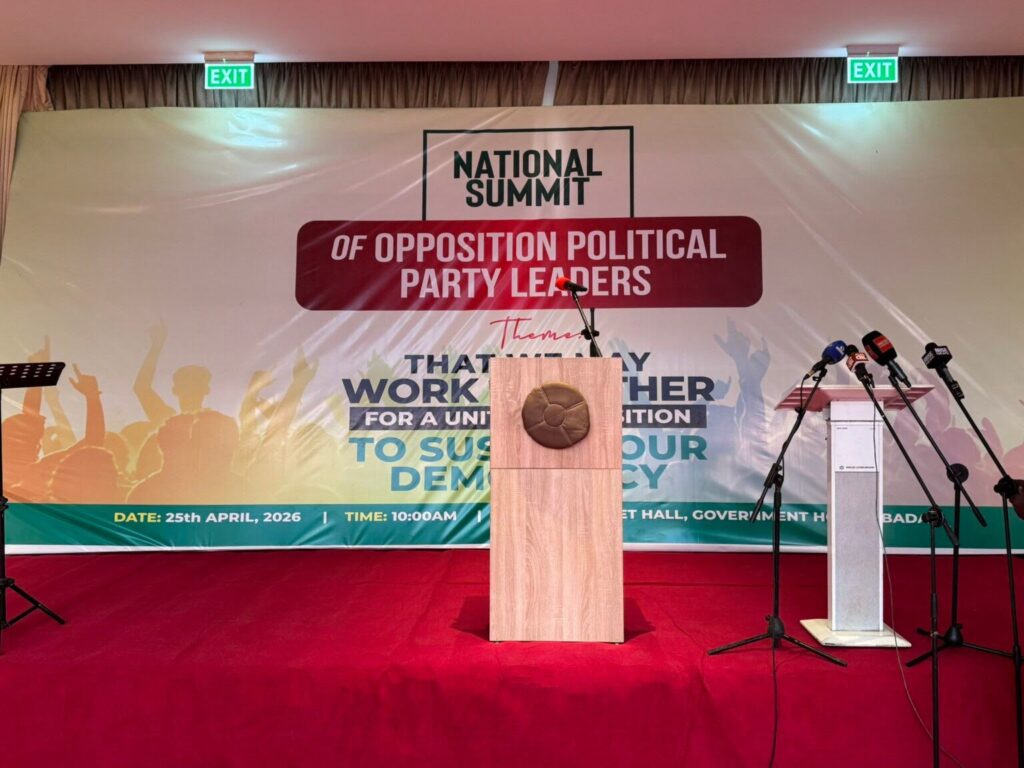
Opposition political parties in Nigeria have unveiled a strategic plan to present a unified presidential candidate for the 2027 general elections, in what analysts describe as a significant move to challenge the dominance of the ruling All Progressives Congress (APC).
The resolution was reached on Saturday during a high-level national summit of opposition leaders held in Ibadan, the capital of Oyo State. The meeting brought together key stakeholders across major opposition platforms, signaling a renewed push for coalition politics ahead of the next electoral cycle.
Key Opposition Parties Involved
Among the parties at the summit were the African Democratic Congress (ADC), reportedly led by David Mark, the Peoples Democratic Party (PDP), chaired by Kabiru Turaki, and the New Nigeria People’s Party (NNPP).
In a communiqué issued at the end of the summit, the parties jointly declared their intention to consolidate efforts and field a single presidential candidate capable of confronting the APC in 2027.
Coalition Strategy and Political Concerns
The opposition leaders accused the ruling APC of attempting to establish a one-party state, alleging political manipulation and undue influence over democratic institutions.
“Despite the onslaughts and manoeuvrings of the ruling party to impose its dominance, we shall field candidates and actively contest the 2027 presidential and other elections,” the communiqué stated.
They emphasized that the proposed consensus candidate would emerge through mutual agreement among participating parties, with the goal of “rescuing Nigeria and addressing the challenges faced by its citizens.”
Allegations Against INEC Leadership
The coalition also raised concerns about the leadership of the Independent National Electoral Commission (INEC), accusing its chairman, Joash Amupitan, of alleged bias in favor of the APC.
According to the statement, the opposition parties believe his continued tenure could undermine public trust and electoral credibility.
“Nigerians have lost confidence in his neutrality and ability to guarantee free, fair, and credible elections,” the communiqué noted, calling for his removal.
Call for Electoral Reforms
In addition, the opposition bloc urged the National Assembly of Nigeria to urgently review the Electoral Act 2026. They argued that certain provisions in the law could compromise the integrity of elections if left unamended.
Political Implications for 2027
The move toward a united opposition front reflects growing recognition of the challenges posed by fragmented political interests in Nigeria’s electoral system.
Political observers note that if successfully implemented, a single opposition candidate could reshape the dynamics of the 2027 presidential race.
However, questions remain about how the coalition will navigate internal rivalries, zoning considerations, and candidate selection processes.