
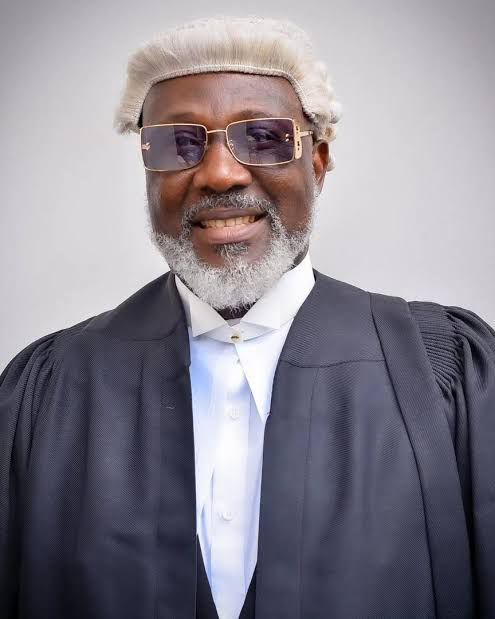
Former Kogi West Senator, Dino Melaye, has criticised the appointment of the Executive Chairman of the Nigeria Revenue Service (NRS), Zacch Adedeji, to a leadership position in President Bola Ahmed Tinubu’s 2027 campaign fundraising structure.
Melaye described the development as a potential conflict of interest, arguing that a senior public official whose appointment was confirmed by the Senate should not simultaneously play an active role in raising funds for the re-election campaign of a sitting president.
Speaking during an interview on Arise Television’s Prime Time, Melaye said he would seek judicial clarification on the legality of the appointment.
According to him, Adedeji’s responsibilities as head of the NRS require him to operate within the limits of public service regulations and applicable Nigerian laws.
“Zacch Adedeji cannot be the chairman of the NRS and, at the same time, be a fundraiser for the presidential campaign of a sitting President,” Melaye said.
He argued that combining the two roles could create concerns about institutional independence and the possibility of a public office being used, directly or indirectly, for partisan political fundraising.
Melaye said his decision to challenge the matter in court was aimed at allowing the judiciary to determine whether the arrangement complies with the law.
“We want to test it in a court of law,” he said, while accusing the ruling All Progressives Congress (APC) and the Tinubu administration of being overly eager to secure political support ahead of the 2027 election.
Concerns over public office and political fundraising
The controversy centres on the distinction between an individual’s political activities and the responsibilities attached to holding a sensitive public office.
Melaye maintained that the NRS chairman occupies a consequential position within government and therefore must be particularly careful to avoid situations that could create an actual or perceived conflict between official duties and partisan political interests.
He also questioned the inclusion of other senior government officials in the campaign fundraising structure, describing the development as a matter that deserves public scrutiny.
The former lawmaker further alleged that public officials should not be placed in positions where their government responsibilities could be perceived as being connected to the financial interests of a political campaign.
However, these remain Melaye’s allegations and political interpretation of the appointments. Any determination on whether the arrangement violates Nigerian law would ultimately depend on the relevant legal provisions and, if challenged, the decision of a competent court.
Melaye questions suspension of campaign list
Melaye also claimed that the campaign fundraising list was subsequently suspended following public criticism of the appointments.
He rejected the explanation that the suspension was simply because some names were missing from the list, insisting that the public reaction to the appointments played a role.
The controversy has consequently raised broader questions about the participation of serving government officials in political campaign structures ahead of the 2027 general elections.
As political activities gradually intensify ahead of the next presidential election, the issue is likely to attract further debate over the boundaries between public service, political participation, campaign fundraising and the use of government-linked positions.
For now, Melaye’s stated intention to seek judicial intervention could provide an opportunity for the courts to clarify the legal boundaries surrounding serving public officials and partisan campaign activities.
The development also places renewed attention on the need for transparency, clear institutional boundaries and strict compliance with Nigeria’s electoral and public service laws as political parties prepare for the 2027 elections.