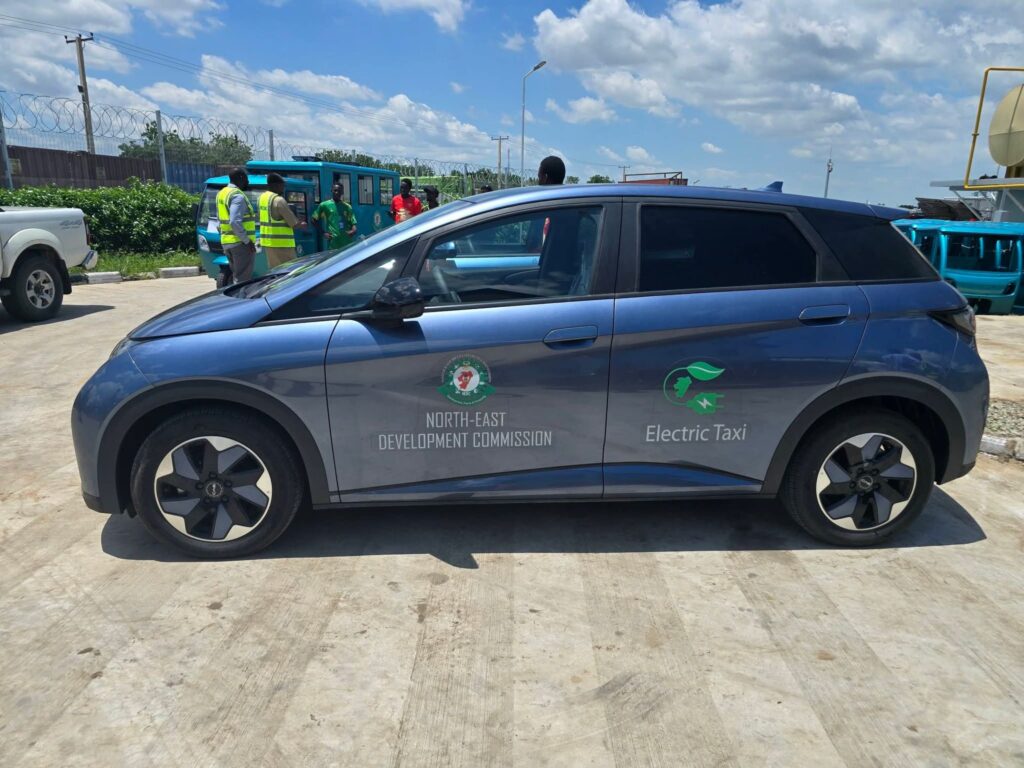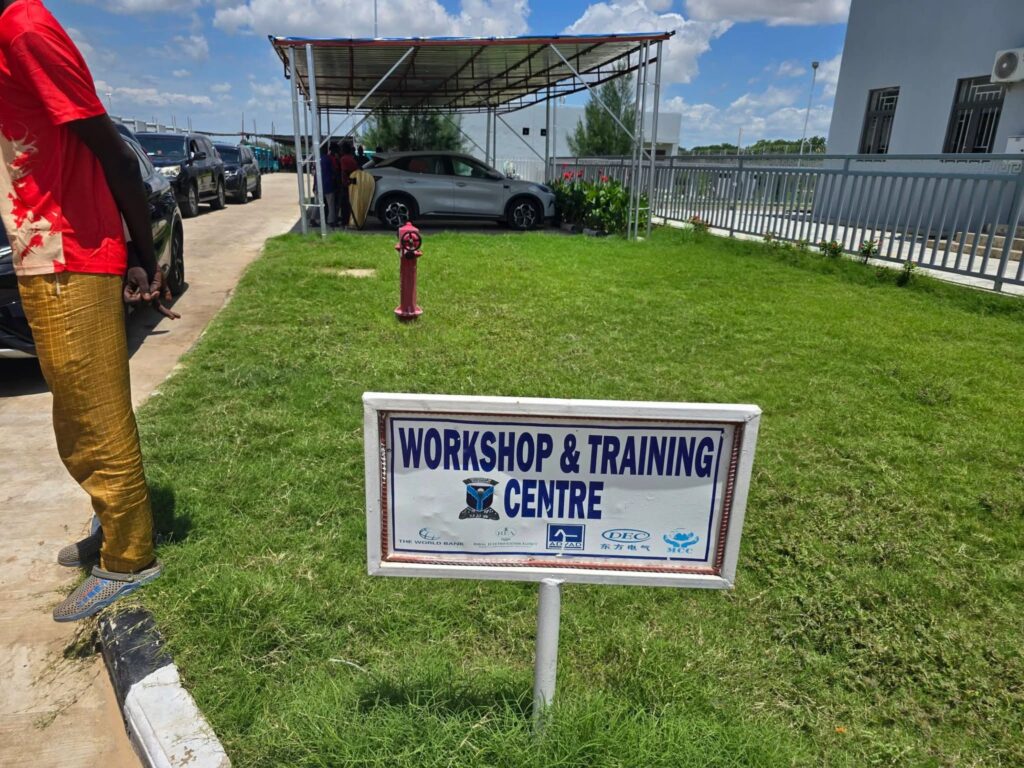
The North-East Development Commission (NEDC) under the able leadership of Dr Mohammed G Alkali is taking a strategic step towards transforming the economic landscape of the North-East through its Electric Vehicle (EV) initiative, including the development of an Electric Vehicle Assembly Plant and an integrated ecosystem for electric mobility.
The initiative represents more than the introduction of a new means of transportation. It is a deliberate investment in youth empowerment, job creation, entrepreneurship, technology transfer, environmental sustainability and regional economic transformation.
With millions of young people constituting a significant proportion of the North-East’s population, the region requires economic interventions capable of moving youths from dependency to productivity. The NEDC Electric Vehicle initiative is positioned to provide opportunities for young people to acquire technical skills, establish businesses and participate meaningfully in the emerging green economy.
Why Electric Vehicles for the North-East?
The Managing Director/Chief Executive Officer of NEDC explained that the Commission undertook a thorough assessment of the most suitable energy and transportation options for the region.
“And after our thorough analysis, we came to the conclusion that for the North-East region, the CNG could work, but e-vehicles can work better for many reasons.”
This assessment reflects the need to develop solutions that are specifically suited to the realities and long-term development requirements of the North-East rather than simply adopting technologies because they are popular elsewhere.
Electric mobility offers the potential to reduce dependence on conventional fossil fuels, lower operating costs for users and create a new industrial value chain involving vehicle assembly, maintenance, charging infrastructure, battery services, software, spare parts and technical training.
The EV initiative therefore has the potential to become an industrial development programme, rather than merely a transportation project.
A Major Opportunity for Youth Empowerment
One of the most significant expected impacts of the Electric Vehicle Assembly Plant is its potential to empower thousands of young people across the North-East.
The initiative can create opportunities at different levels of the value chain. Young people can be trained and employed as:
Electric vehicle technicians and maintenance specialists;
Battery maintenance and servicing technicians;
Charging-station operators and installers;
Auto-electrical and electronic technicians;
Vehicle assembly workers;
Software and digital-mobility specialists;
Spare-parts manufacturers and distributors;
Vehicle operators and fleet managers;
Entrepreneurs in electric mobility services;
Trainers and technical instructors; and
Researchers and innovators developing locally appropriate EV solutions.
This means that the benefits of the assembly plant will not be limited to those working directly inside the factory. A wider ecosystem of businesses and services can emerge around it.
From Job Seekers to Job Creators
Perhaps the most important long-term impact is the opportunity to change the mindset of young people from seeking limited formal employment to becoming self-reliant entrepreneurs and job creators.
A young person trained in EV technology, for example, could establish a small electric-vehicle repair workshop. Another could operate a charging station, while others could engage in battery diagnostics, spare-parts distribution, fleet management or vehicle leasing.
In this way, the project can stimulate a chain reaction in which one major investment creates numerous secondary businesses.
Building a New Industrial Value Chain
The establishment of an Electric Vehicle Assembly Plant provides an opportunity for the North-East to participate in a rapidly evolving global industry.
The plant can serve as an anchor for the development of local suppliers and service providers. As demand for electric vehicles increases, businesses can emerge around the production and supply of components, vehicle accessories, batteries, tyres, electronics, charging equipment and other supporting materials.
The Commission can also encourage partnerships with educational institutions, technical colleges, universities and private-sector companies to develop specialised training programmes.
This would help create a workforce equipped for the future rather than preparing young people solely for traditional industries.
Boosting the Regional Economy
The economic impact of the project could extend across all six states of the North-East.
A successful electric-mobility ecosystem can stimulate economic activities in manufacturing, transportation, technology, energy, construction, logistics, finance, retail and services.
As new businesses emerge and existing businesses expand, more people will earn incomes, households will have greater purchasing power and local economies will benefit from increased economic activity.
The project can therefore contribute to the broader objective of moving the North-East from a predominantly consumption-oriented economy towards a more productive, industrial and innovation-driven regional economy.
Supporting the 11 Pillars of the North-East Stabilisation and Development Master Plan
The Electric Vehicle initiative is particularly significant because it is being pursued within the broader framework of the 11 pillars of the North-East Stabilisation and Development Master Plan (NESDMP).
Rather than operating as an isolated project, the initiative can complement the Commission’s comprehensive approach to regional recovery, reconstruction, development and economic prosperity.
Its impact cuts across several development priorities, including human capital development, infrastructure, economic empowerment, employment generation, technology, environmental sustainability and private-sector participation.
The EV programme can therefore become an important practical demonstration of how the Master Plan can translate strategic development objectives into opportunities that directly affect the lives of ordinary people.
Skills Development and Technology Transfer
For the North-East to fully benefit from the EV revolution, technology transfer and human-capital development will be critical.
NEDC’s intervention can provide a platform for young people to receive practical training in modern automotive technologies.
Partnerships with manufacturers, universities, polytechnics, technical colleges and international technology companies could expose young Nigerians to advanced skills in:
electric propulsion, battery technology, vehicle diagnostics, embedded electronics, software systems, charging infrastructure and energy management.
Such knowledge can remain in the region long after the initial project has been completed.
The ultimate objective should be to build a generation of young professionals capable of designing, assembling, maintaining and eventually innovating electric mobility technologies locally.
Women and Inclusive Economic Participation
The economic opportunities created by electric mobility should also extend to women and other groups that have historically had limited participation in technical industries.
Training programmes can deliberately create pathways for women to participate in areas such as digital mobility services, administration, software development, sales, fleet management, charging-station operations, entrepreneurship and technical services.
An inclusive EV ecosystem would therefore ensure that the benefits of the project reach a broad section of society.
Environmental and Public-Health Benefits
The transition towards electric mobility also presents environmental opportunities.
Electric vehicles produce no tailpipe emissions during operation, which can contribute to improved air quality, particularly in densely populated urban centres.
For a region facing increasing urbanisation and transportation demands, the development of cleaner mobility options can complement wider environmental and sustainability objectives.
The initiative can also encourage investment in renewable energy, particularly solar power, for charging infrastructure. This creates a potential connection between the EV programme and the region’s broader renewable-energy ambitions.
Reducing Transportation Costs
Transportation represents a major expenditure for many households and businesses.
Electric vehicles, depending on acquisition costs, electricity tariffs, vehicle efficiency and maintenance requirements, can offer potentially lower operating and maintenance costs than conventional vehicles.
This is particularly important for commercial transportation operators whose livelihoods depend on keeping their vehicles on the road.
If properly implemented, the EV initiative could therefore help operators reduce some running costs while improving the reliability and sustainability of transportation services.
Creating an Innovation Ecosystem
The Electric Vehicle Assembly Plant can become a centre around which an innovation ecosystem develops.
Young entrepreneurs could be encouraged to develop solutions for:
EV charging management;
Mobile payment systems;
Fleet tracking;
Battery monitoring;
Vehicle diagnostics;
Digital transport platforms;
Spare-parts supply chains;
Solar-powered charging systems; and
Other mobility-related technologies.
This would position the North-East not merely as a consumer of imported technology but as a region capable of developing solutions suited to its own environment and eventually exporting those solutions to other parts of Nigeria and Africa.
The Wider Multiplier Effect
The real value of the EV Assembly Plant should therefore be measured beyond the number of vehicles produced.
Its wider multiplier effects could include:
Assembly Plant → Skills Development → Employment → Entrepreneurship → New Businesses → Increased Household Income → Increased Local Spending → Regional Economic Growth.
This multiplier effect is what can transform the project from an industrial facility into an engine of regional development.
A Future Built Around Young People
The North-East’s young population represents one of its greatest assets.
With the right investments in education, skills, infrastructure, technology and entrepreneurship, young people can become the driving force behind the region’s economic transformation.
The NEDC Electric Vehicle initiative offers an opportunity to connect these young people with a modern industry that is expected to become increasingly important globally.
Instead of young people leaving the region in search of opportunities elsewhere, the objective should be to create an environment where they can learn, work, innovate, establish businesses and prosper within the North-East.
In Conclusion, NEDC’s Electric Vehicle Assembly Plant is more than a transportation intervention. It represents an ambitious opportunity to establish a new economic ecosystem built around technology, skills, entrepreneurship, clean energy and youth empowerment.
The decision to explore electric mobility after a thorough assessment of the region’s needs demonstrates an approach centred on finding solutions appropriate for the North-East’s long-term development.
By aligning the initiative with the 11 pillars of the North-East Stabilisation and Development Master Plan, NEDC has the opportunity to ensure that the benefits extend beyond vehicle production to human-capital development, job creation, entrepreneurship, innovation and regional prosperity.
If properly implemented and supported by strong partnerships with the private sector, educational institutions, financial institutions and technology providers, the initiative could produce a generation of skilled young Nigerians who are not only employees but entrepreneurs, innovators and employers of labour.
Ultimately, the greatest measure of the project’s success will not simply be the number of electric vehicles assembled. It will be the number of young lives transformed, businesses created, jobs generated, skills acquired and communities lifted into sustainable prosperity.
For the North-East, electric mobility can therefore become more than a new transportation technology—it can become a vehicle for economic transformation and a pathway to a more prosperous future for its people.