
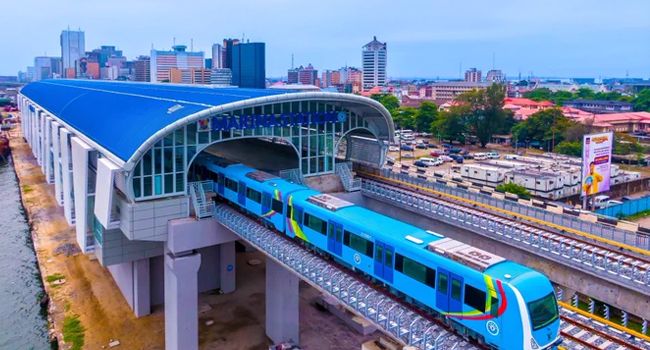
The Federal Government has unveiled plans to develop an ambitious high-speed railway corridor linking Lagos, Nigeria’s commercial hub, with Maiduguri, the capital of Borno State, as part of a broader strategy to transform the country’s transportation system and strengthen connectivity across regions.
The proposed Lagos-Maiduguri corridor is expected to form part of the Federal Government’s long-term efforts to establish an integrated national transport network capable of moving passengers and goods more efficiently between major cities.
The Permanent Secretary of the Federal Ministry of Transportation, Olufunso Adebiyi, disclosed the plan on Monday in Abuja while speaking at the opening of the 19th National Council on Transportation.
Adebiyi said the proposed railway corridor could accommodate trains travelling at speeds of up to 360 kilometres per hour, a development that could significantly reduce journey times between major urban centres along the route.
If eventually implemented as proposed, the project could represent a major transformation of long-distance passenger transportation in Nigeria, particularly by providing an alternative to road travel for millions of Nigerians travelling between the southern, central and northern parts of the country.
Lagos-Maiduguri corridor to strengthen national connectivity
The Lagos-Maiduguri rail connection is particularly significant because of the geographical distance it would cover and the number of major commercial and population centres that could potentially benefit from improved railway connectivity.
Lagos serves as Nigeria’s major commercial and industrial centre, while Maiduguri is an important economic and administrative hub in the North-East.
A modern high-speed railway linking the two cities could improve the movement of people, agricultural products, manufactured goods and other commodities across different parts of the country.
It could also complement existing and planned railway projects by creating a more interconnected national rail system rather than isolated railway corridors.
Speaking on the theme, “Developing an Effective Transport System for Nigeria: The Role of Integrated Transportation,” Adebiyi described transportation as a major driver of economic development.
He said an efficient transport system was essential to the movement of people, goods and services, stressing that the development of transport infrastructure remained critical to national economic growth.
FG highlights railway expansion
The Permanent Secretary also described the ongoing expansion and rehabilitation of Nigeria’s railway network as a rebirth of rail transportation in the country.
According to him, several railway corridors have already been completed, including Port Harcourt-Aba, Warri-Itakpe, Lagos-Ibadan and Abuja-Kaduna.
He added that construction of the Kaduna-Zaria-Kano railway line was approaching completion and was expected to commence operations by December.
Other railway projects currently under development include the Kaduna-Daura-Katsina, Katsina-Jibia-Maradi and Kano-Dutse corridors.
The projects are expected to improve regional connectivity and expand the role of rail transportation in the movement of passengers and freight.
What a 360km/h railway could mean for Nigeria
The proposed 360km/h operating speed would place the planned corridor in the category of very high-speed rail systems.
Beyond reducing travel time, a reliable high-speed rail network could have wider economic implications.
Improved connectivity can make it easier for businesses to move goods, connect suppliers with markets and enable workers and entrepreneurs to travel between economic centres.
For Nigeria, where road transportation remains the dominant means of long-distance travel, a modern railway system could also help diversify the country’s transport options.
A shift of some passenger and freight traffic from roads to rail could potentially reduce pressure on major highways and improve the efficiency of long-distance transportation.
The Lagos-Maiduguri proposal could therefore become particularly important for the North-East, where improved transport connectivity has long been considered essential to expanding trade, investment and economic opportunities.
Infrastructure alone not enough, says Head of Service
Also speaking at the transportation council, the Head of the Civil Service of the Federation, Abel Enitan, cautioned that infrastructure development alone would not be sufficient to create an effective national transportation system.
Enitan stressed the importance of strong institutions, effective regulation, reliable data, innovation and a skilled workforce.
He described transportation as the lifeblood of the economy and called for stronger collaboration between the Federal Government, state governments and relevant transport agencies.
According to him, an integrated transport system requires more than the construction of roads and railway lines. It also depends on effective management, regulation, planning and the availability of skilled professionals capable of operating and maintaining the infrastructure.
A broader vision for Nigeria’s transport sector
The latest announcement signals the Federal Government’s broader ambition to move Nigeria towards a more integrated transportation system in which rail, road and other modes of transport complement one another.
For the proposed Lagos-Maiduguri high-speed rail corridor, the major challenge will be translating the ambitious plan into a fully financed, technically sound and operational railway project.
The construction of such a long-distance high-speed railway would require significant investment, detailed feasibility studies, land acquisition, advanced railway technology, extensive safety systems and long-term maintenance arrangements.
Nevertheless, the proposal has the potential to reshape the way Nigerians travel across the country if successfully developed.
With ongoing railway projects in different parts of Nigeria and the proposed expansion towards Maiduguri, the Federal Government’s transportation agenda could gradually create a more connected national rail network capable of supporting commerce, tourism, employment and regional development.
For residents and businesses in the North-East, particularly Maiduguri, a direct connection to Nigeria’s major economic centres would represent a potentially significant step towards deeper integration with the national economy.
The proposed Lagos-Maiduguri high-speed rail corridor therefore stands as one of the more ambitious elements of Nigeria’s emerging railway vision, although its ultimate impact will depend on funding, implementation, technical feasibility and sustained commitment to completing the project.