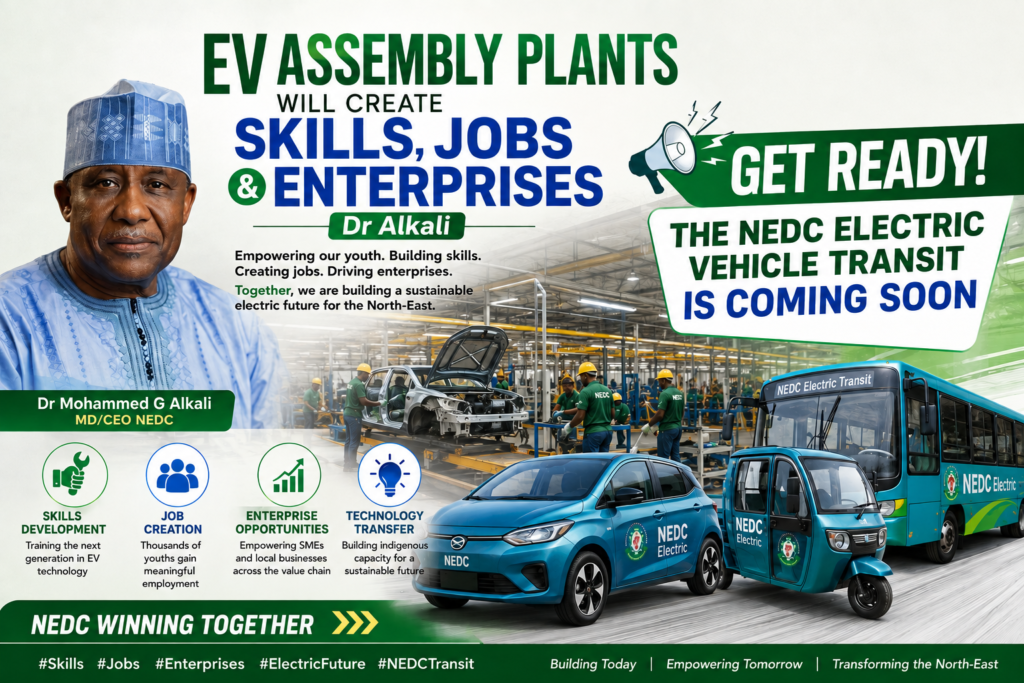
In leadership, true greatness is not measured solely by the position one occupies, the authority one exercises, or the wealth one accumulates. It is measured by the number of lives touched, the opportunities created for others, and the willingness to extend a helping hand to people who genuinely deserve support. By this standard, Dr. Mohammed G. Alkali, Managing Director and Chief Executive Officer of the North-East Development Commission (NEDC), stands out as a leader whose influence extends beyond his official responsibilities.
One remarkable quality that distinguishes Dr. Alkali is his willingness to help people without necessarily having a prior personal relationship with them. For him, the most important considerations are often merit, qualifications, competence, commitment and the ability of an individual to benefit from an opportunity.
In a society where personal connections sometimes determine access to opportunities, this approach to leadership deserves recognition. It demonstrates a belief that qualified individuals should not be denied opportunities simply because they do not have influential relatives, political godfathers or personal relationships with those in positions of authority.
A Leader Who Gives People a Chance
Across Nigeria, many talented and qualified individuals struggle to access opportunities that could transform their lives. Some possess the necessary academic qualifications, while others have the skills, dedication and determination to contribute meaningfully to society. Unfortunately, their potential sometimes remains untapped because they lack the right connections.
Dr. Alkali’s approach offers a different perspective: people should be given opportunities based on their qualifications, capabilities and potential, rather than solely on who they know.
His willingness to listen to people, consider their circumstances and assist where possible reflects an understanding that leadership should be a bridge between people’s aspirations and the opportunities they need to realise them.
For many beneficiaries of assistance received through his office, such opportunities can mean more than professional advancement. They can provide financial stability, restore hope, support families and give individuals the confidence to pursue greater ambitions.
A single opportunity, when extended to the right person, can transform an entire household. It can enable parents to educate their children, provide relief to struggling families and inspire beneficiaries to extend similar kindness to others.
This is the wider significance of leadership that recognises merit and creates room for deserving people to succeed.
Accessibility: A Distinctive Quality of Leadership
Another quality worthy of commendation is Dr. Alkali’s approachability.
Leadership becomes more meaningful when people feel that they can communicate their concerns, present their qualifications and seek guidance without being intimidated by the office a person occupies.
Despite the responsibilities associated with leading a major regional development institution, Dr. Alkali is regarded by those who have interacted with him as someone who can be approached for assistance and guidance.
Approachability is an important leadership quality because it helps bridge the gap between public officeholders and the people they serve. It encourages communication, allows concerns to be heard and creates opportunities for individuals who might otherwise remain unnoticed.
A leader who listens gives people a sense of belonging. A leader who considers their circumstances gives them hope. And a leader who helps qualified individuals access opportunities demonstrates that public service can have a direct and positive impact on people’s lives.
These qualities are particularly important in the North-East, where years of insecurity, displacement and economic disruption have created significant social and economic challenges. Beyond rebuilding infrastructure, the region needs leadership that recognises human potential and supports people in their efforts to rebuild their lives.
Trustworthiness and the Responsibility of Leadership
Trust is one of the most valuable assets any leader can possess. It is built through consistency, sincerity, responsible conduct and a willingness to treat people fairly.
Dr. Alkali’s reputation for being approachable and helpful has contributed to the positive perception held by people who have experienced his support or sought his assistance.
Trustworthy leadership also requires an understanding that opportunities carry responsibilities. When people receive support, they should be encouraged to justify the confidence placed in them through hard work, discipline, integrity and dedication to their responsibilities.
The relationship between leadership and beneficiaries should therefore go beyond the immediate assistance provided. It should encourage a culture of gratitude, accountability and service to others.
Those who benefit from an opportunity should remember that their success can become an avenue for helping other people. In this way, the positive impact of a leader’s intervention can continue long after the initial assistance has been provided.
Beyond Infrastructure: Investing in Human Potential
The North-East Development Commission has an important mandate to support recovery, rehabilitation, reconstruction and development across the six states of the North-East geopolitical zone.
Under Dr. Alkali’s leadership, the Commission’s development responsibilities extend across critical areas, including infrastructure, education, healthcare, livelihoods and human capital development.
However, the importance of leadership cannot be measured by institutional projects alone. The human dimension of public service is equally significant.
Behind every opportunity is a person with ambitions, responsibilities and a family that may depend on their success. Helping a qualified individual secure an opportunity can be just as meaningful to that person as a development project is to the community it serves.
This does not diminish the importance of infrastructure or institutional reforms. Rather, it highlights the need to recognise that sustainable development requires both physical reconstruction and investment in people.
A road connects communities, a school prepares future generations, and a healthcare facility improves access to medical services. Similarly, an opportunity given to a qualified individual can unlock potential, strengthen a family and contribute to the region’s economic development.
This is why leadership that combines institutional responsibility with a genuine concern for people’s advancement deserves thoughtful recognition.
Merit Should Remain at the Centre of Opportunity
One of the most important lessons from Dr. Alkali’s approach, as described by those who have experienced his assistance, is the value of giving qualified people a fair chance.
When merit and qualifications are prioritised, institutions stand to benefit from capable and committed individuals. It also sends a powerful message to young people that education, competence, hard work and perseverance matter.
Such an approach can help build confidence in public institutions and encourage individuals to improve themselves rather than surrender to the belief that success depends entirely on personal connections.
For young people in the North-East, this message is especially important. The region has an abundance of potential, talent and ambition. What many individuals need is an opportunity to demonstrate what they can do.
When leaders help create access to such opportunities, they contribute to a culture in which ability can be recognised and potential can be transformed into meaningful achievement.
The objective should always be to ensure that assistance strengthens merit, promotes fairness and enables beneficiaries to contribute positively to society.
A Legacy Measured by Lives Touched
Ultimately, the enduring legacy of leadership is not determined by titles alone. It is reflected in the lives improved, the hopes restored, the doors opened and the opportunities created for others.
Dr. Mohammed G. Alkali’s example, particularly in the area of helping people through his office, provides an opportunity to reflect on the human side of public service.
His approachability, willingness to consider requests for assistance and emphasis on merit and qualifications are qualities that beneficiaries and admirers consider worthy of commendation.
For those who have received assistance, the value of such support may be difficult to express fully. What may appear to be a simple intervention to one person can represent a turning point in another person’s life.
A job opportunity can provide dignity and stability. Professional guidance can prevent years of uncertainty. A helping hand can restore confidence to someone who has almost given up hope.
These are the human experiences that give leadership its deeper meaning.
As the North-East continues its journey from recovery towards sustainable prosperity, leaders who recognise the importance of human potential will remain essential to the region’s progress.
Dr. Mohammed G. Alkali’s greatest contribution will not be defined only by the projects delivered under his leadership, but also by the opportunities created, the people encouraged to succeed and the lives positively influenced through his office.
In the final analysis, a leader’s influence becomes truly meaningful when people can point to a moment when someone gave them a chance, believed in their potential or helped them move forward without demanding that they first become personally connected.
That is the kind of leadership that inspires gratitude, strengthens public confidence and reminds society that public office, at its best, is an opportunity to serve humanity.
A leader who opens doors for others creates a legacy that continues to live in the success of those who walk through them.