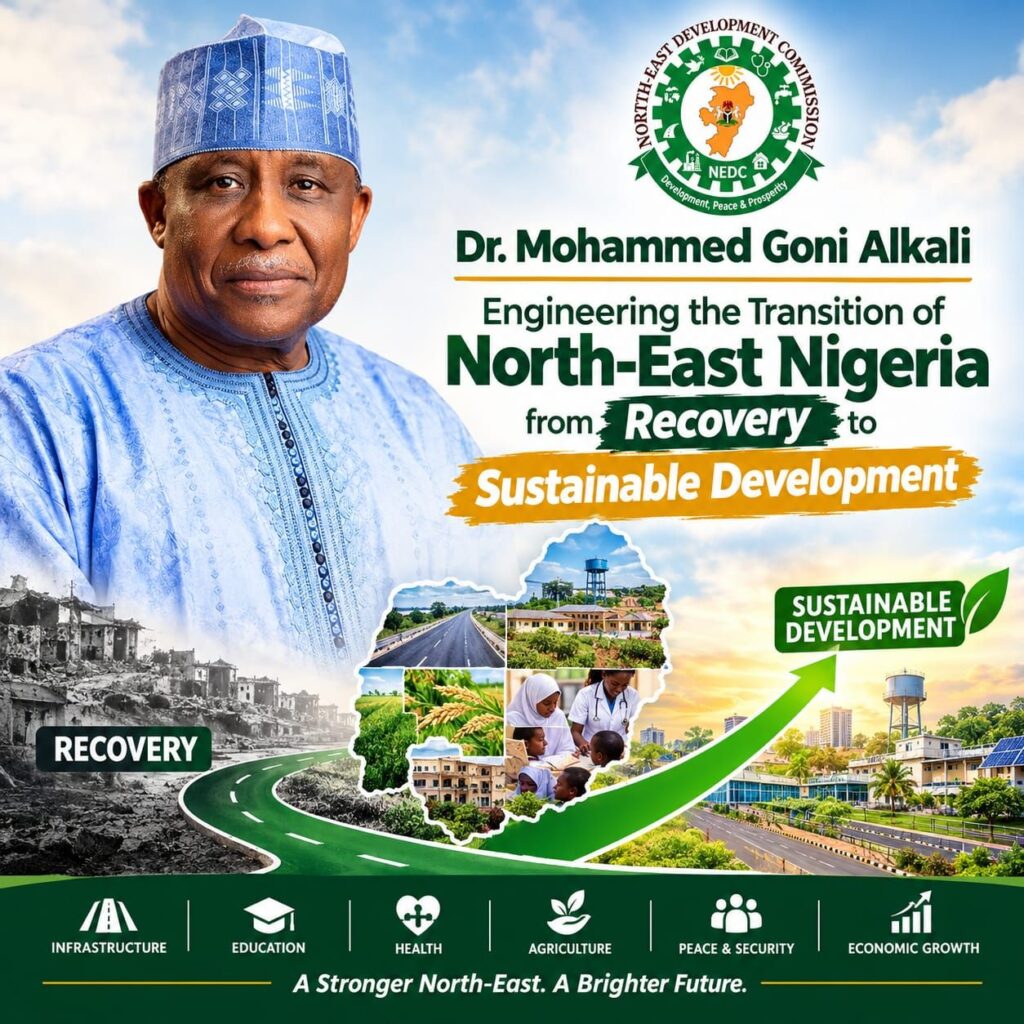
By strengthening development coordination and prioritising community recovery, Dr. Mohammed G. Alkali’s stewardship of the North-East Development Commission places institutional performance and regional transformation at the heart of the North-East’s development agenda.
At a time when Nigeria’s North-East continues to confront the far-reaching consequences of insecurity, displacement, damaged infrastructure and disrupted livelihoods, the leadership of the North-East Development Commission (NEDC) remains critical to the region’s reconstruction and long-term recovery. At the helm of this responsibility is Dr. Mohammed G. Alkali, Managing Director and Chief Executive Officer of the Commission, whose stewardship is associated with the broader drive to strengthen development interventions, improve institutional coordination and advance a more resilient and prosperous North-East.
The significance of this responsibility extends beyond the delivery of individual projects. It lies in the challenge of building an effective development institution capable of translating policy priorities into practical outcomes for millions of people across Borno, Adamawa, Yobe, Gombe, Taraba and Bauchi states.
For a region where the demand for essential infrastructure, accessible healthcare, quality education, economic opportunities and community rehabilitation remains substantial, the test of leadership is clear: how effectively can development programmes improve people’s lives, restore confidence and establish a durable foundation for sustainable prosperity?
It is against this backdrop that the theme of “A Distinguished Legacy of Visionary Leadership, Dedicated Service and Institutional Transformation” assumes particular significance. It captures the broader expectations surrounding the NEDC’s mandate and the importance of leadership that combines strategic vision with accountability, effective implementation and measurable development outcomes.
A Strategic Vision for Regional Reconstruction
The reconstruction of the North-East requires a comprehensive approach that recognises the interconnected nature of security, infrastructure, social welfare and economic development. Roads cannot deliver their full economic value without productive communities, while schools, hospitals and other public facilities must be supported by adequate services, skilled personnel and sustainable maintenance arrangements.
This reality makes development coordination a central responsibility of the NEDC. Under Dr. Alkali’s leadership, the Commission’s wider development agenda is framed around the need to move beyond isolated interventions towards a coordinated approach that addresses immediate community needs while laying the groundwork for long-term economic recovery.
Such an approach is particularly relevant to communities affected by prolonged insecurity, population displacement and the destruction of essential public infrastructure. For residents returning to their communities, reconstruction is not simply about rebuilding physical structures. It also involves restoring access to education, healthcare, clean water, livelihood opportunities and the basic services necessary for dignified living.
The Commission’s role is therefore significant in supporting the transition from emergency recovery to sustainable development. This requires identifying priority needs, coordinating interventions across relevant institutions and ensuring that investments contribute to the wider social and economic objectives of the region.
Infrastructure Development as a Foundation for Economic Growth
Infrastructure remains one of the most important drivers of regional recovery. Reliable roads improve connectivity between communities and markets, facilitate the movement of goods and services, and support access to schools, hospitals and administrative centres. Similarly, investments in electricity, water supply and public facilities can create an enabling environment for businesses, farmers, artisans and other economic actors.
For the North-East, where years of insecurity have disrupted transportation networks and weakened local economies, infrastructure development carries implications that extend far beyond construction. Properly planned and maintained projects can help reconnect communities, reduce barriers to trade and strengthen the relationship between rural production centres and urban markets.
The NEDC’s infrastructure priorities must consequently be assessed not only by the number of projects delivered but also by their usefulness, durability and impact on the communities they serve.
Under Dr. Alkali’s stewardship, the broader expectation is that development investments will support a more connected region in which public infrastructure contributes directly to economic activity, social inclusion and improved living conditions.
Achieving this objective requires rigorous project supervision, appropriate technical standards, transparent procurement processes and continuous monitoring. It also requires ensuring that projects are selected according to clearly established community needs rather than treated as ends in themselves.
Ultimately, the value of infrastructure lies in its ability to serve people, stimulate economic activity and remain functional long after construction has been completed.
Human Capital Development: Investing in the Region’s Future
No reconstruction programme can achieve lasting success without investing in people. Education, vocational training, healthcare and skills development are essential to rebuilding communities and preparing younger generations to participate meaningfully in the region’s economic future.
The North-East has a substantial population of young people whose potential can become a powerful driver of innovation, entrepreneurship and productivity when supported by appropriate opportunities. However, unemployment, disrupted schooling, limited access to technical training and the consequences of displacement can prevent many young people from fully contributing to development.
This makes human capital development an important consideration in the NEDC’s regional recovery agenda.
Investments in educational facilities can improve access to learning, while technical and vocational training can equip young people with practical skills relevant to construction, electrical installation, fabrication, renewable energy, transportation and other productive sectors.
The effectiveness of these interventions, however, depends on their connection to real economic opportunities. Training programmes are more likely to produce lasting benefits when they respond to labour-market needs, provide practical experience and create pathways towards employment, entrepreneurship or further professional development.
Healthcare infrastructure is equally important. Communities recovering from conflict and displacement need accessible and reliable health services, including maternal and child healthcare, preventive care and essential medical support. The availability of functional health facilities can improve public welfare and strengthen the resilience of households facing economic and social pressures.
A development strategy that places people at its centre must therefore consider education, healthcare and skills acquisition as long-term investments rather than isolated social interventions.
Rebuilding Livelihoods and Strengthening Economic Resilience
The economic consequences of prolonged insecurity have been particularly severe for farmers, traders, small-business owners, artisans and households whose livelihoods depend on stable markets and community networks.
For many residents, reconstruction becomes meaningful when they can return to productive activity, earn a dependable income and provide for their families. This underscores the importance of linking physical reconstruction with livelihood restoration and local economic development.
Agriculture remains central to the economic life of many communities across the North-East. Supporting agricultural recovery can involve improving access to productive inputs, strengthening rural infrastructure, facilitating market access and encouraging value addition through agro-processing. When coordinated effectively with other development partners, these measures can contribute to food security, household income and employment generation.
Small and medium-sized enterprises also have an important role to play. Local businesses create jobs, provide essential services and circulate income within communities. Interventions that improve access to skills, infrastructure and appropriate enterprise support can help strengthen the capacity of these businesses to survive and expand.
For the NEDC, the wider challenge is to ensure that reconstruction investments complement the productive capacities of local communities. Development projects should create opportunities for local participation, encourage responsible private-sector engagement and help communities build greater economic independence.
The long-term objective is a region whose economic prospects are not defined solely by its recovery from conflict but increasingly by the productivity, enterprise and creativity of its people.
Youth Empowerment and the Promise of Emerging Industries
The future prosperity of the North-East will depend partly on the region’s ability to prepare its young population for changing economic realities. Beyond traditional sectors, emerging industries offer opportunities to develop technical expertise, create new businesses and expand the range of employment options available to young people.
Renewable energy, electric mobility, modern construction, digital services and technical manufacturing are among the areas that can support new skills and enterprise opportunities when introduced through appropriate policies and investments.
The development of electric mobility and related technical capabilities, for example, can open pathways for training in vehicle maintenance, electrical systems, fabrication, assembly and other specialised fields. Such initiatives can also encourage young people to acquire skills that are relevant to the evolving demands of the wider economy.
However, the sustainability of these opportunities depends on more than the introduction of new technologies. It requires reliable power, access to technical instruction, suitable infrastructure, viable markets and partnerships with organisations capable of supporting production and maintenance.
The NEDC’s development agenda can contribute to this transition by promoting skills acquisition and encouraging initiatives that connect young people to emerging sectors. The ultimate measure of success should be the number of participants who acquire useful competencies, secure employment, establish viable enterprises or contribute to the growth of local industries.
For Dr. Alkali’s leadership, the broader strategic opportunity lies in supporting a development environment in which young people are equipped not only to participate in recovery but also to shape the region’s future economic direction.
Institutional Reform and the Importance of Effective Coordination
The effectiveness of a development commission depends not only on the scale of its resources but also on the quality of the institutions responsible for deploying them.
Strong institutional performance requires clear priorities, competent personnel, reliable administrative processes, sound financial management and an organisational culture that values professionalism. It also depends on the ability to coordinate activities with state governments, local authorities, federal institutions, development partners and community stakeholders.
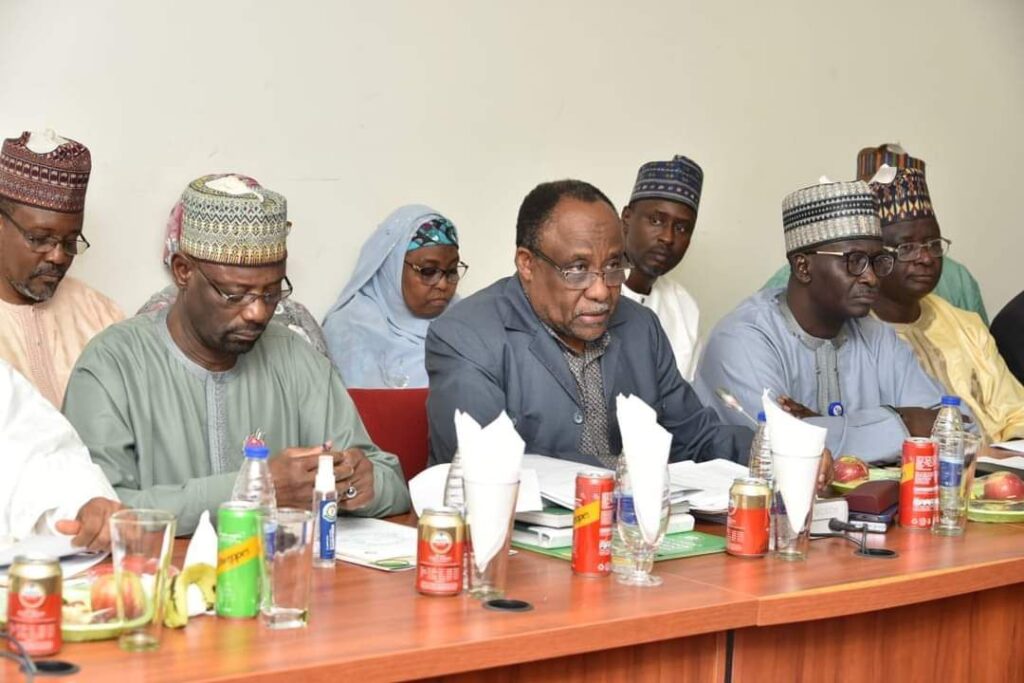
Given the scale of reconstruction required across the six North-East states, coordination is especially important. Multiple institutions may work in related sectors, making it necessary to clarify responsibilities, avoid unnecessary duplication and identify opportunities for complementary investments.
The NEDC’s effectiveness must therefore be considered in terms of how well it aligns its programmes with regional priorities, maintains implementation standards and responds to changing community needs.
Under Dr. Alkali’s stewardship, the importance of institutional development is inseparable from the Commission’s wider mission. A capable institution must be able to translate strategic plans into implementable projects, track expenditure, assess performance and make adjustments when interventions fail to deliver their intended results.
Institutional transformation is not achieved through administrative changes alone. It is demonstrated through improved delivery, stronger internal controls, clearer accountability and a consistent ability to produce results.
For a public institution entrusted with a major regional recovery mandate, these principles are essential to sustaining public confidence and ensuring that development resources achieve their intended purpose.
Accountability, Transparency and Measurable Results
Public confidence in development institutions is strengthened when commitments are supported by verifiable evidence of progress. For the NEDC, this means ensuring that projects are appropriately planned, properly executed and assessed against clearly defined objectives.
Project completion figures are useful, but they do not tell the whole story. A completed school must be evaluated in terms of its usability, learning environment and contribution to educational access. A health facility must be assessed by its functionality, staffing and ability to provide services. A road project should be considered in relation to connectivity, durability and the economic activities it supports.
Similarly, youth empowerment initiatives should be measured by the skills acquired and the opportunities created, while livelihood programmes should be evaluated according to their contribution to household resilience and productive activity.
A strong monitoring and evaluation framework can help the Commission identify successful interventions, address implementation weaknesses and improve the design of future projects. Regular reporting can also enable citizens and other stakeholders to understand what has been achieved, what remains outstanding and how public resources are being used.
For leadership to leave a durable institutional legacy, accountability must be embedded in the development process. This includes setting realistic targets, publishing reliable information where appropriate and ensuring that lessons from implementation inform subsequent decisions.
Such measures are important not only for public trust but also for improving value for money and ensuring that development investments produce lasting benefits.
Community Participation and Inclusive Development
Sustainable reconstruction cannot be achieved through a purely top-down approach. Communities are often best positioned to identify their most pressing needs, explain the challenges affecting local projects and determine whether interventions are producing meaningful improvements.
Engaging traditional institutions, religious leaders, women’s groups, youth associations, civil society organisations and other community representatives can help ensure that development priorities reflect local realities.
Community participation can also improve project ownership. When residents understand the purpose of an intervention and have opportunities to contribute to its planning and monitoring, they are better positioned to support its sustainability and report implementation challenges.
Inclusivity is particularly important in communities affected by displacement and economic hardship. Women, children, persons with disabilities, displaced households and other vulnerable groups may face distinct barriers to accessing essential services and livelihood opportunities.
Development planning should therefore consider who benefits from a project, who may be excluded and what adjustments are needed to ensure that the intervention reaches those most in need.
For the NEDC, community-centred development offers a practical way to strengthen the connection between institutional decisions and everyday realities. It can also help ensure that reconstruction is understood not merely as a government programme but as a shared process involving public institutions and the people they serve.
Environmental Sustainability and Climate Resilience
The long-term success of regional development also depends on how effectively infrastructure and livelihood programmes respond to environmental challenges.
Across the North-East, climate variability, water stress, land degradation and desertification can place additional pressure on communities already facing economic and social difficulties. These challenges have implications for agriculture, access to water, public health and the durability of development investments.
Infrastructure planning must therefore consider environmental conditions from the outset. Drainage systems, water facilities, roads, public buildings and energy projects require designs that account for local conditions and reduce the risk of premature deterioration.
Renewable energy can also support development by expanding access to electricity in appropriate locations and reducing dependence on less sustainable sources of power. However, these systems require proper installation, maintenance arrangements and realistic plans for long-term operation.
In agriculture, improved water management, climate-resilient practices and sustainable land use can help strengthen the capacity of households to withstand environmental shocks.
Integrating environmental considerations into reconstruction is consequently not an optional addition to development planning. It is part of protecting public investments, reducing future costs and ensuring that present-day interventions remain useful for future generations.
From Recovery to Sustainable Prosperity
The broader development challenge confronting the North-East is how to move from repairing the consequences of crisis towards building a more productive, inclusive and resilient regional economy.
Recovery remains necessary, but recovery alone is not sufficient. A durable transformation requires functioning institutions, reliable infrastructure, accessible social services, productive livelihoods and an enabling environment for private enterprise.
This transition demands continuity of planning and implementation. Projects must be connected to wider regional priorities, while investments in infrastructure should complement efforts to strengthen education, healthcare, skills development and economic activity.
It also requires a realistic understanding of the scale of the task. The needs of the six North-East states are extensive, and no single institution can address every development challenge independently. Progress depends on sustained collaboration among federal and state governments, local authorities, private-sector organisations, development partners and communities.
Within this framework, the NEDC has an important role in supporting coordination, directing attention towards regional priorities and helping to establish the conditions for sustainable development.
The significance of Dr. Alkali’s stewardship should therefore be assessed against the Commission’s ability to deliver practical results, strengthen institutional capacity and contribute to improvements that communities can experience and verify.
The Legacy of Leadership Must Be Measured by Lasting Impact
Leadership in a development institution is ultimately judged by the quality of its decisions, the effectiveness of its systems and the lasting value of the results it helps produce.
For Dr. Mohammed G. Alkali, the responsibilities associated with leading the NEDC extend across a region whose reconstruction needs remain considerable. Meeting these responsibilities requires strategic direction, administrative discipline, collaboration and a consistent commitment to ensuring that development interventions respond to the needs of the people.
A distinguished leadership legacy cannot rest on vision alone. It must be reinforced by effective implementation, responsible management of public resources, measurable progress and institutions capable of sustaining achievements beyond the tenure of any individual officeholder.
The most meaningful indicators of transformation will be communities with better access to essential services, young people equipped with relevant skills, businesses able to expand, infrastructure that remains functional and public institutions that demonstrate professionalism and accountability.
These are the outcomes that can turn reconstruction into genuine development and convert development investments into lasting public value.
As the North-East continues its journey towards recovery and prosperity, the NEDC’s contribution will remain important to the region’s future. The central task is to ensure that strategic plans translate into tangible improvements in people’s lives and that the benefits of development reach communities across all six states.
Ultimately, the enduring measure of Dr. Mohammed G. Alkali’s leadership at the NEDC will be the extent to which institutional performance, coordinated reconstruction and sustainable development translate into stronger communities, expanded opportunities and a more resilient North-East.