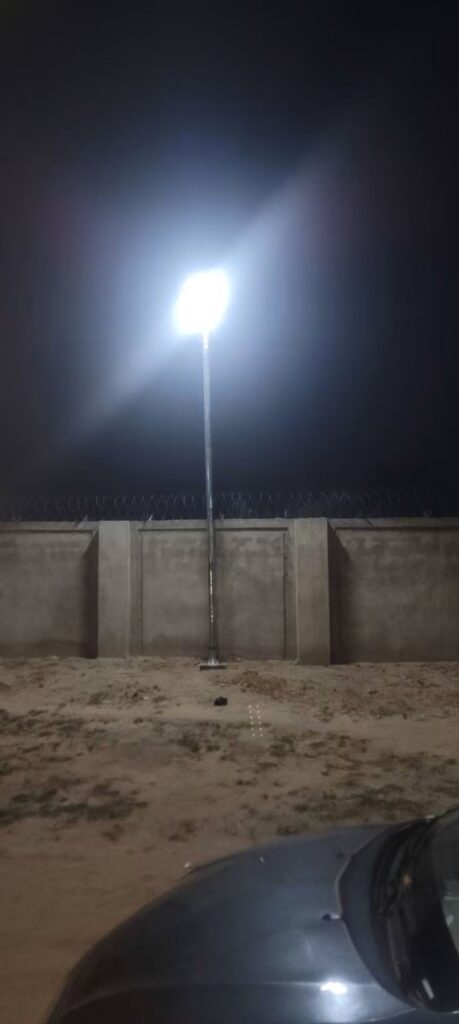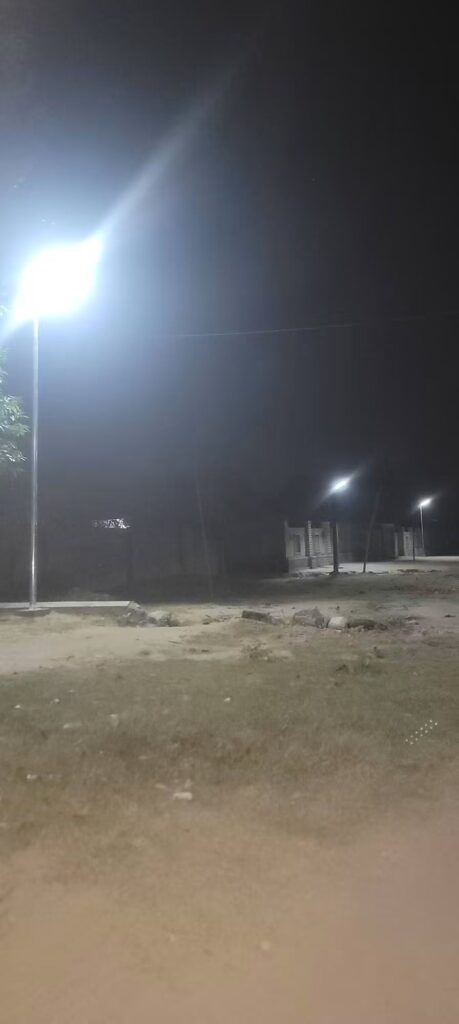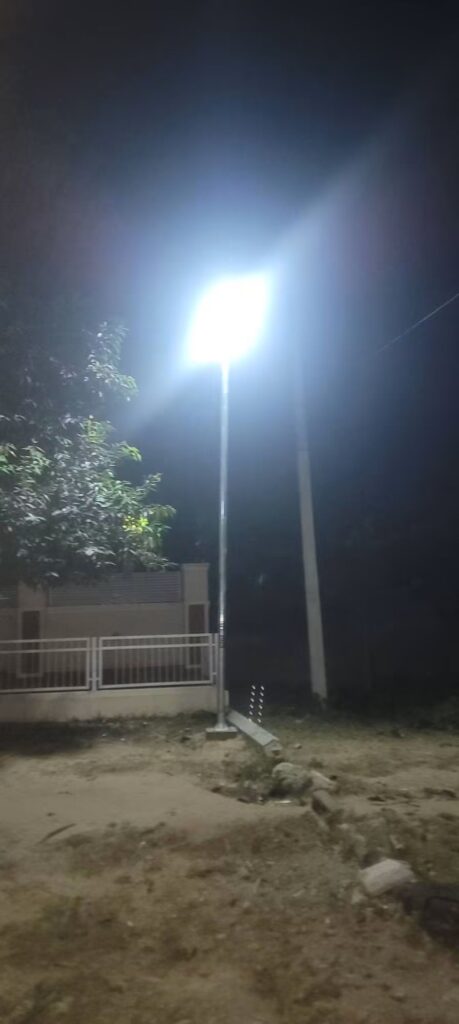
The Member representing Maiduguri Metropolitan Federal Constituency in the House of Representatives, Rt. Hon. Abdulkadir Rahis, has facilitated the provision and completed installation of 150 solar-powered streetlights across several communities in Maiduguri, marking a grassroots infrastructure intervention aimed at improving night-time visibility, supporting community safety and enhancing residents’ quality of life.
The completed project covers strategic streets and neighbourhoods across Bolori II, Maisandari, Bolori I, Gwange III, Limanti, Gwange I and Lamisula, extending public lighting to residential areas and community corridors where improved illumination can support safer movement and everyday activities after sunset.
The installation represents a practical constituency development intervention, bringing solar-powered public lighting closer to residents and demonstrating the importance of community-focused infrastructure in improving urban living conditions.
Completed Installations Across Multiple Communities
The 260 solar streetlights have been fully installed across the identified locations, providing lighting infrastructure to several neighbourhoods within Maiduguri Metropolitan Federal Constituency.
Bolori II and Surrounding Communities
In Bolori II and surrounding areas, the completed installations cover Bayan Texaco, Umarari–Albani Street and Goni Damgari.
The provision of streetlights in these locations is expected to improve visibility along residential streets, support pedestrians and motorists, and provide a better-lit environment for residents going about their activities during evening hours.
Maisandari Ward
Maisandari Ward is among the major beneficiaries of the completed intervention, with installations covering the following locations:
- Moduganari
- Line Eyn Church
- Line Makabarta
- Shuwari
- Mohammed Kauji Street, along Damboa Road
The completed installations extend the benefits of public lighting across multiple neighbourhoods, helping improve visibility along local streets and access routes used by residents, traders and other road users.
Bolori I
In Bolori I, the streetlights have been installed along Alhaji Gambo Street and in the area opposite Bakura Bread.
The completed installations provide additional lighting infrastructure intended to make the surrounding environment more accessible and improve visibility for residents, pedestrians and motorists.
Gwange III Ward
The Forestry Quarters in Gwange III Ward is also covered by the completed project.
The installation provides public lighting for the neighbourhood, helping residents navigate their surroundings more easily after dark and improving visibility along residential routes.
Limanti Ward
In Limanti Ward, the completed installation covers the Adam Kolo Street to Kalari corridor.
The intervention provides additional illumination along this route, supporting night-time movement and improving visibility for residents and other road users.
Gwange I Ward
The completed project also extends to Gwange I, covering Zango Street, Kwana Bakwai, Zawiya Street and Liberia Street.
The inclusion of these locations further broadens the reach of the intervention, extending public lighting to additional residential streets and neighbourhoods within the constituency.
Lamisula
In Lamisula, the completed installation covers Wulari–Jurusalam Street.
The streetlighting infrastructure is intended to improve visibility along the route, support residents’ movement after sunset and provide a better-lit environment for everyday community activities.
Improving Night-Time Visibility and Community Safety
The completion of the 260 solar streetlights provides an important opportunity to improve public lighting across the beneficiary communities.
Well-lit streets can help pedestrians identify obstacles, enable motorists to see their surroundings more clearly and make neighbourhood routes easier to navigate. Improved illumination can also benefit residents who travel for work, education, business, religious activities and other essential engagements during evening hours.
Although streetlights alone cannot eliminate insecurity, functional public lighting can complement other community safety measures by improving visibility in public spaces and reducing poorly illuminated areas.
For communities where residents depend on local streets and connecting routes for their daily activities, the availability of functioning streetlights represents a practical improvement to the neighbourhood environment.
Supporting Local Businesses and Community Life
Beyond public lighting, the completed project has the potential to support local economic activities across the beneficiary locations.
Small business owners, roadside vendors, traders and service providers may benefit from better-lit surroundings, while residents can find it easier to access shops and other essential services during evening hours.
Improved illumination can also encourage more convenient movement within neighbourhoods, particularly for people returning home after work or attending evening engagements.
The use of solar-powered technology provides an alternative to conventional grid electricity for street lighting, helping reduce dependence on continuous grid power. Sustaining these benefits will, however, require proper maintenance, functioning batteries and timely repairs when necessary.
Constituency Representation and Grassroots Development
The completion of the project highlights the value of constituency interventions that address practical community needs through visible and accessible infrastructure.
As the representative of Maiduguri Metropolitan Federal Constituency, Rt. Hon. Abdulkadir Rahis has facilitated the provision of streetlighting infrastructure across multiple communities, with the completed installations extending beyond a single neighbourhood to cover several strategic locations.
The intervention illustrates how grassroots development can be advanced through projects that respond to everyday concerns and provide public benefits at the community level.
Development is not measured exclusively by large-scale infrastructure. Smaller, well-targeted interventions can also make a meaningful difference when they address identified needs, reach multiple communities and remain functional over time.
By extending the completed installations across Bolori II, Maisandari, Bolori I, Gwange III, Limanti, Gwange I and Lamisula, the project broadens access to public lighting for residents in different parts of the constituency.
Sustaining the Benefits of the Completed Project
With the installations completed, attention should now focus on ensuring that the streetlights continue to function effectively.
Routine inspections, timely repairs, battery replacement where necessary and protection against vandalism will be important to the long-term success of the project.
Community members can also contribute by protecting the installations and reporting damaged or malfunctioning units to the appropriate authorities. Such cooperation will help preserve the infrastructure and ensure that residents continue to benefit from the investment.
The lasting impact of the intervention will ultimately depend not only on the completion of the installations but also on their continued functionality and proper maintenance.
In conclusion, the completed installation of 260 solar-powered streetlights facilitated by Rt. Hon. Abdulkadir Rahis represents a grassroots infrastructure intervention aimed at improving public lighting and supporting community well-being across Maiduguri Metropolitan Federal Constituency.
With installations completed across identified locations in Bolori II, Maisandari, Bolori I, Gwange III, Limanti, Gwange I and Lamisula, the project extends the benefits of solar-powered streetlighting to multiple neighbourhoods.
The intervention underscores the importance of constituency development initiatives that respond to residents’ everyday needs. As the lights continue to serve the beneficiary communities, their effective maintenance will be essential to sustaining improved visibility, supporting night-time movement and contributing to a better-lit urban environment across Maiduguri.