NEDC’s Electric Vehicle Initiative Signals a New Era of Innovation, Youth Employment and Sustainable Development Under Dr Mohammed G. Alkali
The North-East region of Nigeria is approaching an exciting chapter in its development journey as the prospect of electric mobility continues to generate interest and anticipation. With the North-East Development Commission (NEDC) pursuing initiatives aimed at rebuilding the region, strengthening its economy and creating opportunities for its people, the emerging electric vehicle (EV) initiative represents a promising step towards innovation, skills development, employment generation and a more sustainable transportation future.
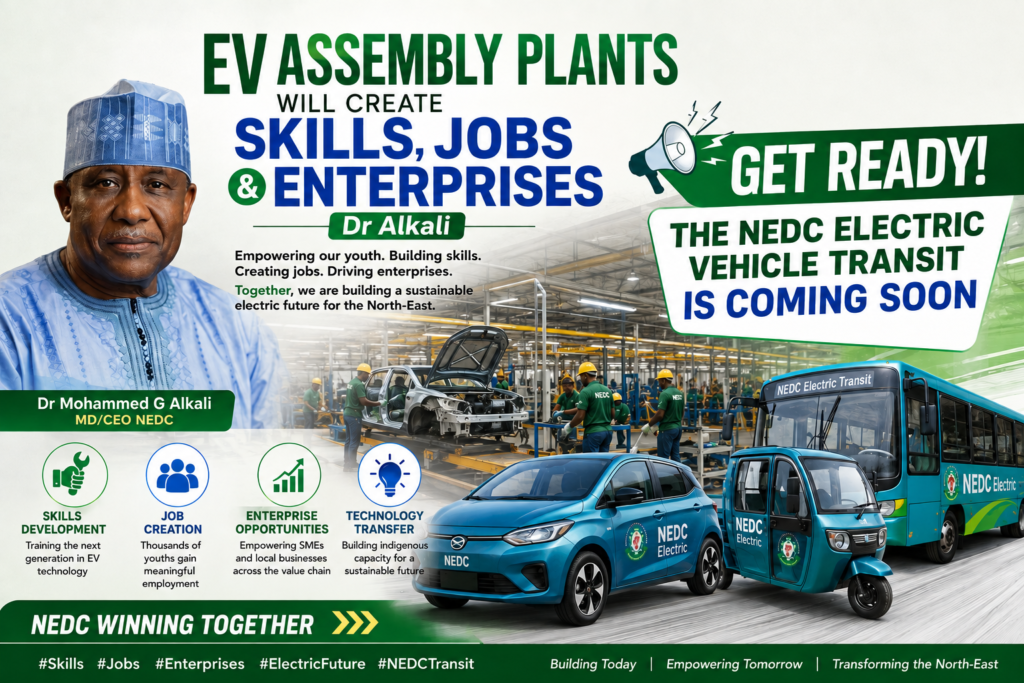
GET READY! THE FUTURE OF ELECTRIC MOBILITY IN THE NORTH-EAST IS COMING SOON!
This message captures the growing anticipation surrounding the NEDC’s electric mobility initiative and the possibilities it could unlock for millions of people across Borno, Adamawa, Yobe, Gombe, Taraba and Bauchi states.
Under the leadership of Dr Mohammed G. Alkali, Managing Director and Chief Executive Officer of the North-East Development Commission, the Commission continues to pursue a development vision that goes beyond immediate reconstruction. The broader objective is to create the foundations for sustainable prosperity by investing in infrastructure, developing human capacity, encouraging innovation and supporting economic activities capable of improving livelihoods across the region.
Electric mobility, if successfully implemented at scale, could become another important component of this transformation.
Beyond Transportation: A New Opportunity for the North-East
Electric vehicles represent more than an alternative to conventional petrol- and diesel-powered transportation. Around the world, the development of electric mobility is creating new opportunities in vehicle assembly, technical maintenance, charging infrastructure, battery technology, renewable energy integration and specialised vocational training.
For the North-East, these possibilities are particularly significant.
The region has an enormous population of young people whose energy, creativity and technical abilities can contribute to economic growth if they receive the right training and opportunities. An electric mobility programme could help connect these young people to emerging industries while supporting the development of technical skills that will remain valuable in the years ahead.
Rather than viewing transportation solely as the movement of people and goods, the region can begin to explore how the sector can become a platform for industrial development, entrepreneurship and job creation.
This is where the potential of the NEDC’s electric vehicle initiative becomes particularly compelling.
With appropriate investment, partnerships and implementation, electric mobility could stimulate demand for trained technicians, electrical engineers, vehicle maintenance specialists, charging station operators, software professionals and other skilled workers. It could also create opportunities for small and medium-sized businesses involved in spare parts, logistics, servicing and related support industries.
The resulting benefits could extend beyond the vehicles themselves to the wider economic ecosystem required to sustain their operation.
Dr Mohammed G. Alkali and the Vision of Development Through Innovation
The leadership of Dr Mohammed G. Alkali has been associated with a development agenda focused on recovery, reconstruction and the creation of lasting opportunities across the North-East.
For a region that has endured years of insecurity, displacement, damaged infrastructure and economic disruption, development requires more than restoring what was lost. It also requires preparing communities for new economic realities and identifying opportunities capable of supporting long-term prosperity.
Electric mobility offers an opportunity to consider precisely that kind of forward-looking development.
The potential significance of the initiative lies not merely in the introduction of electric vehicles but in the possibilities for developing local skills, encouraging technical partnerships, strengthening transportation services and expanding the region’s participation in emerging industries.
Under Dr Alkali’s leadership, the NEDC has an opportunity to help position the North-East to benefit from technological changes that are reshaping transportation and energy systems around the world.
The ultimate measure of success, however, will be the extent to which these opportunities translate into practical benefits for ordinary citizens, particularly young people, entrepreneurs, transport operators and communities seeking sustainable sources of income.
A successful electric mobility programme must therefore be understood as both a transportation initiative and a potential investment in the region’s human and economic capital.
Electric Vehicle Assembly: The Promise of Industrial Development
One of the most exciting aspects of the electric mobility vision is its potential connection to vehicle assembly and technical development.
Vehicle assembly can support a network of complementary activities, including component handling, quality assurance, electrical systems installation, maintenance, diagnostics and technical training. Where supported by appropriate investment and local capacity, such activities can contribute to the gradual development of an industrial ecosystem.
For the North-East, this presents an opportunity to explore how new transportation technologies can support economic diversification.
The region’s economy can benefit when development initiatives encourage the growth of productive industries rather than relying exclusively on the movement of finished products into local markets.
A properly structured electric vehicle programme could create pathways for technical collaboration, vocational education, enterprise development and the transfer of specialised knowledge.
It could also encourage young people to consider careers in engineering, electrical technology, renewable energy and modern vehicle maintenance.
Such possibilities require careful planning, reliable infrastructure, access to electricity, sustainable financing and partnerships with experienced manufacturers. They also depend on ensuring that training programmes respond to the actual technical requirements of the industry.
Nevertheless, the opportunity is worth pursuing because the benefits could extend well beyond the initial deployment of electric vehicles.
The bigger vision is not simply to bring electric vehicles to the North-East, but to help build the skills, businesses and infrastructure that can make electric mobility a sustainable part of the region’s future.
Youth Employment: Turning Potential into Productivity
Youth employment remains one of the most important considerations in the North-East’s development journey.
Across the region, young people need access to opportunities that enable them to earn a living, develop professional skills and contribute meaningfully to their communities.
Electric mobility could provide a platform for addressing some of these needs through technical education, apprenticeship programmes and the development of businesses connected to the transportation industry.
Potential areas of opportunity include:
Technical training: Preparing young people to maintain, diagnose and repair electric vehicles.
Electrical engineering: Developing skills in vehicle electrical systems, charging equipment and power management.
Charging infrastructure: Creating opportunities in the installation, operation and maintenance of charging facilities.
Entrepreneurship: Encouraging businesses offering vehicle servicing, logistics, technical supplies and related services.
Renewable energy: Exploring opportunities to integrate solar power and other appropriate energy solutions into charging infrastructure.
Digital technology: Developing skills in vehicle diagnostics, fleet monitoring and modern transportation management systems.
These are potential opportunities rather than guaranteed employment outcomes. Their realisation will depend on the scale of implementation, the availability of investment and the effectiveness of local training and recruitment arrangements.
Even so, the possibilities demonstrate why electric mobility deserves attention as part of a broader economic development strategy.
When young people are equipped with relevant skills, they become better positioned to participate in emerging industries and contribute to the economic resilience of their communities.
For the NEDC, the opportunity is to connect technological innovation with practical human development so that the benefits of modernisation can reach beyond major institutions and extend to ordinary citizens.
A Cleaner and More Sustainable Transportation Future
Environmental sustainability is another important consideration in the development of electric mobility.
Electric vehicles produce no exhaust emissions from their tailpipes while driving, potentially helping to improve local air quality compared with conventional vehicles. Their overall environmental benefits, however, depend partly on how the electricity used to charge them is generated, the efficiency of the vehicles and the management of their batteries throughout their life cycle.
For the North-East, a carefully planned transition to electric transportation could provide an opportunity to explore cleaner mobility solutions while strengthening the region’s technical capacity.
The integration of appropriate renewable energy systems, particularly solar power where technically and economically viable, could also be considered when developing charging infrastructure.
Such an approach would require attention to electricity availability, charging locations, maintenance arrangements, battery safety and the long-term costs of operating electric vehicles.
These practical considerations are essential. A sustainable electric mobility programme must be designed not only to introduce new technology but also to ensure that the technology remains dependable, affordable and suitable for local conditions.
With proper planning, electric mobility could contribute to a more diversified transportation system while supporting broader conversations about energy efficiency and environmental responsibility.
Improving Transportation and Supporting Economic Activities
Transportation plays a central role in economic development.
Farmers depend on transport to move agricultural produce to markets. Traders require reliable mobility to distribute goods. Workers need dependable ways to reach their workplaces, while businesses depend on transportation to connect suppliers, customers and commercial centres.
Electric vehicles could contribute to these activities where their operating characteristics, purchase costs, charging requirements and maintenance arrangements make them suitable.
Electric buses and other passenger vehicles, for example, could offer potential benefits for organised fleets operating on predictable routes with access to dependable charging facilities.
Electric tricycles and smaller commercial vehicles could also be considered for selected applications, provided that their range, carrying capacity, durability and total operating costs meet users’ needs.
For transport operators, the relevant question is not simply whether a vehicle uses electricity instead of petrol or diesel. It is whether the vehicle can deliver dependable service at a competitive overall cost.
That assessment must account for the initial purchase price, charging expenses, battery life, repairs, spare parts and the availability of technical support.
If these factors are properly addressed, electric mobility could create opportunities to improve transportation services and support commercial activities across selected areas of the North-East.
The Commission’s challenge and opportunity will be to ensure that any deployment is informed by local needs, sound economic analysis and a realistic plan for long-term operation.
Partnerships and Skills Development: Building a Strong Foundation
The success of electric mobility depends on collaboration.
Vehicle manufacturers, technical institutions, energy providers, government agencies, private investors and local businesses all have potential roles to play in establishing a sustainable ecosystem.
Manufacturers can contribute technical expertise and training. Educational institutions can help develop relevant curricula and practical programmes. Energy providers can support charging infrastructure, while financial institutions and private investors can explore suitable financing arrangements.
Local businesses can contribute maintenance services, logistics, distribution and other support functions.
For the North-East, partnerships of this nature could create opportunities to develop expertise gradually while ensuring that local participation is built into the process.
Technical training should be particularly important. Electric vehicles use high-voltage electrical systems and specialised components that require appropriate safety procedures and professional competence.
Consequently, any programme intended to develop local capacity should provide structured training, recognised competencies and access to the equipment required for safe maintenance.
A strong technical foundation would help build public confidence, support vehicle reliability and create a pathway for young people to participate meaningfully in the emerging sector.
The objective should be to ensure that the North-East does not merely become a destination for electric vehicles but also develops the human capacity needed to operate, maintain and support them.
Making Electric Mobility Accessible and Affordable
While the prospects are encouraging, electric mobility also presents challenges that require honest consideration.
The initial cost of electric vehicles can be a barrier for individuals and businesses. Charging infrastructure may be limited, while electricity supply, spare parts availability and battery replacement costs can influence the long-term viability of electric transportation.
These challenges are particularly important in communities where purchasing power is limited and transport operators must carefully manage daily expenses.
A successful programme will therefore need to consider affordability alongside technological innovation.
Potential measures could include carefully designed fleet arrangements, partnerships with financial institutions, appropriate financing options and phased deployment in locations where charging and maintenance services can be provided reliably.
Public awareness will also be essential. Potential users need clear information about charging, operating costs, battery performance, safety and vehicle maintenance.
Rather than assuming that electric vehicles will automatically be cheaper in every circumstance, their costs and benefits should be assessed against the specific transportation needs of the communities they are intended to serve.
A gradual, evidence-based approach could help identify the most suitable applications and build public confidence as the programme develops.
From Recovery to Prosperity
The broader significance of the NEDC’s electric mobility initiative becomes clearer when viewed within the North-East’s long-term development needs.
Recovery remains important, but sustainable prosperity requires the development of economic opportunities capable of supporting communities over time.
Roads, schools, healthcare facilities and other infrastructure are essential foundations of development. Equally important is the ability of people to acquire useful skills, establish businesses, access employment and participate in productive economic activities.
Electric mobility could complement these wider priorities by connecting infrastructure development with technical innovation and potential industrial growth.
It offers a way to consider how the region can participate in emerging sectors while addressing practical transportation needs.
Under the leadership of Dr Mohammed G. Alkali, the NEDC has an opportunity to help connect these different elements through careful planning, strategic partnerships and an emphasis on measurable outcomes.
The strongest legacy of such an initiative would not be determined by publicity alone. It would be reflected in the quality of the programme, the opportunities created for local people, the reliability of the vehicles deployed and the sustainability of the supporting infrastructure.
Ultimately, the goal should be to ensure that innovation serves the people and contributes to lasting improvements in their economic and social circumstances.
The Six States, One Shared Future
The North-East comprises six states with different economic strengths, transportation needs, infrastructure conditions and development priorities.
A regional electric mobility strategy would need to recognise these differences while identifying opportunities for cooperation.
Urban transportation, commercial logistics, institutional fleets and selected public services may offer different levels of suitability for electric vehicles.
A phased approach could help determine which applications deliver the greatest value, where charging infrastructure is most practical and how local technical capacity can be developed.
It would also allow lessons from early implementation to inform future expansion.
Such an approach could promote regional collaboration while ensuring that investment decisions are guided by evidence, practical needs and the long-term interests of communities.
The aspiration is a North-East where technological innovation complements reconstruction, where young people can acquire skills relevant to emerging industries and where businesses have opportunities to participate in a changing economy.
This is the broader promise behind the anticipation surrounding electric mobility.
Looking Ahead: The Future Is Approaching
The phrase “GET READY! THE FUTURE OF ELECTRIC MOBILITY IN THE NORTH-EAST IS COMING SOON!” is more than an attention-grabbing headline. It expresses anticipation for a development pathway that could connect transportation, technology, environmental responsibility and economic opportunity.
For Dr Mohammed G. Alkali and the North-East Development Commission, the important task is to translate that promise into practical, sustainable and measurable benefits.
The journey will require investment, technical expertise, strong partnerships, infrastructure and a commitment to ensuring that local communities participate in the opportunities created.
It will also require transparency about implementation timelines and clear communication about what is planned, what is underway and what has already been achieved.
If these foundations are established, electric mobility could become a valuable part of the North-East’s wider development agenda.
Young people could gain access to new technical skills. Entrepreneurs could explore opportunities in emerging services. Transport operators could assess cleaner alternatives for suitable routes and fleets. Institutions could learn from new approaches to transportation and energy management.
These outcomes will depend on effective implementation, but the potential makes the initiative worthy of serious attention.
As the North-East continues its journey from recovery towards sustainable prosperity, the development of new industries and modern transportation solutions could help broaden the region’s economic horizons.
The message is clear: the future of mobility is changing, and the North-East has an opportunity to prepare for it.
GET READY! THE NEDC ELECTRIC MOBILITY VISION IS COMING SOON!
With strategic planning, effective partnerships and a commitment to local capacity development, electric mobility could open new doors for innovation, employment and sustainable growth across the North-East.
The ambition is to build more than a modern transportation system. It is to help create a region where innovation generates opportunities, skills translate into livelihoods and development delivers lasting value to the people.
The North-East is looking ahead. The possibilities are exciting. And the future of electric mobility deserves everyone’s attention.
NEDC: From Recovery to Prosperity