
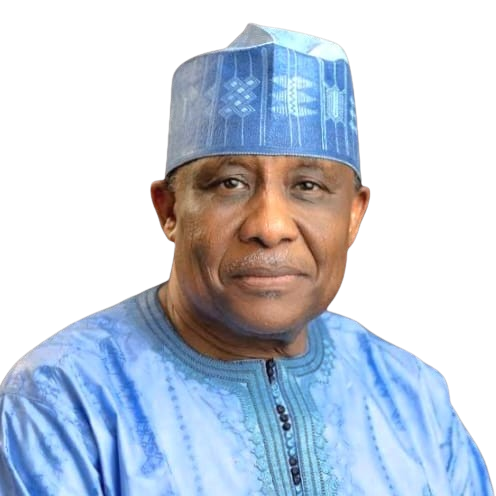
By Ibrahim Musa Mustapha
“Don’t judge a book by its cover.” I also strongly believe that posterity will ultimately judge every man by the impact he makes, the lives he touches and the legacy he leaves behind.
When it comes to Dr. Mohammed G. Alkali, Managing Director and Chief Executive Officer of the North East Development Commission (NEDC), I believe history will be kind to him.
The first time I heard about Dr. Alkali was when he was appointed Managing Director and Chief Executive Officer of NEDC. At that time, securing employment with NEDC had become a major ambition for many young people in Maiduguri. Like many others, we tried to find ways of getting our applications before the relevant authorities.
One day, a friend told us something about Dr. Alkali that stayed with me. He described him as a man of principles who could not easily be compromised.
Some people used that reputation to criticise him. But my reaction was completely different. I remember saying that I actually admired that quality. In a public institution, I believe having principles, maintaining standards and refusing to compromise important processes are qualities that should be respected.
How Our Paths Eventually Crossed
To cut a long story short, my political Boss, Rt. Hon. Abdulkadir Rahis, was fortunate to have three slots through NEDC, and I was privileged to be among the three beneficiaries.
Our CVs eventually reached Dr. Alkali’s desk. What impressed me was that, he got a personal slot from the head my current organization, which according to my experience, he considered my CV based on the requirements of the position and the organisation involved. He did not personally know me at the time.
In fact, my first personal meeting with Dr. Alkali came almost two years after I secured the job.
That experience taught me something important: sometimes, people can positively influence your life without even knowing you personally.
A Boss Who Became a Father Figure
Whenever I have had the privilege of visiting Dr. Alkali, he has consistently given me fatherly advice.
His message has always been simple: concentrate on your work, discharge your responsibilities diligently, remain patient, work hard and stay committed. He would tell me that, In Sha Allah, one day I could become somebody I never imagined becoming.
But he would always emphasise that such progress requires patience, hard work, discipline and commitment.
Beyond professional advice, he has also assisted me financially and personally on several occasions.
For that, I remain deeply grateful.
My appreciation of Dr. Alkali is therefore not based merely on what I read about him or what I see in public. It is also shaped by my personal encounters with him and the opportunities and encouragement I have received.
A Man Who Works Beyond Office Hours
One of the things that has continued to amaze me about Dr. Alkali is his work ethic.
Whether in his office or at his residences in Abuja and Maiduguri, he is constantly attending to official files, visitors and matters requiring his attention. He does not appear to see weekends and public holidays in the same way many of us do.
Even when he is extremely busy, he tries to listen to people.
He is approachable, empathetic and compassionate. He may not be able to solve every problem brought before him, but from my experience, when you present a genuine matter requiring his attention, he listens and tries to see what can be done.
That, to me, is leadership.
Principles Should Not Be Mistaken for Weakness
Nobody is perfect. Dr. Alkali, like every other human being, has his strengths and weaknesses.
However, I sometimes wonder whether some of the criticism directed at him is genuinely about his performance or whether, in certain instances, it comes from disappointed personal expectations.
There are people who approach public officials seeking financial assistance. Others seek contracts or opportunities without necessarily meeting the required conditions. When such requests are not granted, frustration can sometimes turn into criticism.
But a public institution cannot be run solely on personal relationships or individual expectations.
A leader must also protect due process, institutional standards and the interests of the wider public.
For me, refusing to compromise on established requirements should not automatically be interpreted as being unfriendly, inaccessible or uncaring.
Look Beyond the Noise
Those who believe that NEDC has underperformed should, in my humble opinion, look beyond social media narratives and examine the Commission’s mandate, development plans, completed projects and interventions across the North-East.
The North-East Stabilisation and Development Master Plan, with its 11 pillars, provides a framework for addressing the region’s enormous development challenges, from peace and agriculture to education, healthcare, infrastructure, entrepreneurship, industrialisation, trade, environmental protection and regional connectivity.
The North-East is a vast region with enormous needs.
No single administration, institution or individual can solve all its problems overnight.
But progress should be measured by what has been initiated, what has been completed, what is being sustained and what foundations are being laid for the future.
A Legacy That Goes Beyond Projects
What particularly interests me about Dr. Alkali’s leadership is that some of the initiatives being pursued have the potential to create opportunities beyond the immediate period of his tenure.
The proposed Electric Vehicle Assembly Plant, the proposed ₦30 billion NEDC–Bank of Industry development fund for MSMEs, infrastructure interventions, healthcare investments, education projects, agricultural programmes and other development initiatives have the potential to create jobs, stimulate businesses and empower young people across the region.
These are the kinds of interventions whose real impact may become even more visible years after their commencement.
A road can outlive the official who approved it.
A school can educate generations.
A hospital can save thousands of lives.
A business fund can create entrepreneurs who employ others.
And a development initiative can become the foundation upon which another generation builds.
That is why leadership should not always be judged only by immediate applause.
The Quiet Humanitarian
There is another side of Dr. Alkali that many people may not see.
He has supported people, empowered individuals and intervened in personal situations without necessarily making public announcements about every act of kindness.
I have personally received private messages from people telling me about how he assisted them after seeing some of my posts about his activities.
I deliberately do not publish or screenshot private conversations because I believe that kindness does not become more valuable simply because it is publicised.
Some acts of assistance are better left between the giver, the recipient and Allah.
Perhaps that is one reason why people sometimes do not fully appreciate the extent of what a person has done privately.
A Leader Who Listens
Dr. Alkali is, in my experience, highly approachable.
Bring a genuine matter requiring intervention to his attention, and he will listen. If there is a way within his authority and the rules governing the institution, he will try to facilitate action.
This is particularly important in a region where millions of people continue to face significant economic and social challenges.
Leadership is not only about sitting in an office and signing documents.
It is also about listening to people, understanding their difficulties and using one’s position responsibly to make a difference.
Posterity Will Be the Final Judge
I believe Borno State and the entire North-East will one day fully appreciate the contributions of people who have served the region at critical moments.
When Dr. Alkali eventually leaves office, there will certainly be different opinions about his tenure.
That is normal. Public officials will always be praised by some and criticised by others.
But beyond the noise, politics and personal interests, the ultimate judge will be posterity.
What infrastructure remains?
How many young people gained opportunities?
How many businesses were supported?
How many communities benefited?
How many children received better education?
How many patients accessed improved healthcare?
How much stronger did the region become?
These are the questions that history will eventually ask.
And I strongly believe that Dr. Mohammed G. Alkali’s contribution to the North-East should be assessed through these broader lenses.
My Personal Verdict
For me, Dr. Mohammed G. Alkali is more than the title Managing Director and Chief Executive Officer of NEDC.
He is a man whose personal guidance has influenced my journey; a mentor whose advice I continue to value; a father figure who has shown me kindness; and a public servant whose commitment to work I have personally observed.
I will continue to appreciate him, not because I believe he is perfect, but because I have experienced a side of him that many people may never see.
He has taught me that leadership requires patience, discipline, hard work, principles and commitment.
And perhaps the greatest lesson is this:
You do not need to announce every good thing you do for it to have value. Sometimes, the people whose lives you quietly change become the testimony that survives you.
Borno State and the North-East may not fully appreciate every aspect of Dr. Alkali’s contribution today. But when the noise of the present generation fades and posterity looks back at the people who served the region, I believe his name will be remembered positively.
Dr. Mohammed G. Alkali is not perfect. But he is a man of principle, a hardworking administrator, a compassionate leader and, to many of us, a source of hope and guidance.
May Allah continue to grant him good health, wisdom, strength and the ability to keep contributing to the development of the North-East.
Posterity, indeed, will judge.