
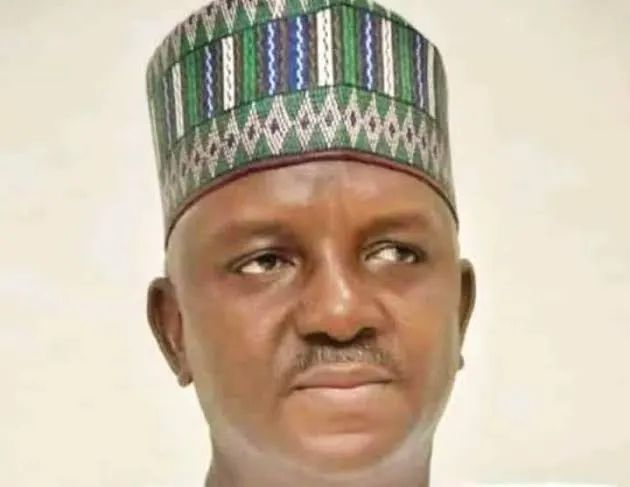
The Economic and Financial Crimes Commission has arrested former Minister of Power, Saleh Mamman, following his conviction and sentencing by the Federal High Court in Abuja over alleged financial crimes linked to his tenure in office.
According to the Chairman of the EFCC, Ola Olukoyede, the former minister was apprehended around 3:30 a.m. on Tuesday in Kaduna State alongside two individuals allegedly accused of shielding him from law enforcement authorities.
The anti-graft agency also disclosed that the residence where the arrest took place is currently under investigation as part of ongoing efforts to uncover additional details connected to the case.
Saleh Mamman Convicted Over Alleged N33.8 Billion Fraud
Saleh Mamman, who served as Nigeria’s Minister of Power between August 2019 and September 2021 under the administration of former President Muhammadu Buhari, was reportedly convicted in May 2026 by the Federal High Court in Abuja.
The court sentenced the former minister to 75 years imprisonment over allegations bordering on fraud, money laundering, and financial misappropriation involving more than N33.8 billion.
The conviction marks one of the most high-profile corruption cases involving a former cabinet member in recent years, further highlighting the Nigerian government’s anti-corruption drive and renewed efforts to tackle public sector financial crimes.
Background of Saleh Mamman’s Political Career
Saleh Mamman was sworn in as Minister of Power on August 21, 2019, after being nominated by former President Buhari and confirmed by the Nigerian Senate.
During his time in office, the Ministry of Power faced mounting criticism over electricity supply challenges, power infrastructure deficits, and concerns surrounding the management of public funds within the sector.
In September 2021, Buhari removed Mamman from office during a cabinet reshuffle and replaced him with Abubakar Aliyu.
EFCC Intensifies Anti-Corruption Crackdown
The arrest of the former minister signals a continued crackdown by the EFCC against corruption and abuse of office among former public officials.
Analysts believe the development could strengthen public confidence in Nigeria’s anti-corruption institutions, especially amid growing demands for accountability in the management of public resources.
The EFCC has yet to provide further details regarding the two individuals arrested alongside Mamman or the nature of the ongoing investigation linked to the Kaduna residence.