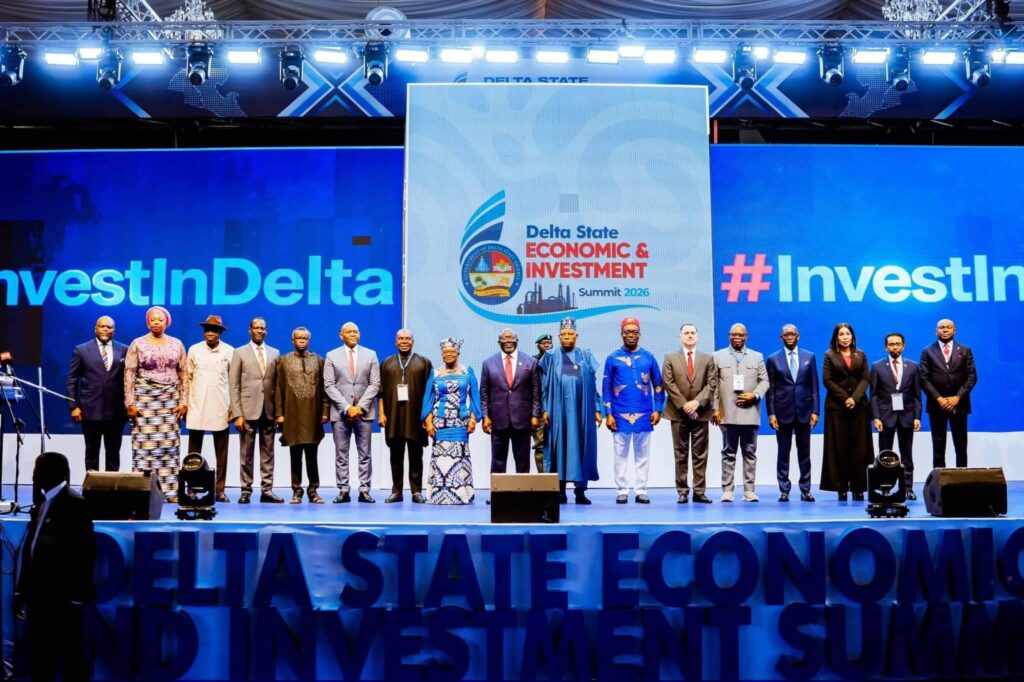
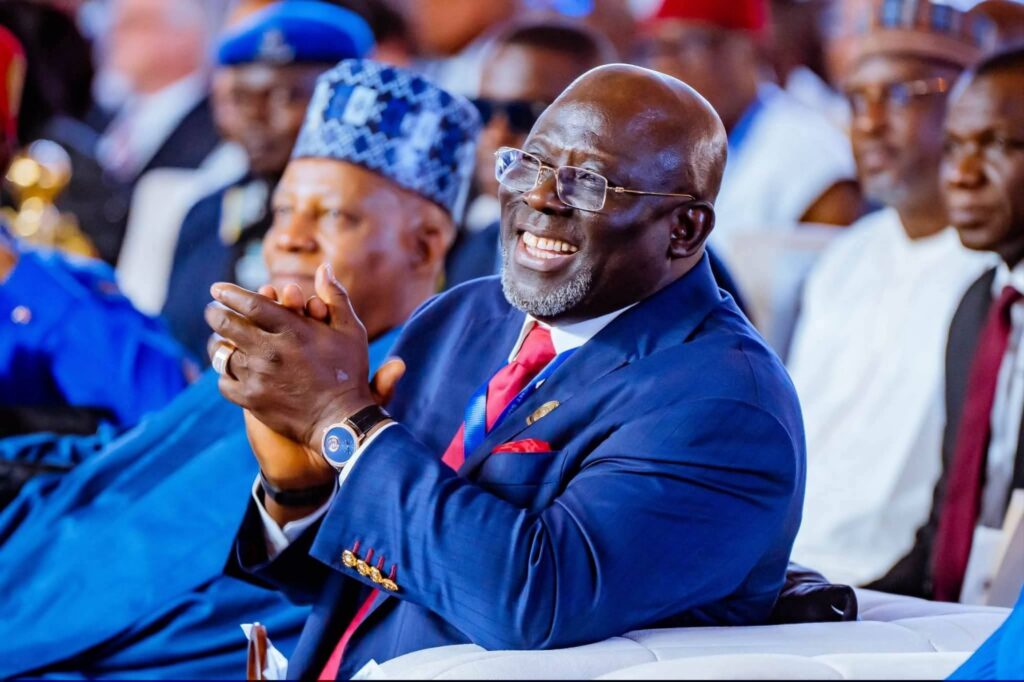
Shortly after participating in the Delta State Economic and Investment Summit in Asaba, Vice President Kashim Shettima returned to the Presidential Villa in Abuja to chair the 159th meeting of the National Economic Council (NEC), held virtually. There was no extended break, no pause for rest—just a seamless transition from engaging investors and stakeholders to presiding over one of Nigeria’s most important economic coordination meetings.
Since taking the oath of office alongside President Bola Ahmed Tinubu on 29 May 2023, the Vice President has maintained a remarkably demanding schedule that continues to draw attention. From Maiduguri to Washington, Lagos to London, and across Nigeria’s six geopolitical zones, one question consistently arises: how does he sustain such an intense pace?
In a role widely regarded as one of the most demanding in government, Senator Kashim Shettima has distinguished himself through relentless engagement. Without prolonged periods of rest, he has maintained an unbroken cycle of official assignments across states and continents, advancing the priorities of the Tinubu administration’s Renewed Hope Agenda.
Across Nigeria, the Vice President has transformed his office into a vital bridge between the Presidency and the states. He has consistently chaired National Economic Council meetings, commissioned landmark projects, mediated critical discussions, represented the President at investment summits, and participated in security, humanitarian, agricultural, technology, and MSME engagements. Whether in Delta, the North-East, Benue, or the South-East, his approach has remained consistent—engage stakeholders, make decisions, and move swiftly to the next assignment. His frequent presence has reinforced the perception that the Federal Government remains closely connected to the aspirations and challenges of the states.
This approach reflects a deliberate understanding that meaningful national development cannot be driven solely from Abuja. By taking the message of the Renewed Hope Agenda directly to sub-national governments and communities, Shettima has made economic coordination, humanitarian intervention, and political consultation practical exercises rather than bureaucratic processes. His swift return from Asaba to immediately preside over the NEC meeting exemplifies that commitment.
On the international stage, the Vice President has equally projected Nigeria’s interests with consistency. He has represented President Tinubu at the United Nations General Assembly, climate conferences, African Union engagements, bilateral meetings, and global investment forums across Africa, Europe, Asia, and the Americas. Whether promoting investment opportunities, advocating food security, strengthening counter-terrorism cooperation, or advancing regional partnerships, his message has remained clear: Nigeria is pursuing reforms, open for business, and prepared to provide leadership on the African continent.
Observers attribute his remarkable stamina to several factors. Foremost is the Renewed Hope Agenda, which provides a clear strategic framework for governance, covering economic reform, security, agriculture, and human capital development. Every domestic and international engagement aligns with these national priorities. Equally important are disciplined planning, meticulous preparation, effective teamwork, and strict adherence to schedules. For the Vice President, rest is often taken during travel rather than through lengthy breaks.
His previous experience as a two-term Governor of Borno State during the height of the Boko Haram insurgency also appears to have shaped his resilience. Years of managing security crises, humanitarian emergencies, and complex governance challenges prepared him for continuous decision-making under pressure. The demands of the Vice Presidency, therefore, represent an extension of a leadership style forged during some of Nigeria’s most difficult periods.
Leadership through consistent presence carries significant value. For investors, it demonstrates commitment and seriousness. For state governments, it strengthens collaboration with the Federal Government. For citizens, it projects an administration actively engaged with national development. While critics may question the sustainability of such an intense schedule, supporters point to tangible outcomes, including stronger policy coordination, accelerated implementation of NEC resolutions, expanded humanitarian initiatives, new investment commitments, and a more visible Nigerian presence in international affairs.
Perhaps the answer lies not in extraordinary physical endurance, but in an unwavering sense of purpose. Since 2023, Vice President Kashim Shettima has approached the office not as a ceremonial institution but as a platform for constant service—travelling across Nigeria and around the world on behalf of President Bola Ahmed Tinubu to advance governance, economic growth, and national development. In public service, visibility matters, commitment matters, and sustained engagement matters. Judging by the pace maintained over the past three years, the Vice President has demonstrated an exceptional commitment to all three.
About the Author
Christopher Godwin Akaba is a public affairs analyst, social commentator, and communications strategist based in Abuja. He writes extensively on governance, public policy, leadership,hu national development, and political affairs, offering informed perspectives on issues shaping Nigeria’s democratic and socio-economic landscape.