
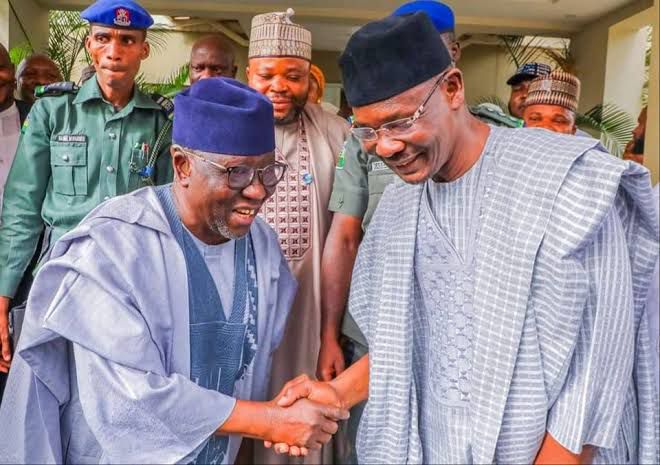
Governor Abdullahi Sule of Nasarawa State has firmly dismissed claims that his predecessor, Umaru Tanko Al-Makura, is his political godfather or the architect of his emergence as governor.
Speaking during an interview on Sunday Politics, a flagship programme on Channels Television, Sule clarified the nature of his relationship with the former governor, emphasizing mentorship over political imposition.
Sule Rejects ‘Godfather’ Label in Nasarawa Politics
Addressing longstanding speculations about political godfatherism in Nasarawa, Governor Sule stated unequivocally that while Al-Makura supported his gubernatorial ambition, he did not singlehandedly install him in office.
“Al-Makura didn’t bring me into office. He supported me when I was coming into office. He didn’t pick me from the dustbin,” Sule said.
The governor explained that his professional background and leadership experience played a significant role in his political rise. Before venturing into politics, Sule served as a Group Managing Director of a publicly quoted company, a credential he believes distinguished him as a viable candidate.
Mentorship vs Godfatherism: Sule Draws the Line
Sule acknowledged that Al-Makura introduced him to the political landscape and provided guidance, but insisted that such a role should not be mistaken for godfatherism—a term often associated with undue political control and influence.
“He is not my godfather; he mentored me into politics,” Sule added.
The governor’s remarks come amid ongoing debates about the influence of political godfathers in Nigeria’s democratic process, particularly in state-level politics where power dynamics often shape candidate selection and governance.
Zoning and Political Fairness in Nasarawa
Governor Sule also addressed internal political dynamics within the state, particularly regarding zoning and succession. He revealed that Al-Makura had a preferred aspirant during the election period, which differed from his own choice due to regional considerations.
According to Sule, fairness and equity in power rotation were central to his stance.
“His preferred aspirant may not be my preferred aspirant… they come from two different zones. I strongly believe then, I believe now, I believe tomorrow that it will not be fair to still go back to his own that has just finished 12 years,” he explained.
This comment underscores the issue of zoning in Nigerian politics, where equitable distribution of power among regions is often seen as key to maintaining political stability.
Political Independence and Governance
By distancing himself from the label of political godson, Sule appears to be reinforcing his independence as a leader and decision-maker. Analysts say such positioning could strengthen public perception of his administration as autonomous and merit-driven.
The governor’s comments may also influence future political alignments in Nasarawa State, especially as stakeholders begin to strategize for upcoming elections.