
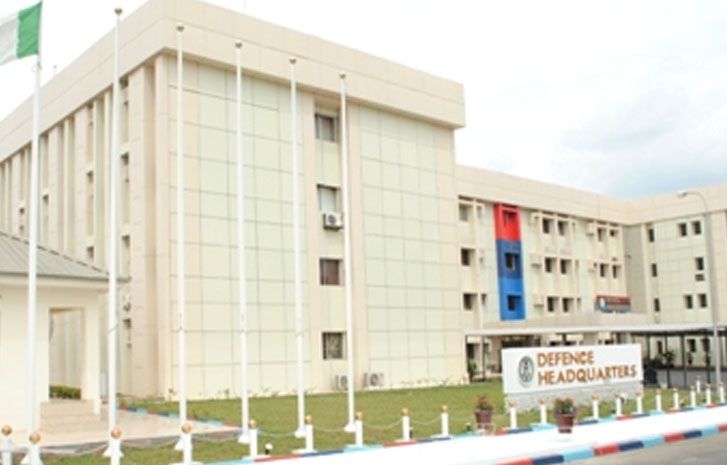
The Defence Headquarters (DHQ) has clarified that the reported withdrawal of about 200 United States military personnel from Nigeria should not be interpreted as an end to, or deterioration of, the security partnership between Nigeria and the United States.
The clarification comes amid growing public interest in reports that the United States is reducing its military presence in Nigeria, particularly in the North-East, where Nigerian forces continue to battle Boko Haram, the Islamic State West Africa Province (ISWAP) and other armed groups.
The development has generated questions over whether the reduction in the number of American personnel could affect Nigeria’s counter-terrorism operations and intelligence capabilities.
However, the Nigerian military says the situation should instead be understood within the context of how the two countries structure their defence and security cooperation.
DHQ: US troop withdrawal is not a breakdown in relations
Samaila Uba, spokesperson for the Defence Headquarters, addressed the issue on Tuesday during a security briefing organised by the National Counter Terrorism Centre (NCTC).
Mr Uba, a major general, said the military had received several requests from journalists seeking clarification on reports concerning the withdrawal of US personnel from Nigeria.
According to him, the presence of American military personnel in Nigeria has always been connected to specific operational requirements and counter-terrorism objectives.
He therefore described the reported withdrawal as a mission-related adjustment rather than an indication that Nigeria and the United States were ending their security relationship.
“The Armed Forces of Nigeria wishes to clarify that the reported withdrawal of about 200 United States personnel should not be interpreted as a breakdown or termination of the Nigeria-United States security partnership,” Mr Uba said.
He stressed that the defence relationship between both countries remains strong and continues to serve mutual security interests.
Intelligence sharing remains central to Nigeria-US cooperation
The DHQ spokesperson explained that the Nigeria-US security relationship extends beyond the physical presence of American troops in the country.
According to him, cooperation between the two countries includes intelligence sharing, military training, technical assistance, logistics support and professional military engagement.
This means that a reduction in the number of US personnel stationed in Nigeria does not necessarily mean that Washington is withdrawing its broader security support to the country.
“Our cooperation with the United States is designed to strengthen our capabilities through intelligence sharing, training, technical assistance and other forms of professional military cooperation,” Mr Uba said.
Intelligence cooperation has become particularly important in the fight against terrorism because Nigerian security agencies require timely information on the movement, financing, communication and operational activities of terrorist organisations.
AFRICOM had earlier disclosed a reduction in US forces
The latest clarification follows reports by The New York Times that the United States was planning to withdraw about 200 personnel from Nigeria.
However, the reported drawdown is not entirely new.
In July, the commander of the United States Africa Command (AFRICOM), Dagvin Anderson, said that “much of our forces” had already been withdrawn from Nigeria.
Mr Anderson, however, indicated that the security relationship with Nigeria would continue, particularly in the areas of intelligence cooperation and information required to support counter-terrorism efforts.
“They are continuing the partnership that Nigeria has asked for to help continue with the intelligence sharing and the understanding that’s necessary,” he said.
The statements from AFRICOM and the Nigerian military therefore suggest that the reduction in personnel should be viewed separately from the broader strategic relationship between both countries.
Why were US troops deployed to Nigeria?
The deployment of US military personnel to Nigeria followed a security agreement between the two countries amid heightened concerns over terrorist activities in parts of the country.
The United States initially described the deployment as involving a relatively small team.
The development followed a US military strike against suspected ISIS-linked fighters, an operation that US President Donald Trump said was targeted at militants who posed a threat to Christians.
Following discussions between the US and Nigerian governments, American personnel were deployed to support Nigeria’s counter-terrorism efforts.
By February, reports indicated that about 200 US personnel had arrived in the North-East.
Their presence generated public debate in Nigeria, with some Nigerians questioning the involvement of foreign military personnel in the country’s internal security affairs.
Nigerian authorities subsequently explained that the American personnel were primarily expected to provide support rather than take over Nigeria’s security responsibilities.
US personnel were initially assigned non-combat roles
At the time of their deployment, the Defence Headquarters said the US personnel were expected to focus on areas such as military education, intelligence sharing, logistics and strategic engagement.
The objective was to strengthen the capacity of Nigerian security forces to respond to terrorism and other transnational security threats.
The arrangement reflected the broader principle that Nigeria’s security agencies remain responsible for defending the country’s territory, while international partners provide specialised assistance where necessary.
However, the nature of the cooperation later expanded.
The US personnel were reportedly involved in a combat operation alongside Nigerian troops in the North-East. The operation resulted in the death of a senior commander of the Islamic State West Africa Province and other terrorists.
The development demonstrated that the cooperation between Nigerian and American forces was not limited entirely to classroom training or intelligence activities.
Focus on the North-East
Much of the security cooperation involving the US personnel has been associated with Nigeria’s North-East, particularly Borno State.
The region has faced more than a decade of terrorism and insurgency involving Boko Haram and ISWAP.
The conflict has affected communities, displaced millions of people over the years and created significant humanitarian and development challenges.
Although Nigerian security forces have recovered large areas previously controlled or heavily influenced by insurgents, terrorist groups continue to pose threats through attacks, ambushes, improvised explosive devices and other asymmetric tactics.
For this reason, intelligence and surveillance remain important components of Nigeria’s counter-terrorism strategy.
What the troop reduction means for Nigeria
The reported reduction in US military personnel does not automatically mean that Nigeria has lost American security support.
Modern military partnerships are not necessarily measured by the number of foreign troops physically stationed in a country.
Training programmes, intelligence exchanges, technical assistance, surveillance capabilities, strategic coordination and information sharing can continue even when the number of deployed personnel changes.
The DHQ’s position is that the latest development represents an adjustment based on operational requirements.
The Nigerian military also wants to make clear that foreign military assistance is designed to complement, rather than replace, the capabilities of Nigeria’s own armed forces.
This distinction is particularly important because national defence remains the responsibility of Nigeria’s security institutions.
DHQ cautions against speculation
Mr Uba urged journalists and members of the public to avoid drawing conclusions that are not supported by official information.
He warned that interpreting a mission-specific reduction in foreign military personnel as evidence of the collapse of Nigeria’s defence cooperation with the United States could create an inaccurate picture of the situation.
“We equally call on the media and the Nigerian public to avoid interpreting a routine or mission-specific adjustment in foreign military presence as evidence of a collapse in Nigeria’s security cooperation or national defence capability,” he said.
The military maintains that cooperation with the United States continues in areas considered mutually beneficial.
Nigeria remains at the centre of its own security operations
Despite the involvement of foreign partners, Nigerian troops remain the primary force responsible for counter-terrorism and national defence operations within the country.
The role of international partners is largely intended to strengthen Nigeria’s capabilities through access to expertise, intelligence, technology, training and other forms of assistance.
For the Nigerian government, maintaining such partnerships is important because terrorism and organised crime increasingly operate across national borders.
Cooperation with foreign governments and international security organisations can therefore help Nigerian authorities track terrorist networks, identify threats and improve the effectiveness of counter-terrorism operations.
The broader picture
The reported US troop drawdown comes at a time when Nigeria continues to reassess its security strategies in response to changing threats.
The country’s security challenges extend beyond the North-East to include banditry, kidnapping, terrorism, communal violence, organised crime and other forms of transnational criminal activity.
Against this background, the continuation of intelligence sharing and technical cooperation with international partners remains significant.
For now, the Defence Headquarters has made its position clear: the reduction in US military personnel should not be interpreted as a termination of the Nigeria-US security partnership.
Instead, Nigerian authorities say the two countries will continue working together through intelligence sharing, training, technical assistance and other forms of professional military cooperation, while Nigerian security forces retain primary responsibility for protecting the country.
Key Takeaway
The reported withdrawal of about 200 US military personnel from Nigeria does not, according to the Defence Headquarters, represent the end of American security cooperation with Nigeria. The military says the adjustment is linked to specific operational requirements, while intelligence sharing, training, technical assistance and other areas of bilateral security cooperation remain ongoing.
The development will nevertheless be closely watched, particularly in the North-East, where Nigerian forces continue operations against Boko Haram, ISWAP and other terrorist groups.