
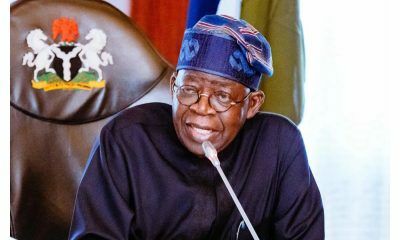
As political activities ahead of Nigeria’s 2027 general election gradually gather momentum, a civil society organization, the Center for Reform and Public Advocacy (CFRPA), has renewed public debate surrounding the academic credentials of President Bola Ahmed Tinubu.
The group has formally petitioned the Independent National Electoral Commission (INEC), requesting clarification on the legal implications of allegations relating to academic certificates submitted by the President during the 2023 presidential election process.
In a letter dated June 19, 2026, and addressed to the Chairman of INEC, Professor Joash Amupitan, CFRPA urged the electoral body to provide its position on issues concerning the President’s educational records before preparations for the 2027 presidential election intensify.
CFRPA Raises Concerns Ahead of 2027 Election
According to the organization, the request is aimed at promoting transparency, accountability, and public confidence in Nigeria’s electoral process. The group argued that questions surrounding the qualifications of candidates seeking public office should be addressed promptly to prevent future legal disputes.
CFRPA’s Head of Legal Unit, Barrister Kalu Agu, stated in the petition that INEC has a constitutional responsibility to ensure that all candidates seeking elective positions meet the legal requirements stipulated by Nigerian law.
The advocacy group referenced academic records released during legal proceedings in the United States involving Chicago State University (CSU), claiming that certain inconsistencies warrant official clarification by Nigerian authorities.
Allegations Referenced in the Petition
Among the issues raised by the group is the claim that information contained in academic records associated with President Tinubu’s admission to Chicago State University allegedly conflicts with historical records relating to educational institutions listed in his background.
The organization specifically questioned references to Government College Lagos and called on relevant authorities to verify all documentation connected to the President’s educational history.
In addition, the group raised concerns regarding a National Youth Service Corps (NYSC) discharge certificate allegedly linked to the President, urging government agencies to provide official clarification on the matter.
However, it is important to note that these allegations remain matters of public and legal debate, and no court of competent jurisdiction has issued a final ruling declaring President Tinubu’s Chicago State University degree invalid.
Call for INEC’s Legal Position
The petition emphasized the need for INEC to publicly explain how existing constitutional provisions regarding candidate qualifications would apply in situations involving disputed academic credentials.
According to CFRPA, providing such clarification would help strengthen public trust in the electoral system and ensure that future elections are conducted within the framework of the law.
The group cited provisions of the 1999 Constitution of the Federal Republic of Nigeria (as amended), including sections relating to qualification and disqualification for elective offices.
Possible Legal Implications
Legal analysts note that issues involving candidate qualifications often become significant during election seasons, particularly when allegations of document irregularities are involved.
Under Nigerian electoral law, allegations of certificate forgery can have serious consequences if proven before a competent court. However, legal experts also emphasize that every individual is presumed innocent unless otherwise determined through due judicial process.
As of the time of filing this report, neither INEC nor the Presidency had publicly responded to the latest petition submitted by CFRPA.
Political Significance Ahead of 2027
The renewed focus on President Tinubu’s academic records is expected to become part of broader political discussions as parties prepare for the 2027 elections.
Political observers believe that issues relating to candidate eligibility, governance performance, economic policies, and national security will likely dominate public discourse in the coming months.
Whether the petition leads to further legal proceedings or official responses from government institutions remains to be seen. Nevertheless, the development underscores the importance of transparency, accountability, and adherence to constitutional provisions in Nigeria’s democratic process.
In conclusion, the CFRPA petition has once again brought national attention to long-standing debates regarding President Bola Tinubu’s academic credentials and eligibility questions. While the allegations remain contested, the group’s request places pressure on relevant institutions to provide clarity on matters that could influence political discussions ahead of the 2027 presidential election.
As Nigerians look toward another electoral cycle, stakeholders continue to emphasize the need for credible institutions, transparent processes, and respect for the rule of law in safeguarding the nation’s democracy.