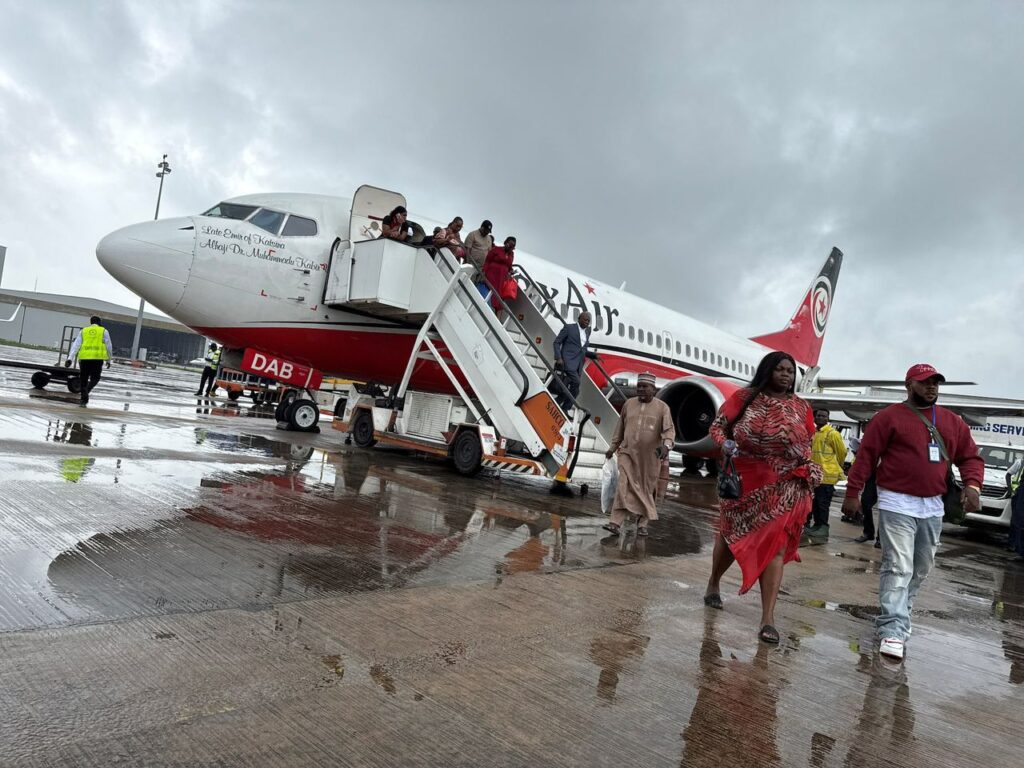
Aviation authorities in Nigeria have warned that domestic airfares could rise in the coming days as airlines struggle to cope with soaring fuel prices, raising fears of widespread flight disruptions.
The warning comes amid a sharp spike in the cost of Jet A1 aviation fuel, which industry figures say has risen from about ₦900 ($0.67) per litre in late February to around ₦3,300 ($2.44) an increase of more than 300%.
Minister of Aviation and Aerospace Development, Festus Keyamo told journalists that operators had been “stretched to their limit” and could no longer sustain operations without increasing ticket prices in the short term. It followed a closed‑door meeting with airlines, fuel marketers and regulators in the capital, Abuja.
Airline executives say the situation has become critical. The chief executive of Air Peace, Allen Onyema, warned that domestic flights could be grounded within days if no agreement is reached to reduce fuel prices.
“We are bleeding,” Mr Onyema said, adding that airlines were not unwilling to operate but could not absorb fuel costs that were rising far faster than global crude prices.
Last week, Nigerian airlines had threatened to suspend operations. They said it was not as a negotiating tactic, but because continuing to fly under current conditions risked compromising safety and financial viability.
Mr Keyamo said talks were continuing, with a 48 to 72‑hour window given to regulators and fuel marketers to agree on what he described as “fair and reasonable” pricing for Jet A1 fuel.
The crisis in Nigeria is unfolding against the backdrop of turbulence in global energy markets triggered by the conflict involving Iran, Israel and the United States.
Since late February, the war has disrupted oil shipments through the Strait of Hormuz – a key artery for global energy supplies – sending crude oil and jet fuel prices sharply higher worldwide.
Brent crude, the international oil benchmark, has risen by more than 40% since the conflict began, with analysts warning of continued volatility as fears persist over supply disruptions in the Middle East.
Jet fuel prices have risen even more sharply in some markets, hitting airlines particularly hard because fuel accounts for up to 40% of operating costs. African carriers have been among the worst affected, with limited access to hedging tools and smaller financial buffers.
Despite being Africa’s largest oil producer, Nigeria continues to import much of its refined fuel, leaving key sectors – including aviation – exposed to global price shocks and currency pressures.
Airline operators argue that the rise in Jet A1 prices locally far exceeds global trends, pointing to bottlenecks in supply, high transport costs and pricing practices within Nigeria’s downstream petroleum sector.
For now, passengers are being warned to brace for higher fares – or possible cancellations – as negotiations continue amid one of the toughest periods Nigeria’s aviation industry has faced in years.
Related posts:

THE MD/CEO OF NEDC MOHAMMAD GONI ALKALI'S EFFORTS IN THE TRANSPORT SECTOR AND INTRODUCTION OF ELECTR...

Gov. Buni Commends NEDC’s Post-Insurgency Recovery Drive as Damaturu–Magza Road Nears Completion