
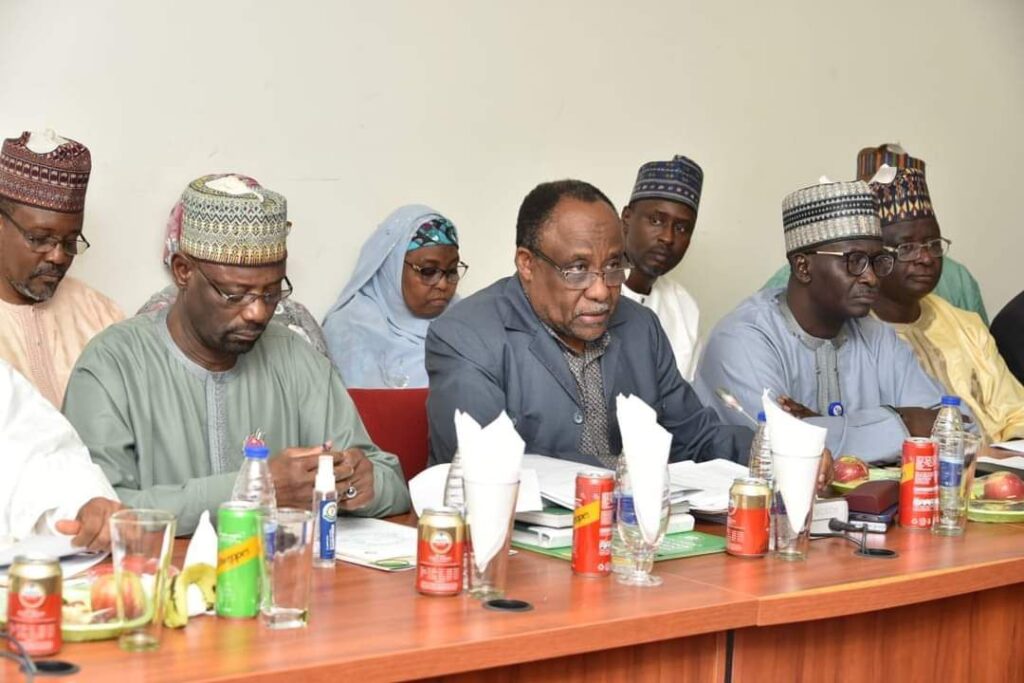
NEDC Governing Board Approves Landmark Investments to Accelerate Regional Transformation, Drive Economic Growth and Advance President Bola Ahmed Tinubu’s Renewed Hope Agenda
Chairman and Distinguished Members of the Governing Board,
Members of the Fourth Estate,
Ladies and Gentlemen,
Good afternoon, and thank you for honouring our invitation to this important media interaction.
Today marks another defining milestone in the transformation of the North-East. The decisions of the Governing Board reaffirm the North East Development Commission’s commitment to delivering sustainable development in line with the North-East Stabilisation and Development Master Plan (NESDMP) and the Renewed Hope Agenda of His Excellency, President Bola Ahmed Tinubu, GCFR.
Over the past several years, the Commission has focused on rebuilding communities, restoring livelihoods and laying the foundations for long-term prosperity. Today, we are pleased to present a new generation of strategic investments that will accelerate economic growth, strengthen regional connectivity, expand access to clean energy, improve healthcare and create opportunities for millions of people across the North-East.
The North East Development Commission (NEDC) stands today at a defining moment in the implementation of the North-East Stabilisation and Development Master Plan (NESDMP). Established to coordinate the rebuilding of a region affected by years of insurgency and humanitarian crises, the Commission has progressively translated the Master Plan into tangible interventions that are restoring hope, rebuilding communities and laying the foundation for long-term prosperity.
The NESDMP provides a phased roadmap for the transformation of the North-East. The Commission’s initial efforts focused on the Stabilisation and Recovery Phase, restoring critical infrastructure, supporting displaced communities, rebuilding schools and health facilities, improving security through strategic interventions and restoring basic public services. This was followed by the Renewal Phase, during which the Commission expanded investments in strategic infrastructure, renewable energy, education, healthcare, environmental sustainability, economic empowerment and institutional development across the six states of the region.
Today, the Commission is entering the next phase of the Master Plan—Expansion and Sustainable Growth. This phase seeks to unlock the North-East’s economic potential by accelerating investments that promote industrialisation, regional connectivity, energy security, enterprise development and human capital, while creating an enabling environment for private sector participation and sustainable economic growth.
Guided by the strategic 11 pillars of the North-East Stabilisation and Development Master Plan (NESDMP) namely; peaceful society, leadership in agriculture, healthy citizens, purposeful infrastructure, productive entrepreneurs, educated populace, protected environment, industralisation, florishing trade memorable experience and a connected region, the Commission is shifting its focus from rebuilding what was lost to creating the conditions for long-term competitiveness and shared prosperity.
“The North-East is no longer defined by its past, but by the promise of its future. We are moving from recovery, renewal and stabilisation to development, from recovery to prosperity…”
This vision reflects the Commission’s unwavering commitment to transforming the North-East into a peaceful, productive and investment-ready region whose growth contributes meaningfully to Nigeria’s economic development, national stability and regional integration.
In furtherance of this vision, the Governing Board of the North East Development Commission has approved a historic package of strategic investments designed to accelerate the implementation of the North-East Stabilisation and Development Master Plan while advancing the Renewed Hope Agenda of His Excellency, President Bola Ahmed Tinubu, GCFR. The approvals represent the Commission’s most ambitious package of development investments to date, spanning renewable energy, transportation, infrastructure, electric mobility, enterprise development and strategic partnerships.
The Governing Board of the North-East Development Commission (NEDC) has approved a historic package of strategic investments designed to accelerate the implementation of the North-East Stabilisation and Development Master Plan (NESDMP) while supporting the Renewed Hope Agenda of His Excellency, President Bola Ahmed Tinubu, GCFR. The approvals mark a transition from post-conflict recovery to long-term economic transformation through investments in energy, transportation, infrastructure, enterprise, education and healthcare.
A New Chapter for the North-East
The Commission has spent the past years rebuilding confidence across the North-East through strategic investments in roads, bridges, schools, healthcare facilities, renewable energy and livelihoods. Having laid this foundation, the Governing Board has approved a new generation of interventions that will serve as catalysts for change, growth and development. Together they are intended to unlock private investment, stimulate enterprise, create jobs and position the North-East as a competitive economic region.
Transforming Vision into Results
The Commission recently attained five ISO certifications covering quality, environment, occupational health and safety, anti-bribery and sustainable communities, demonstrating globally recognised governance systems. It has completed over 300 kilometres of roads and more than 50 bridges, reconnecting communities, reducing transport costs and improving access to markets, schools and hospitals. Through the Light Up the North-East Project, more than 100,000 solar streetlights have improved security and extended commercial activity. In education, 49 tertiary institution projects, 18 Mega Schools and over 100 Water, Sanitation and Hygiene (WASH) facilities have expanded access to learning. In healthcare, MRI and CT Scan machines have been approved for teaching hospitals while youth empowerment programmes in photovoltaics, metering, linesmen, waste-to-wealth, and entrepreneurship have equipped thousands with employable skills.
ROADS AND BRIDGES: CONNECTING COMMUNITIES, DRIVING GROWTH
The Commission has continued to reconnect communities and unlock economic opportunities through one of the most extensive road and bridge infrastructure programmes in the North-East. To date, it has delivered over 300 kilometres of roads and more than 50 bridges, restoring critical transport corridors, improving access to education and healthcare, facilitating trade, and strengthening regional integration.
Across Adamawa State, the Commission constructed the 32km Dabna Road, the Federal College of Education, Yola Road, the College of Education, Hong Road, the Garkida Cross–Kukurtu Road, and rehabilitated roads in Fufore. Landmark projects such as the Numan Bridge, Bole Bridge, Madagali and Michika Bridges, and the Mubi–Maiha–Sarao Bridges have significantly improved connectivity, agricultural transportation and cross-border trade.
In Bauchi State, the Commission delivered the 32km Kirfi–Gombe Abba Road, the landmark Tashan Turmi, Bara and Kalajanga Bridges, the Ningi–Yadagungume–Fuskar Mata Road, the Soro–Ganjuwa Bridge, and extensive erosion control and drainage works, improving inter-state connectivity and climate resilience.
In Borno State, major interventions include the Ngom–Koshebe–Zabarmari–Gongulong–Khadamari Road Corridor, the Zabarmari–Dusuman Road, the reconstruction of the Gongulong–Khadamari and Monguno–Maiduguri Roads, the Fogori (Galtimari) Bridge, the Moro-Moro Market Bridge, and the Kaleri–Moduganari Bypass Road, restoring critical infrastructure destroyed by conflict and flooding.
In Gombe State, investments including the 21km Gombe Abba–Kirfi Road, bridges along the Gombe Northern Bypass, Gombe–Dukku, Gombe–Akko and Tsando Roads, together with major erosion control works, have strengthened mobility and regional connectivity.
In Taraba State, the rehabilitation of the Jalingo–Wukari Highway, construction of the Mayo Ndaga, Namnai and River Bantaje Bridges, alongside emergency repairs to the Mayo Kam Bridge and drainage works on the Suntai–Donga Road, have reconnected communities and improved access to agricultural and commercial centres.
In Yobe State, the Commission delivered the 54km Mutai–Ngalda Road, the Damaturu–Buni Yadi–Magza Road Overlay, roads serving the NEDC Mega School, Potiskum, the Damaturu–Gujba Bridge, and several bridges, culverts and drainage structures across Potiskum, Tarmuwa, Gujba and Fune Local Government Areas, enhancing mobility and flood resilience.
Collectively, these investments have reduced travel times, lowered transportation costs, improved access to markets and essential services, strengthened food security, and laid the foundation for increased private investment and inclusive economic growth.
BUILDING THE NEXT PHASE OF TRANSFORMATION
Having laid a solid foundation for recovery through sustained investments in infrastructure, education, healthcare, renewable energy and human capital development, the Governing Board has approved a new generation of transformational initiatives that will accelerate the North-East’s transition from recovery to prosperity.
These approvals reflect the Commission’s conviction that sustainable peace is achieved not only through reconstruction but also through economic opportunity, productive enterprise, and inclusive development. Accordingly, the approved interventions have been carefully designed to address the critical drivers of long-term growth—reliable energy, modern transportation, resilient infrastructure, enterprise development, and skilled human capital.
Collectively, the initiatives form an integrated investment strategy that reinforces the objectives of the North-East Stabilisation and Development Master Plan (NESDMP) while supporting the Renewed Hope Agenda of His Excellency, President Bola Ahmed Tinubu, GCFR. Rather than isolated projects, they are complementary investments that strengthen one another and create the conditions for broad-based economic transformation.
TO DRIVE THIS NEXT PHASE OF DEVELOPMENT, THE GOVERNING BOARD APPROVED:
50MW SOLAR MINI-GRID POWER – ₦100 BILLION
POWERING THE FUTURE
Recognising that access to reliable electricity remains one of the greatest barriers to economic development in the North-East, the Governing Board approved a ₦100 billion investment for the deployment of 50MW of renewable energy through solar mini-grids and distributed energy systems.
This investment builds on the success of the Commission’s Light Up the North-East Project, under which over 100,000 solar-powered street lights have been installed across the region, improving public safety, extending business hours and demonstrating the transformative impact of renewable energy on communities.
The approval is also informed by the region’s significant electricity access deficit. While Nigeria currently records an estimated 58% national electrification rate, leaving 42% of the population without access to electricity, the challenge is considerably greater in the North-East, where only 39% of the population is electrified, leaving 61% without reliable access to electricity. This energy gap continues to limit industrial growth, agricultural processing, access to quality healthcare and education, digital inclusion and private sector investment.
The advancement of the proposed NORTH-EAST RAILWAY, a transformative initiative that will strengthen regional integration, improve freight and passenger transportation, reduce logistics costs, support agricultural and industrial value chains, and position the North-East as a strategic trade corridor linking Nigeria with neighbouring countries. The railway, additional roads and bridges and the proposed regional airline will improve mobility, reduce logistics costs, connect producers to domestic and regional markets, and strengthen trade with neighbouring countries. These investments support agriculture, commerce, tourism, and regional integration.
The Commission recognises that reliable and affordable electricity is fundamental to achieving sustainable economic growth. Consequently, the 50MW renewable energy programme represents a strategic intervention designed to expand energy access, stimulate local economic activity and strengthen energy security across the region.
In collaboration with the Rural Electrification Agency (REA) and other development partners, the Commission is supporting the vision of achieving universal electrification across the North-East by 2030. Current assessments indicate that achieving this objective will require an estimated US$4.29 billion in investment to provide electricity access to approximately 4.26 million residential households and electrify more than 218,000 currently identified unelectrified communities across the region.
The long-term electrification strategy envisions a balanced mix of technologies, including approximately 2.1 million households (50%) served through solar home systems, 438,000 households (10%) connected to the national grid in densely populated areas close to existing infrastructure, and approximately 1.7 million households (40%) electrified through renewable energy mini-grids, providing reliable power to communities where conventional grid extension is not economically viable.
The Commission’s 50MW investment is therefore not an isolated energy project; it is a strategic catalyst for regional transformation. It will provide reliable electricity to homes, schools, healthcare facilities, markets, agricultural clusters, industrial parks and small businesses, lowering the cost of doing business, improving productivity and enabling enterprise development. It will also accelerate agro-processing, support digital innovation, strengthen healthcare delivery, improve educational outcomes, create green jobs and attract new private investment into the region.
Beyond expanding electricity access, the programme will contribute to Nigeria’s clean energy transition, reduce dependence on fossil fuels, improve environmental sustainability and position the North-East as a national leader in renewable energy deployment. As with the Commission’s broader investment portfolio, this initiative is designed to serve as a catalyst for change, growth and development, creating the enabling environment for inclusive prosperity and long-term economic resilience across the North-East.
CONNECTING THE REGION
The development of a NORTH-EAST REGIONAL AIRLINE to improve regional connectivity, facilitate business travel, promote tourism, support emergency response and cargo movement, and make the North-East more accessible to investors and development partners.
ROADS AND BRIDGES PROGRAMME – ₦100 BILLION
To consolidate the Commission’s achievements in reconnecting the North-East, the Governing Board approved an additional ₦100 billion for the construction and rehabilitation of strategic roads and bridges across the region. The investment builds on the Commission’s delivery of over 300 kilometres of roads and more than 50 bridges, further strengthening connectivity between communities, agricultural hubs, commercial centres and industrial clusters.
The programme will improve the movement of people and goods, reduce transportation costs, facilitate trade, enhance access to healthcare and education, and stimulate private investment by creating a more efficient transport network. It will also strengthen regional integration and complement the Commission’s investments in renewable energy, rail, aviation and electric mobility, creating an integrated infrastructure system that supports sustainable economic growth.
ELECTRIC VEHICLE PROGRAMME: DRIVING THE FUTURE OF SUSTAINABLE MOBILITY
One of the Governing Board’s most transformative resolutions is the rollout of the North East Development Commission’s flagship Electric Vehicle (EV) Programme, a pioneering initiative that positions the North-East at the forefront of Nigeria’s transition to clean, efficient and sustainable transportation.
The rollout of the Commission’s flagship Electric Vehicle (EV) Programme, vehicles are already in Nigeria ahead of the official launch. The programme will deploy 300 electric taxis, 12-seater electric minibuses (Tricycles) and larger-capacity electric buses as part of a phased rollout of over 10,000 electric vehicles, supported by charging infrastructure and maintenance facilities.
This initiative will modernise public transportation, reduce depend, create green jobs and establish the North-East as a leader in sustainable mobility.
The programme represents far more than the introduction of new vehicles. It is a comprehensive economic and environmental transformation strategy designed to modernise public transportation, reduce dependence on fossil fuels, improve energy security and catalyse the growth of a new green economy within the region.
Beyond transportation, the programme is expected to unlock significant economic opportunities. The establishment of charging infrastructure, battery management systems, maintenance workshops and fleet operations will stimulate new industries, attract private sector investment and create thousands of skilled and semi-skilled jobs for engineers, technicians, electricians, mechanics, ICT professionals and transport operators. It will also provide opportunities for local entrepreneurs to participate in the emerging electric mobility value chain through vehicle servicing, component supply, charging services and fleet management.
The programme is complemented by the Commission’s investments in 50MW of solar mini-grid infrastructure, creating a mutually reinforcing ecosystem in which renewable energy powers sustainable transportation. This integrated approach demonstrates the Commission’s commitment to building resilient infrastructure that supports industrialisation, environmental sustainability and long-term economic growth.
Implemented through strategic international partnerships and supported by advanced technology and technical expertise, the initiative will promote local capacity development, facilitate technology transfer and strengthen knowledge exchange in electric mobility and renewable energy. It will equip young people across the North-East with the technical and vocational skills required to participate in the emerging green economy, creating a new generation of skilled professionals in electric vehicle maintenance, charging infrastructure, battery management and clean energy technologies.
The EV Programme aligns with the North-East Stabilisation and Development Master Plan (NESDMP) and supports the Renewed Hope Agenda of His Excellency, President Bola Ahmed Tinubu, GCFR, by promoting industrialisation, improving regional connectivity, creating employment, reducing carbon emissions and strengthening Nigeria’s energy transition. More importantly, it positions the North-East as a national leader in sustainable mobility and demonstrates how innovative infrastructure can serve as a catalyst for inclusive growth, environmental stewardship and economic transformation.
As one of the largest electric mass transit initiatives on the African continent, the NEDC Electric Vehicle Programme is more than an investment in transportation it is an investment in people, productivity and prosperity. It represents a bold step towards building a cleaner, smarter and more connected North-East, while reinforcing the Commission’s vision of creating lasting opportunities for future generations.
NEDC–BOI MSME Development Fund — NGN30 billion
- The establishment of the ₦30 billion NEDC–Bank of Industry (BOI) MSME Development Fund to provide accessible financing, business development services and capacity-building support for micro, small and medium enterprises, particularly youth- and women-owned businesses. The Fund is expected to stimulate entrepreneurship, strengthen local industries, create employment, and accelerate inclusive economic growth across the region.
STRENGTHENING HEALTHCARE AND IMPROVING LIVES
- Healthcare remains a cornerstone of the North East Development Commission’s commitment to improving the quality of life across the region. In line with the Healthy Citizenry pillar of the North-East Stabilisation and Development Master Plan (NESDMP) and President Bola Ahmed Tinubu’s Renewed Hope Agenda, the Commission is making strategic investments to strengthen healthcare infrastructure, expand access to specialist medical services and build a resilient health system capable of serving future generations.
- One of the Commission’s flagship interventions is the procurement of 8 state-of-the-art 1.5 Tesla Helium-Free MRI systems and other critical equipment for deployment across the six North-East states. Complemented by the ongoing procurement of CT Scan machines, digital X-ray systems, mammography equipment, dialysis machines and other advanced diagnostic technologies, these investments will significantly improve access to specialised healthcare, reduce medical referrals outside the region and enhance the capacity of tertiary hospitals to deliver quality care.
- To ensure long-term sustainability, the Commission has established dedicated MRI facilities, provided alternative power solutions, executed five-year maintenance agreements with equipment manufacturers and commenced specialised training for radiologists, biomedical engineers and technical personnel to guarantee continuous operation and local capacity development.
- The Commission is also investing in specialist healthcare institutions, including the comprehensive upgrade of the Borno Eye Hospital into a modern ophthalmic centre and the establishment of a fully equipped Fertility Centre at the University of Maiduguri Teaching Hospital (UMTH). These facilities will provide advanced medical services previously unavailable within the region, reducing medical tourism while expanding access to quality specialist care.
- Beyond these flagship projects, the Commission has renovated and equipped numerous Primary Healthcare Centres, General Hospitals and specialist facilities across the six states, improving healthcare delivery for communities at all levels. In addition, the Community Targeted Social Health Insurance Programme (CTSHIP) has enrolled about 10,000 vulnerable beneficiaries, providing financial protection for low-income households and internally displaced persons while supporting the region’s transition towards Universal Health Coverage.
- Together, these interventions represent a strategic shift from emergency humanitarian support to sustainable healthcare development. By investing in modern medical infrastructure, advanced technology, healthcare financing and human capital, the Commission is strengthening the region’s healthcare system, improving health outcomes and ensuring that the people of the North-East can increasingly access world-class medical services closer to home
- PARTNERSHIPS — UNIDO, UNDP, REA
- The strengthening of strategic partnerships with the United Nations Industrial Development Organization (UNIDO), the United Nations Development Programme (UNDP) and the Rural Electrification Agency (REA) to leverage global expertise, technology transfer and co-investment in renewable energy, industrialisation, enterprise development, skills acquisition and community resilience.
INSTITUTIONAL EXCELLENCE: DELIVERING TO GLOBAL STANDARDS
The Commission’s development achievements are underpinned by strong institutional governance and internationally recognised management systems. In a landmark achievement, the NEDC attained five International Organization for Standardization (ISO) certifications, affirming its commitment to quality service delivery, transparency, accountability and sustainable development.
These include ISO 9001:2015 (Quality Management Systems), ISO 14001:2015 (Environmental Management Systems), ISO 45001:2018 (Occupational Health and Safety Management Systems), ISO 37001:2016 (Anti-Bribery Management Systems), and ISO 37101:2016 (Sustainable Development in Communities).
These certifications demonstrate that the Commission operates in accordance with globally recognised best practices, ensuring that public resources and development partner investments are managed with efficiency, integrity and accountability. They further strengthen investor confidence and reinforce the NEDC’s capacity to deliver complex, transformational programmes that advance the objectives of the North-East Stabilisation and Development Master Plan (NESDMP) and the Renewed Hope Agenda of His Excellency, President Bola Ahmed Tinubu, GCFR.
“These achievements have been delivered through strengthened institutional governance, culminating in the Commission attaining five internationally recognised ISO certifications further demonstrating its commitment to transparency, accountability and excellence in public service delivery.”
Collectively, these decisions represent one of the most comprehensive development packages ever approved by the Commission. They are designed to unlock private investment, create employment, improve productivity, enhance regional competitiveness, and build a resilient economy capable of delivering sustainable growth for generations to come.
More importantly, these interventions reaffirm the Commission’s commitment to delivering projects that create lasting value. They are not merely investments in infrastructure and public services; they are catalysts for change, growth, and development, laying the foundation for a peaceful, connected, energy-secure and prosperous North-East that will contribute significantly to Nigeria’s long-term economic development.
WHY THESE INVESTMENTS MATTER
Taken together, these interventions form one coordinated economic strategy. Reliable power enables production; transport infrastructure connects businesses to markets; enterprise finance supports innovation; education and healthcare develop human capital. The result will be increased productivity, stronger food security, more jobs, higher incomes, and greater investor confidence across the North-East.
CONCLUSION
The North-East Development Commission remains committed to delivering measurable development outcomes in line with the NESDMP and aligned with President Bola Ahmed Tinubu’s Renewed Hope Agenda. These investments are more than projects, they are catalysts for change, growth and development that will improve lives, strengthen communities, and unlock the enormous economic potential of the North-East. The North-East is Ready. From Recovery to Prosperity.