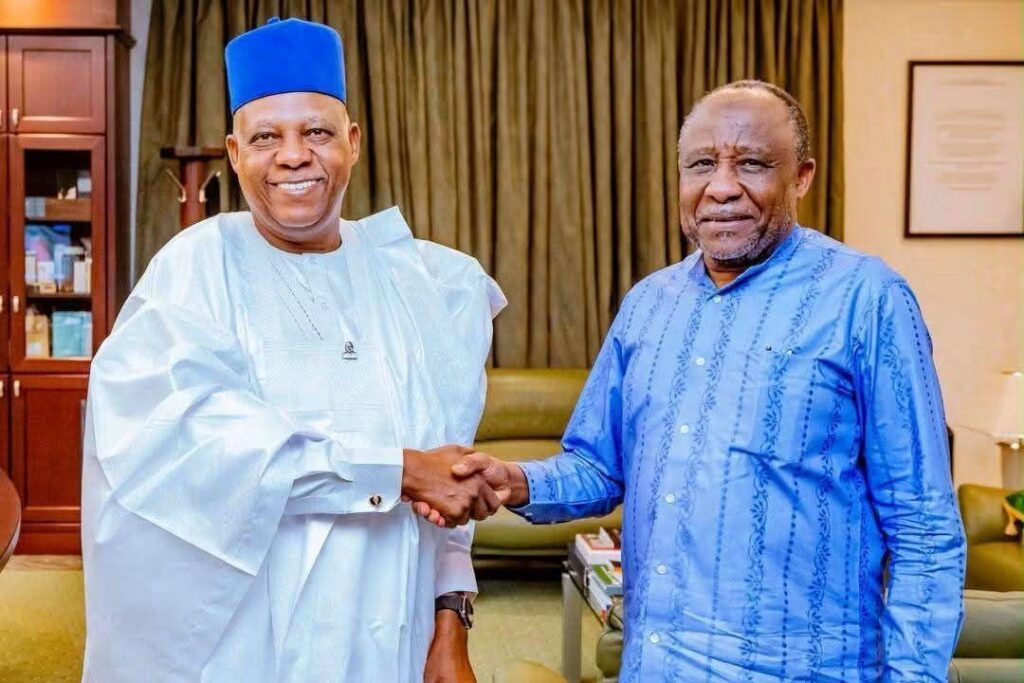
Nigeria’s North-East is pursuing a new chapter of reconstruction, economic recovery and sustainable development under the North-East Development Commission (NEDC), led by its Managing Director and Chief Executive Officer, Dr. Mohammed Goni Alkali.
Guided by the 11 pillars of the North-East Stabilisation and Development Master Plan (NESDMP), the Commission’s development agenda focuses on rebuilding infrastructure, strengthening public services, restoring livelihoods and creating economic opportunities across Adamawa, Bauchi, Borno, Gombe, Taraba and Yobe states.
The challenge extends beyond rebuilding what was destroyed by years of insurgency. It requires establishing the infrastructure, institutions and economic opportunities necessary for communities to recover, businesses to grow and young people to build sustainable futures.
Under Dr. Alkali’s leadership, the NEDC has pursued interventions spanning roads, bridges, education, healthcare, water supply, solar lighting, skills acquisition and economic empowerment. The Commission’s reported achievements demonstrate the breadth of its reconstruction programme, while completed projects across the six states provide tangible examples of its development activities.
From Vision to Action
The North-East Stabilisation and Development Master Plan provides a long-term framework for coordinating interventions across the region. Its 11 pillars recognise that sustainable development requires progress in infrastructure, human capital, economic recovery, peacebuilding and institutional capacity.
The Master Plan contains 529 schemes, programmes and projects designed to support the region’s transition from recovery and stabilisation towards renewal, expansion and sustainable growth.
The importance of this framework lies in connecting individual projects to broader development outcomes. Roads should facilitate commerce, schools should improve learning opportunities, healthcare facilities should strengthen medical services, and empowerment programmes should help people develop sustainable livelihoods.
This is the strategic context within which the NEDC’s completed projects should be understood: not merely as physical structures, but as interventions intended to strengthen the social and economic foundations of the North-East.
Completed Infrastructure Projects Across the Region
Infrastructure remains one of the most visible dimensions of the Commission’s development activities. According to achievement figures reported in 2026, the NEDC has delivered more than 300 kilometres of roads and over 50 bridges across the six states.
These investments are intended to improve mobility, reconnect communities, facilitate trade and provide better access to schools, hospitals and markets.
Among the notable road and bridge projects reported across the region are the following:
Adamawa State: The Commission has undertaken road reconstruction and bridge rehabilitation, including the reconstruction of the 2.5-kilometre Garkida–Cross Road in Gombi Local Government Area, the 2.5-kilometre road at the College of Education, Hong, and collapsed bridges at Dilichim and Tashan Tsamiya in Madagali Local Government Area. These interventions form part of efforts to improve local connectivity and access to essential services.
Bauchi State: The 53-kilometre Kirfi–Gombe Abba Road and bridges along the Bauchi–Gombe corridor are among the Commission’s reported infrastructure interventions. Such routes are important for connecting communities, supporting agricultural activities and facilitating movement between commercial centres.
Gombe State: The 21-kilometre Gombe Abba–Kirfi Road and bridge projects along the Gombe Northern Bypass, Gombe–Dukku and Gombe–Akko corridors feature among the Commission’s reported infrastructure investments.
Taraba State: Interventions include rehabilitation of the Jalingo–Wukari Highway and the construction of bridges at Mayo Ndaga, Namnai and River Bantaje, alongside other road and drainage works intended to strengthen connectivity.
Yobe State: The 54-kilometre Mutai–Ngalda Road and the Damaturu–Buni Yadi–Magza road overlay are among the major road interventions reported by the Commission, alongside bridge, culvert and drainage projects.
These projects illustrate the geographical spread of the NEDC’s infrastructure programme. Their long-term value will depend on road quality, maintenance and the extent to which improved connectivity supports economic activities and public services.
Education: Building the Next Generation
Education is another major component of the NEDC’s development agenda. The Commission has reported the completion of 18 mega schools across the six North-East states, alongside 49 tertiary institution projects.
The mega schools are intended to expand access to learning through improved educational infrastructure, while tertiary institution interventions support facilities serving students and academic communities.
In Adamawa State, the NEDC Mega School in Guyuk is a notable example. The facility includes four blocks containing 12 classrooms, staff quarters, administrative and clinic blocks, a commercial centre, a borehole and other supporting facilities.
The Commission has also reported the construction and rehabilitation of educational facilities at Government Secondary School, Garkida, and other institutions in Adamawa State.
In Bauchi State, mega schools in Ningi, Giade and Bauchi South are among the Commission’s reported educational projects. The Commission has also undertaken interventions in primary school infrastructure across the state.
In Yobe State, the Model Mega School in Potiskum and a 250-seat auditorium at Yobe State University are among the facilities reported as completed and handed over.
These projects demonstrate the importance of investing in educational infrastructure across different levels of the system.
However, the impact of school construction ultimately depends on adequate staffing, teaching materials, maintenance and the ability of children to attend and complete their education.
Healthcare: Expanding Access to Essential Medical Services
Healthcare infrastructure is essential to rebuilding communities and improving the quality of life of residents across the North-East.
In Adamawa State, completed or handed-over NEDC projects include the construction and furnishing of an MRI block at Modibbo Adama University Teaching Hospital in Yola, alongside water-scheme upgrades at the Adamawa State School of Nursing and Midwifery.
The Commission has also reported healthcare interventions involving medical facilities and emergency services across the region.
At the regional level, Dr. Alkali reported in 2026 that the number of functional MRI machines across the North-East had increased from one to eight. The Commission has also reported interventions involving CT scan equipment to strengthen diagnostic capacity.
These investments are significant because access to modern diagnostic equipment can improve the detection and management of complex medical conditions.
Their ultimate benefit, however, depends on the availability of trained personnel, maintenance services, consumables and reliable electricity to keep the equipment operational.
Water Supply, Solar Lighting and Community Wellbeing
Access to clean water and improved public infrastructure remains essential to the wellbeing of communities affected by displacement, poverty and infrastructure deficits.
The NEDC has reported completing more than 100 water, sanitation and hygiene facilities, alongside more than 500 solar-powered boreholes.
In Adamawa State, its interventions include a water-scheme upgrade at the School of Nursing and Midwifery in Yola. The Commission has also undertaken solar-powered borehole and water infrastructure projects in other parts of the region.
The Light Up the North-East initiative is another major component of its public infrastructure programme. Reports in 2026 indicated that more than 100,000 solar streetlights had been installed across the six states.
Solar lighting can extend commercial activities into the evening, improve visibility and support the use of public spaces after dark. Its effectiveness depends on functioning equipment, timely repairs and proper maintenance.
Together, water supply and solar lighting interventions demonstrate how relatively direct infrastructure improvements can contribute to community wellbeing and support other development activities.
Skills Acquisition and Economic Empowerment
Reconstruction must create opportunities for people to participate in the region’s economic recovery.
The NEDC has undertaken skills acquisition and vocational training interventions intended to equip people with practical competencies and support their participation in productive activities.
In Adamawa State, skills acquisition centres in Guyuk and Mayo Belwa have been among the Commission’s reported projects, including rehabilitation and equipping interventions.
Such facilities can provide a foundation for training in trades and practical occupations, helping participants develop the skills needed for employment or self-employment.
The Commission’s wider economic agenda also includes support for small and medium-sized enterprises. Its announced MSME financing initiatives seek to improve access to finance, business development services and capacity building.
For these programmes to achieve sustainable outcomes, training must be linked to market demand, access to tools and equipment, business mentorship and opportunities to secure employment or establish viable enterprises.
The broader objective is to move communities beyond dependence on emergency assistance towards productive livelihoods and greater economic resilience.
Energy and Electric Mobility: Preparing for the Future
The NEDC’s development agenda also includes emerging initiatives in renewable energy and transportation.
In 2026, the Commission announced plans for a 50-megawatt solar power project intended to improve electricity access for homes, schools, hospitals, markets and businesses.
The Commission has also announced an electric mobility programme aimed at supporting cleaner transportation, technical training and employment opportunities in related industries.
These initiatives represent planned investments rather than completed projects. Their potential contribution will depend on financing, implementation, infrastructure availability and sustainable operating arrangements.
Nevertheless, their strategic significance is clear. Reliable energy can strengthen existing investments in education and healthcare, while modern transportation can improve connectivity and create new commercial opportunities.
Hands-On Leadership and Accountability
The delivery of development projects requires more than financial resources. It also demands planning, coordination, effective supervision and a commitment to quality.
As Managing Director and Chief Executive Officer of the NEDC, Dr. Mohammed Goni Alkali has a central role in guiding the Commission’s priorities and overseeing its implementation responsibilities.
The reported completion and handover of projects in states such as Adamawa and Yobe demonstrate the importance of moving interventions from construction to use by the intended communities.
Accountability remains essential at every stage. Completed projects must meet the required standards, facilities must remain functional, and public resources must produce measurable benefits.
The Commission’s performance should therefore be assessed not only through the number of projects completed but also through their quality, accessibility, sustainability and impact on the lives of residents.
Effective collaboration with state governments, local authorities, development partners and community stakeholders will remain important in ensuring that investments address local needs and complement wider development priorities.
From Recovery to Sustainable Prosperity
As the North-East advances towards the 2030 horizon of the Master Plan, the focus must increasingly be on consolidating recovery and building a productive regional economy.
The region possesses considerable agricultural potential, entrepreneurial talent and opportunities for investment in energy, transportation, education and commerce.
Realising this potential requires maintaining completed infrastructure, strengthening public institutions, supporting local enterprises and ensuring that development opportunities reach rural communities and vulnerable populations.
It also requires recognising that reconstruction and development are continuing processes. The completion of a road, school or hospital is an important milestone, but lasting prosperity depends on whether the facility continues to serve its purpose and improves people’s lives over time.
The NEDC’s challenge is to build on its reported achievements and ensure that completed projects contribute to stronger livelihoods, improved public services and a more resilient regional economy.
Conclusion
Dr. Mohammed Goni Alkali’s leadership of the NEDC places the North-East Stabilisation and Development Master Plan at the centre of a broad regional development agenda.
From the Guyuk Mega School and road and bridge interventions in Adamawa to educational facilities in Bauchi, connectivity projects across Gombe and Taraba, and completed infrastructure in Yobe, the Commission’s reported projects illustrate the breadth of its development activities.
Combined with investments in healthcare, water supply, solar lighting and skills acquisition, these interventions demonstrate the range of priorities required to move the region from recovery towards sustainable prosperity.
The 11 pillars provide the strategic direction, while implementation, accountability and effective maintenance will determine the lasting value of the projects delivered.
The ultimate measure of success will be a North-East where communities are better connected, children have improved access to education, healthcare facilities can serve their populations, businesses can grow and young people have meaningful opportunities to build their futures.
From recovery to reconstruction, and from reconstruction to prosperity, the goal is to build a more resilient, inclusive and economically vibrant North-East for generations to come.
Related posts:
A Legacy That Inspires: How Dr. Mohammed G. Alkali Is Shaping the Future of North-East Nigeria
Dr. Mohammed G. Alkali: A Rare Embodiment of Grace, Hope and Transformational Leadership in the Nort...