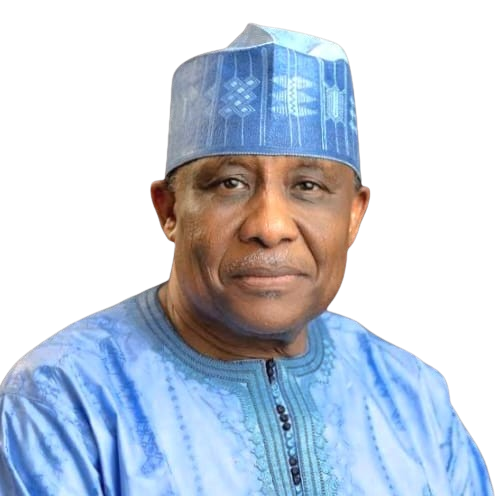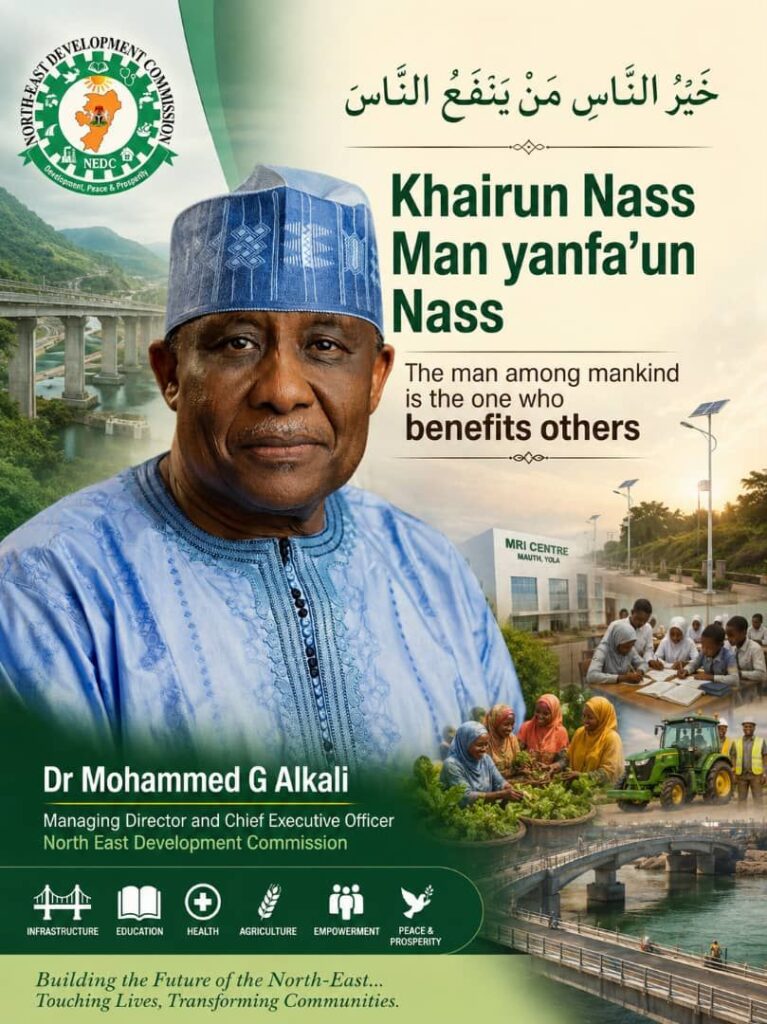
The transformation of Nigeria’s North-East requires more than the reconstruction of damaged infrastructure. It demands visionary leadership, strategic planning, compassion and a sustained commitment to rebuilding lives, restoring livelihoods and creating opportunities for lasting prosperity. Under the leadership of Dr. Mohammed G. Alkali, Managing Director and Chief Executive Officer of the North-East Development Commission (NEDC), the region’s development agenda continues to reflect the ambition of moving beyond recovery towards sustainable growth and shared prosperity.
For a region that has endured years of insecurity, displacement, economic disruption and humanitarian hardship, the task of rebuilding is both urgent and complex. It requires institutions capable of addressing immediate needs while laying the foundations for a stronger, more resilient future.
Within this context, Dr. Alkali’s leadership represents an important dimension of the North-East’s development aspirations: the pursuit of reconstruction, human development and economic transformation through purposeful institutional action.
He is often celebrated through four compelling descriptions: **a rare embodiment of grace, the hope of the hopeless, the builder of the North-East, and a leader of vision and compassion.** Together, these expressions capture the ideals of a leadership philosophy that places people at the centre of development and recognises that the ultimate measure of progress is the positive difference it makes in their lives.
## A Rare Embodiment of Grace
The true worth of leadership extends beyond official titles, institutional authority and public recognition. It is ultimately reflected in the lives improved, opportunities created and communities strengthened through the exercise of responsibility.
Describing Dr. Mohammed G. Alkali as a rare embodiment of grace speaks to the values of humility, service, compassion and dedication that define the ideal of purposeful public leadership.
At the helm of an institution entrusted with the enormous responsibility of supporting the North-East’s recovery and development, the challenge is not simply to implement projects but to ensure that interventions respond to the aspirations and practical needs of the people.
Behind every road is a farmer seeking easier access to markets. Behind every bridge is a community yearning for stronger connections. Behind every school is a generation preparing for tomorrow. Behind every healthcare facility is a family hoping for better access to treatment.
Similarly, every skills-acquisition programme represents an opportunity for a young person to become economically independent, while every initiative supporting small businesses can contribute to employment, household income and community development.
These realities give human meaning to the work of the NEDC. They demonstrate that development is not merely about physical structures or project completion figures; it is about improving the conditions under which people live, work and pursue their aspirations.
The Islamic principle of *Khairun Nass Man Yanfa’un Nass* — “The best of people are those who benefit others” — provides a fitting expression of this philosophy of service. It reinforces the belief that leadership achieves its highest purpose when its influence translates into meaningful benefits for society.
For Dr. Alkali, the broader significance of the NEDC’s mandate lies in helping communities regain confidence, strengthening economic opportunities and contributing to a future in which the people of the North-East can pursue progress with renewed optimism.
## The Hope of the Hopeless
The effects of prolonged conflict across the North-East extend far beyond damaged buildings and destroyed infrastructure. Families have lost livelihoods, businesses have been disrupted, communities have experienced displacement and countless young people have faced barriers to education, employment and economic advancement.
In such an environment, development becomes an important instrument for restoring hope.
A rehabilitated road can reconnect isolated communities to markets and essential services. A reconstructed bridge can improve mobility and facilitate commercial activities. A properly equipped school can expand educational opportunities, while healthcare infrastructure can strengthen access to essential medical services.
Agricultural support can help farmers improve production and livelihoods. Enterprise development can create opportunities for aspiring entrepreneurs, while vocational training can equip young people with practical skills for employment and self-reliance.
Energy investments, particularly those that improve access to reliable and sustainable power, can also support businesses, educational institutions, healthcare facilities and local economic activities.
The significance of such interventions extends beyond their immediate physical or economic outcomes. They can help restore a sense of belonging, rebuild public confidence and demonstrate that communities affected by crisis remain central to the region’s development priorities.
This is the deeper meaning behind the description of Dr. Alkali as the hope of the hopeless. Hope becomes meaningful when it is translated into practical opportunities that enable individuals and communities to rebuild their lives.
Ultimately, sustainable development should empower people to participate actively in their own progress rather than remain indefinitely dependent on assistance. It should create the conditions for dignity, productivity and greater economic independence.
## The Builder of the North-East
The description of Dr. Mohammed G. Alkali as the builder of the North-East reflects the broad scope of the development responsibilities entrusted to the NEDC.
Building the North-East is not the responsibility of a single project, sector or institution acting in isolation. It is a comprehensive undertaking that requires coordinated progress across infrastructure, education, healthcare, agriculture, energy, transportation, environmental sustainability, entrepreneurship and human capital development.
The challenge is not simply to replace what conflict destroyed. It is to establish stronger foundations for a more productive, inclusive and resilient regional economy.
Roads and bridges are essential to connectivity and commerce. Educational infrastructure strengthens the development of human capital. Healthcare investments support healthier communities, while agricultural programmes can improve food production and create opportunities across the agricultural value chain.
Support for micro, small and medium-sized enterprises can encourage entrepreneurship, stimulate local economic activities and expand employment opportunities. Meanwhile, investments in energy and transportation can help address structural constraints to economic growth and regional integration.
Each of these areas contributes to a larger development objective: creating a North-East where communities are better connected, businesses have greater opportunities to grow, young people can develop valuable skills and families can look towards the future with increased confidence.
The NEDC’s role is particularly significant because the region’s recovery requires interventions that address immediate challenges while supporting long-term development.
The real test of this undertaking will be the sustainability of the projects, their accessibility to intended beneficiaries, their maintenance over time and their measurable contributions to the wellbeing of communities across Adamawa, Bauchi, Borno, Gombe, Taraba and Yobe states.
Through strategic planning, effective implementation and accountable delivery, the Commission can continue to contribute to the construction of a stronger and more prosperous North-East.
## From Recovery to Prosperity
The North-East’s development journey must progress beyond the restoration of what was lost. Recovery is necessary, but recovery alone cannot guarantee lasting prosperity.
Recovery seeks to restore essential infrastructure, livelihoods and basic services. Development builds the systems, institutions and productive capacity required for sustained progress. Prosperity emerges when these foundations enable people and businesses to thrive over the long term.
This transition represents one of the most important aspirations of the NEDC’s mandate.
The region must move from emergency responses towards durable economic transformation, from vulnerability towards resilience, and from dependence towards greater productivity and self-reliance.
It must also embrace innovation, strengthen local enterprise and create opportunities that allow its youthful population to participate meaningfully in economic life.
The NEDC’s interventions should therefore be understood within the broader objective of strengthening the economic and social foundations of the region. Individual projects become more valuable when they form part of a coordinated development strategy that connects infrastructure with education, agriculture with markets, skills with employment, and energy with productive enterprise.
This is the significance of the journey from recovery to prosperity: building a regional economy capable of sustaining progress, generating opportunities and improving living standards for present and future generations.
Dr. Alkali’s leadership is situated within this broader ambition, with the Commission’s development agenda providing an institutional platform for advancing reconstruction, stability and economic growth.
## A Leader of Vision and Compassion
Vision without compassion risks producing development that overlooks the needs of ordinary citizens. Compassion without strategic direction, meanwhile, may result in interventions that provide temporary relief without creating lasting change.
The North-East requires both.
Vision enables leaders to identify the region’s potential and establish a clear direction for the future. Compassion encourages an understanding of the difficulties confronting communities and the people whose lives public institutions are expected to improve.
Strategy translates aspirations into programmes, while effective institutional leadership helps turn plans into practical outcomes.
These qualities are particularly important for an institution operating in a region where the challenges of reconstruction intersect with the demands of economic development, social inclusion and long-term stability.
The true value of infrastructure lies not merely in its construction but in its ability to improve lives. Agricultural programmes become more meaningful when farmers can increase productivity, access markets and earn sustainable incomes.
Schools make a greater contribution when children receive quality education and develop the knowledge needed to compete in a changing world. Healthcare facilities achieve their purpose when they improve access to effective services and support healthier communities.
Likewise, entrepreneurship initiatives become transformative when businesses can grow, create employment and contribute to the local economy.
This is the distinction between construction and transformation. Construction creates physical assets; transformation ensures that those assets and related interventions produce lasting social and economic benefits.
The leadership challenge is to maintain this connection between strategic ambition, institutional performance and the everyday needs of the people.
## Investing in Human Capital, Not Just Physical Structures
No region can achieve sustainable prosperity without investing in the abilities, health, knowledge and productive potential of its people.
Human capital development is therefore an indispensable component of the North-East’s transformation agenda. Education, healthcare, vocational training, youth empowerment and entrepreneurship are not secondary considerations; they are essential foundations for long-term economic progress.
The region’s youthful population represents an important opportunity. With appropriate investment and access to quality education and practical skills, young people can become entrepreneurs, engineers, agricultural innovators, healthcare professionals, educators, technology specialists and skilled industrial workers.
Women can expand their participation in enterprise, agriculture and community development. Students can acquire the expertise needed to address regional challenges, while farmers can adopt improved production methods and explore commercial opportunities.
Small businesses can develop into stronger enterprises capable of employing others, creating wealth and contributing to economic diversification.
Realising this potential requires more than the provision of facilities. It also demands effective programmes, qualified personnel, access to finance, appropriate technology, strong partnerships and opportunities for people to apply their knowledge productively.
For the NEDC, the long-term objective must be to ensure that investments in physical infrastructure complement investments in people. Roads, schools, hospitals, energy projects and enterprise-support initiatives are most valuable when they collectively expand human capability and economic opportunity.
The future of the North-East will ultimately depend not only on what is built, but also on what its people are empowered to achieve.
## A Legacy Defined by Service and Impact
The enduring legacy of a public leader is not determined by titles or ceremonial recognition alone. It is reflected in the tangible and lasting improvements experienced by the people.
It is found in the child who gains access to education, the patient who receives essential treatment, the farmer who reaches a market more easily and the entrepreneur who creates employment for another young person.
It is reflected in the family whose community becomes better connected, the student who benefits from improved learning facilities and the young person who acquires a skill that opens the door to economic independence.
These everyday outcomes are among the most meaningful measures of development because they demonstrate how public investment can improve the quality of life.
For the NEDC, the enduring significance of its work will depend on the extent to which projects meet genuine community needs, deliver measurable benefits and remain functional long after their completion.
Such an approach places people before projects, outcomes before publicity and sustainable transformation before temporary recognition.
It also reinforces the importance of accountability, transparency, effective monitoring and responsible management of public resources. These principles are essential to ensuring that development investments deliver the greatest possible value to the communities they are intended to serve.
The strongest legacy is one that continues to benefit people long after individual projects have been completed and individual officeholders have left their positions.
## Building a North-East of Peace, Progress and Prosperity
The ultimate aspiration for the North-East must extend beyond recovery towards a future defined by peace, economic opportunity, social inclusion and sustainable prosperity.
The region possesses considerable agricultural potential, a strategic geographical position, a youthful population and a rich cultural heritage. These strengths can provide a foundation for expanding commerce, manufacturing, technology, renewable energy and other productive sectors.
However, potential does not automatically translate into progress. It requires sustained investment, improved infrastructure, effective security, quality education, accessible healthcare, reliable energy and an environment in which businesses can operate and grow.
It also requires strong institutions capable of maintaining a long-term development vision and ensuring that public investments respond to the changing needs of communities.
The NEDC has an important role to play in this process. Its mandate places it at the intersection of reconstruction, stabilisation, rehabilitation and development across the six North-East states.
Under Dr. Mohammed G. Alkali’s leadership, the Commission’s significance lies in its capacity to help coordinate and advance interventions that address the region’s challenges while supporting its longer-term aspirations.
The task ahead remains substantial. Sustainable progress will require continued collaboration among federal and state governments, local authorities, development partners, private-sector organisations, traditional institutions, civil society and the communities themselves.
No single institution can accomplish the transformation of the North-East alone. Lasting progress depends on shared responsibility, effective coordination and a collective commitment to peace and development.
Nevertheless, institutions such as the NEDC remain essential to building the infrastructure, strengthening the capabilities and expanding the opportunities upon which the region’s future can be established.
## Conclusion: A Leadership Philosophy Anchored in Hope and Service
Dr. Mohammed G. Alkali’s leadership at the North-East Development Commission forms part of the continuing effort to transform a region that has endured profound security, humanitarian and economic challenges.
His public leadership is celebrated through the ideals of grace, hope, reconstruction, vision and compassion. These descriptions reflect the aspirations associated with a development agenda that seeks to restore confidence, rebuild communities and create opportunities for sustainable progress.
As a rare embodiment of grace, he represents the ideal of leadership rooted in service and responsibility. As the hope of the hopeless, he symbolises the aspiration that development should restore dignity and expand opportunity. As the builder of the North-East, he is associated with the broader task of strengthening infrastructure and human development. And as a leader of vision and compassion, he represents the importance of combining strategic planning with an understanding of the people’s needs.
The journey ahead requires sustained commitment, effective implementation, accountability and measurable results. Yet the region’s future should not be defined exclusively by the hardships it has endured. It must also be shaped by the opportunities it can create, the institutions it can strengthen and the prosperity its people can achieve.
From roads and bridges to schools and healthcare facilities, from agricultural development to entrepreneurship, and from energy investments to human capital advancement, every effective intervention can contribute to building a stronger foundation for the future.
The aspiration is clear: **from recovery to renewal, from renewal to growth, and from growth to shared prosperity.**
At the heart of this aspiration lies a timeless philosophy of service:
*“Khairun Nass Man Yanfa’un Nass”* — **The best of people are those who benefit others.**
It is a principle that captures the highest purpose of leadership: to serve with humility, lead with vision, act with compassion and leave behind a legacy measured by the positive difference made in the lives of others.
**Dr. Mohammed G. Alkali: A rare embodiment of grace, a symbol of hope, a builder of the North-East’s future and a leader associated with the pursuit of peace, progress and shared prosperity.**
Related posts:

GOV. PROF. BABAGANA UMARA ZULUM RECEIVES HIGH-POWERED APC E-REGISTRATION AND RECONCILIATION COMMITTE...

NEDC Enhances Healthcare Infrastructure in Adamawa with MRI Centre, Modern Emergency Unit at MAUTH Y...