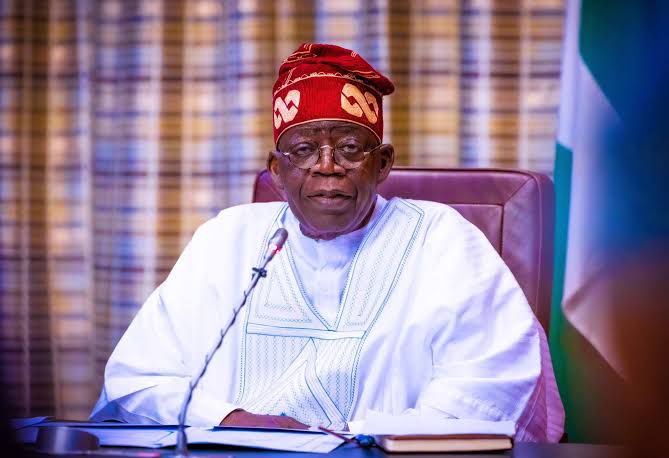
The Presidency has stated that although President Bola Tinubu is yet to complete three years in office, his administration has recorded significant achievements.
The President’s Special Adviser on Information and Strategy, Mr Bayo Onanuga, made this known while reacting to a recent report by The Economist assessing Tinubu’s performance.
In a post on X, Onanuga said President Tinubu inherited a deeply troubled economy but had taken bold steps to stabilise it. He quoted The Economist as noting that when Tinubu assumed office in 2023, Nigeria’s central bank was grappling with about $7 billion in unmet obligations, a situation that drove away international investors.
According to the report, the central bank’s credibility had been weakened by loose monetary policies, poor management of foreign-exchange reserves and an unsustainable multi-tier exchange-rate regime. It added that the government had also spent about $10 billion on fuel subsidies in 2022 alone.
To address these challenges, Tinubu’s administration introduced far-reaching structural reforms, including the removal of fuel subsidy and the unification of exchange rates, allowing the naira to largely float. The central bank also tightened monetary policy to rein in inflation, while the government intensified efforts to improve security in the Niger Delta and introduced tax incentives to attract investors and boost oil production.
The report acknowledged that nearly three years on, many Nigerians are still feeling the impact of higher fuel and food prices, with poverty levels rising. However, it noted that the reforms appear to be yielding results, as inflation dropped from a near 30-year high of 34.8 per cent in December 2024 to 15.2 per cent in December 2025.
It further stated that economic growth is picking up, with the International Monetary Fund projecting a 4.4 per cent expansion in 2026. The naira, after sharp devaluations in 2023, has stabilised, while foreign-exchange reserves have climbed to $46 billion, the highest in seven years.
According to The Economist, improving macroeconomic stability is restoring investor confidence, citing planned and ongoing investments by Shell and Exxon Mobil. Local business leaders were also described as increasingly optimistic, with oil and gas output rising, driven largely by improved security and local participation in the Niger Delta.
The report concluded that these developments could provide the government with greater fiscal space, especially as a weaker naira boosts the competitiveness of Nigeria’s non-oil exports such as cocoa and cashew nuts.