
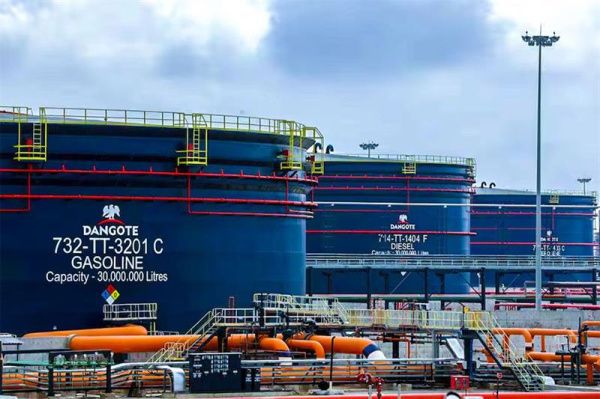
Dangote Refinery Switches Fuel Sales to U.S. Dollars
Dangote Petroleum Refinery has officially commenced the sale of its petroleum products in United States dollars, marking a major shift in Nigeria’s downstream oil and gas sector.
The new payment policy, which takes immediate effect, applies to the sale of Premium Motor Spirit (PMS), popularly known as petrol, Automotive Gas Oil (AGO) or diesel, and Aviation Turbine Kerosene (ATK) for both gantry and coastal customers.
The development represents a significant change in the refinery’s commercial operations and is expected to influence fuel pricing, foreign exchange demand, and the overall Nigerian petroleum market.
Why Dangote Refinery Switched to Dollar Payments
Industry sources revealed that the decision was driven by the refinery’s increasing exposure to foreign exchange risks.
According to officials familiar with the refinery’s operations, a growing proportion of crude oil supplied to Dangote Refinery by the Nigerian National Petroleum Company Limited (NNPCL) is now priced in U.S. dollars, while many of the refinery’s refined products have continued to be sold locally in naira.
This mismatch between dollar-denominated crude purchases and naira-denominated fuel sales has reportedly created substantial exchange rate losses for the refinery.
A senior industry official explained that the refinery now considers dollar-based sales necessary to maintain operational sustainability and reduce the impact of fluctuations in Nigeria’s foreign exchange market.
Limited Naira-for-Crude Supply
Sources further disclosed that the refinery requires more than 15 cargoes of crude oil every month to sustain its production capacity.
However, under the current naira-for-crude arrangement, NNPCL is reportedly able to supply only about three cargoes priced in naira, forcing the refinery to source additional crude from international markets where transactions are conducted in U.S. dollars.
The increasing dependence on imported crude has significantly raised the refinery’s dollar obligations, making the continuation of naira-based fuel sales financially challenging.
A memo communicating the new payment arrangement has reportedly been circulated to fuel marketers lifting petroleum products from the refinery.
Potential Impact on Fuel Prices and the Nigerian Economy
Energy experts believe the policy could reshape Nigeria’s petroleum market in several ways.
Some of the expected implications include:
Increased demand for U.S. dollars by fuel marketers.
Higher foreign exchange pressure on the naira.
Possible increase in the retail price of petrol, diesel, and aviation fuel.
Rising transportation and logistics costs.
Increased operating costs for businesses that depend on petroleum products.
Market observers note that because Dangote Refinery is one of Nigeria’s largest suppliers of refined petroleum products, any major pricing policy adopted by the refinery is likely to influence the broader downstream market.
Expert Analysis
Oil and gas industry analyst Otunba Tunji Oyebanji attributed the development to challenges surrounding Nigeria’s crude oil supply.
According to him, Nigeria’s crude production remains below expectations, while significant volumes of future crude output have already been committed under existing contractual obligations with international buyers.
He explained that these commitments reduce the amount of crude available for domestic refining, forcing Dangote Refinery to purchase additional crude from foreign suppliers in dollars.
Oyebanji added that the resulting increase in demand for foreign currency could place additional pressure on the naira and contribute to further exchange rate volatility.
Implications for Consumers
Although the new policy currently affects wholesale transactions between the refinery and fuel marketers, industry stakeholders believe its effects could eventually reach retail consumers.
If marketers incur higher foreign exchange costs while purchasing fuel, these expenses may ultimately be reflected in pump prices, depending on prevailing market conditions and exchange rates.
The development also raises fresh questions about the future of Nigeria’s naira-for-crude initiative, which was introduced to reduce pressure on foreign exchange and improve domestic fuel supply.
In onclusion, Dangote Refinery’s decision to price petrol, diesel, and aviation fuel in U.S. dollars marks another significant turning point in Nigeria’s energy sector. While the move is aimed at protecting the refinery from exchange rate risks arising from dollar-denominated crude purchases, analysts warn that it could increase demand for foreign exchange and potentially impact fuel prices across the country.
As stakeholders monitor the implementation of the new payment policy, attention will remain focused on crude oil supply arrangements, exchange rate stability, and their implications for Nigeria’s economy and consumers.