
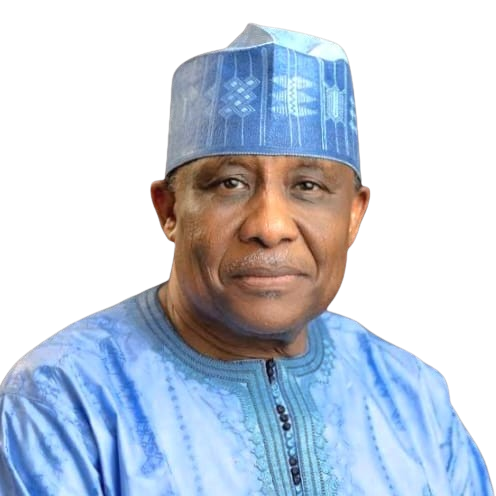
The North-East Development Commission (NEDC), under the leadership of its Managing Director and Chief Executive Officer, Dr Mohammed G. Alkali, is deepening investments in education as a critical pathway to human capital development, social stability and sustainable economic growth across the North-East region.
Education is one of the 11 strategic pillars of the North-East Stabilisation and Development Master Plan (NESDMP), reflecting the recognition that lasting development in the region cannot be achieved without strengthening its education system and creating the right conditions for young people to acquire knowledge, skills and opportunities.
Against this background, the construction of a 250-bed-capacity Students’ Hostel at Mohammed Lawan College of Agriculture in Borno State is more than an infrastructure project. It represents an investment in students, agricultural education and the future workforce of the North-East.
Creating a Conducive Environment for Learning
For students to achieve their full academic potential, access to quality teaching must be complemented by a safe, stable and conducive learning environment.
Adequate accommodation is an important part of that environment. Students who have secure housing close to their institution are better positioned to attend lectures regularly, participate in academic activities and concentrate on their studies without the additional burden of searching for affordable accommodation far from campus.
This is particularly significant for students from rural and underserved communities, many of whom travel considerable distances to access tertiary education.
The 250-bed hostel is therefore expected to help address some of the accommodation challenges facing students while contributing to improved welfare and a more organised academic environment at the college.
Strengthening Agricultural Education
The choice of Mohammed Lawan College of Agriculture is also significant because agriculture remains one of the most important sectors for the economic transformation of the North-East.
The region possesses substantial agricultural potential, but unlocking that potential requires more than access to farmland. It requires a generation of educated and skilled professionals capable of applying modern knowledge and technology to agriculture.
By supporting institutions that train agricultural professionals, NEDC’s education interventions can contribute to the development of human capital in areas including modern farming techniques, agribusiness, agricultural extension services, food processing, mechanisation, irrigation, agricultural technology and value-chain development.
The hostel, therefore, supports a broader objective: ensuring that students have the necessary conditions to acquire the knowledge and skills required to contribute meaningfully to the region’s agricultural transformation.
Dr Mohammed G. Alkali’s Education-Focused Leadership
Under Dr Mohammed G. Alkali, NEDC has continued to place human capital development and educational infrastructure among the priorities of its regional interventions.
His approach recognises that roads, bridges, power and other physical infrastructure are important to development, but sustainable progress ultimately depends on the quality of people who will drive and maintain those investments.
Investment in schools, student accommodation, learning facilities, skills development and other educational infrastructure is consequently an investment in the future of the region.
The Mohammed Lawan College of Agriculture hostel forms part of this broader vision of creating an environment where young people can obtain quality education and develop the skills required to become productive contributors to their communities.
Education as a Foundation for Regional Development
The inclusion of education as one of the 11 pillars of the NESDMP underscores its strategic importance to the North-East’s recovery and development agenda.
The region’s long-term prosperity will depend heavily on its ability to produce educated young people who can participate in agriculture, entrepreneurship, technology, healthcare, engineering, public administration and other productive sectors.
A conducive educational environment can also contribute to social stability by giving young people meaningful opportunities for personal development and economic participation.
For this reason, the provision of student accommodation should not be viewed simply as the construction of a building. It is part of a larger human-capital investment aimed at improving access, welfare and educational outcomes.
Building the North-East Through Its Young People
The 250-bed-capacity hostel at Mohammed Lawan College of Agriculture demonstrates how education infrastructure can connect directly with the broader development objectives of the North-East.
When students have access to safe accommodation, functional learning facilities and supportive academic environments, they are better positioned to complete their education and acquire the skills needed to contribute to society.
For NEDC, such interventions align with the broader objective of building a more stable, skilled and economically productive North-East.
Dr Mohammed G. Alkali’s emphasis on education reflects a fundamental development principle: the most sustainable investment in the North-East is an investment in its people.
By strengthening educational institutions and improving the conditions under which students learn, NEDC is helping to prepare a new generation of professionals, entrepreneurs, farmers, technologists and community leaders who will play a critical role in shaping the future of the region.
The 250-bed Students’ Hostel is therefore not merely accommodation. It is an investment in student welfare, agricultural education, human capital and the long-term development of the North-East.