
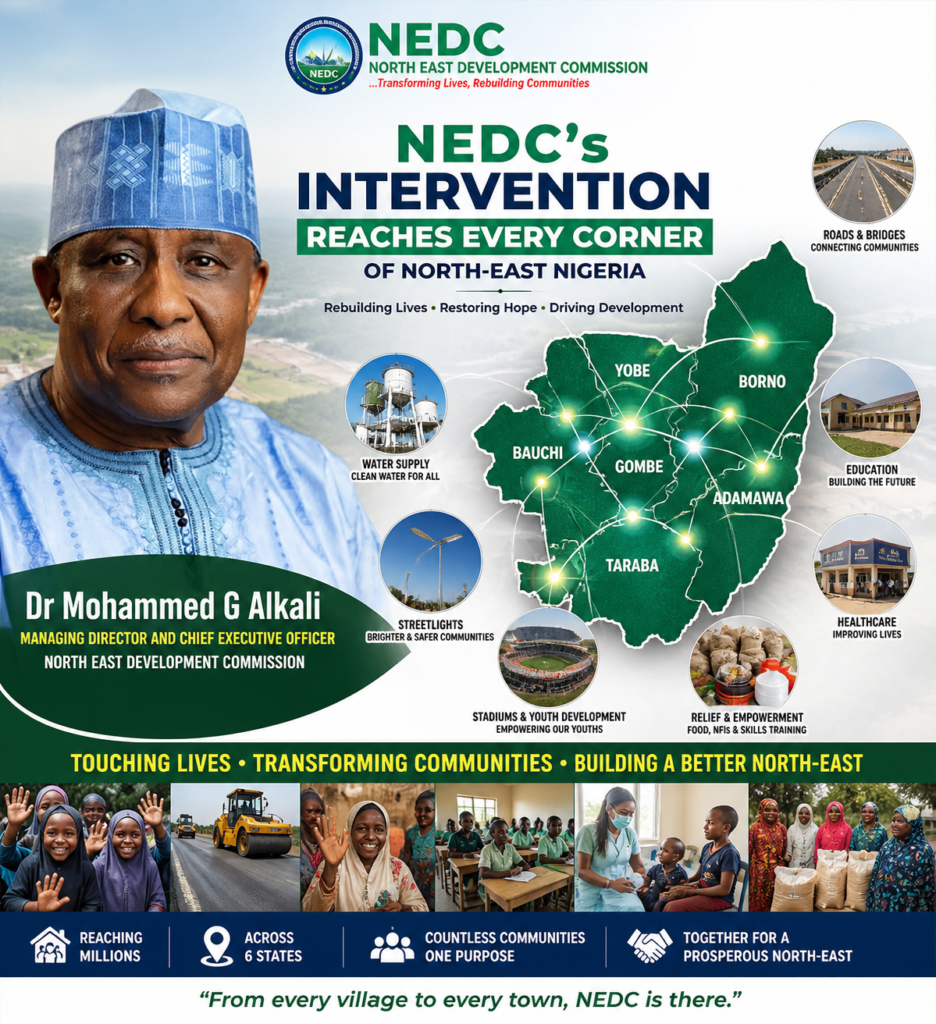
Human Capital Development as a Foundation for Sustainable Growth
Education remains one of the most effective tools for economic growth, social progress, and long-term stability. Across the North-East region of Nigeria, efforts aimed at expanding access to quality education and skills development are helping to create opportunities for thousands of young people.
One institution playing a significant role in this transformation is the North East Development Commission (NEDC), under the leadership of Dr. Mohammed G. Alkali, Managing Director and Chief Executive Officer. Through various educational interventions and youth empowerment initiatives, the Commission continues to demonstrate the importance of investing in human capital as a pathway to regional development.
Why Education Matters More Than Ever
Communities recovering from years of insecurity and economic challenges require more than emergency relief.
While humanitarian assistance addresses immediate needs, education provides a long-term solution by equipping individuals with the knowledge, skills, and confidence needed to build better lives.
Educational support programmes help reduce poverty, improve employment prospects, encourage innovation, and strengthen social cohesion. For many young people, access to education represents the first step toward achieving personal and professional success.
Investing in the Potential of Young People
Every student represents untapped potential. Among today’s learners are tomorrow’s doctors, engineers, teachers, entrepreneurs, researchers, public servants, and community leaders.
By supporting educational opportunities, development agencies and institutions contribute to creating a generation capable of driving economic growth and solving local and national challenges.
Such investments often produce benefits that extend far beyond individual beneficiaries, positively impacting families and entire communities.
Building Hope Through Educational Opportunities
One of the greatest impacts of educational support is the hope it creates. Young people who receive assistance often gain renewed confidence in their ability to pursue their goals and contribute meaningfully to society.
Communities also benefit when educational opportunities become more accessible. Increased school participation, improved literacy rates, and enhanced skills acquisition contribute to stronger and more resilient societies.
The Role of the Academic Support and Skills Enhancement Programme (ASSEP)
A key initiative supporting educational advancement in the North-East is the Academic Support and Skills Enhancement Programme (ASSEP). The programme focuses on providing students and young people with access to academic resources, digital literacy training, vocational education, and capacity-building opportunities.
ASSEP recognizes that modern education extends beyond classroom learning. In today’s rapidly changing world, practical skills, technological competence, entrepreneurship, and critical thinking are increasingly important for success.
Through skills enhancement programmes, participants gain valuable knowledge that improves employability, encourages innovation, and promotes self-reliance. These outcomes contribute directly to economic development and social stability.
Supporting the Recovery and Development of the North-East
The North-East region has faced significant developmental challenges over the years. As communities continue to rebuild, education remains one of the most powerful tools for recovery and progress.
Investments in schools, educational programmes, scholarship opportunities, and skills acquisition initiatives help create a more productive workforce while reducing vulnerability among young people. Such efforts also support peacebuilding by providing constructive opportunities for youth engagement and personal development.
Leadership and Long-Term Vision
Sustainable development requires leaders who prioritize long-term outcomes over short-term gains. Programmes focused on education and skills development demonstrate a commitment to building a future where young people have access to opportunities that enable them to reach their full potential.
By supporting educational initiatives and youth empowerment programmes, institutions contribute to creating a foundation for lasting prosperity, innovation, and community development.
The Future of Education in North-East Nigeria
The future of the North-East depends largely on the investments made in young people today. Expanding access to quality education, strengthening skills development programmes, and creating opportunities for academic advancement will continue to play a crucial role in shaping the region’s future.
As educational initiatives grow and more young people gain access to learning opportunities, the region stands to benefit from a generation equipped with the knowledge, skills, and determination needed to drive sustainable development.
Conclusion
Investing in education is one of the most effective ways to create lasting social and economic change. Through educational support initiatives and programmes such as the Academic Support and Skills Enhancement Programme (ASSEP), efforts are being made to empower young people, strengthen communities, and contribute to the long-term development of North-East Nigeria.
The impact of these investments extends beyond classrooms, creating opportunities, fostering innovation, and preparing future generations to lead the region toward greater prosperity and stability.