
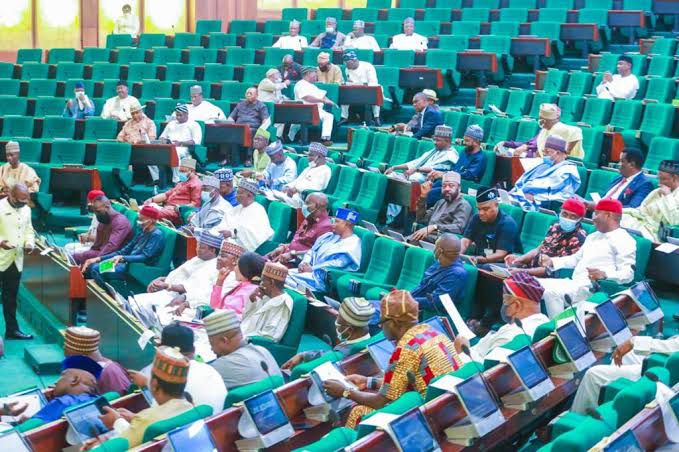
The House of Representatives Public Accounts Committee (PAC) has commenced an investigation into more than ₦432 billion in outstanding financial obligations allegedly owed to the Nigerian Midstream and Downstream Petroleum Regulatory Authority (NMDPRA) by the Nigerian National Petroleum Company Limited (NNPCL) and other petroleum industry operators.
The investigation followed findings contained in the Auditor-General of the Federation’s reports for 2023 and 2024, which raised concerns over unpaid statutory obligations arising from transactions within Nigeria’s petroleum sector.
The committee said the exercise was not intended to witch-hunt any company or individual but to establish the facts surrounding the outstanding liabilities, determine what has been paid, identify the amounts still outstanding and ascertain whether appropriate measures were taken to recover government revenue.
The Chairman of the Public Accounts Committee, Rep. Bamidele Salam, made the position known in a statement announcing the commencement of the committee’s sitting.
Salam urged all government agencies, companies and other entities invited by the committee to honour the summons and appear with relevant records and supporting documents.
According to him, the committee’s responsibility is to ensure that public revenue is properly accounted for and that statutory obligations due to government are not allowed to remain outstanding without adequate recovery efforts.
He said the committee would require the affected entities to provide records necessary for Parliament to understand the circumstances surrounding the debts.
“Any company invited by this Committee must respect the people’s Parliament of the Federal Republic of Nigeria by honouring the summons with appropriate representation and all relevant documents.
“We are not here to witch-hunt anybody; our responsibility is to establish the facts, protect public revenue and ensure that every naira due to the government is properly accounted for,” Salam said.
What the Auditor-General’s Report Revealed
The investigation centres on financial obligations identified in the Auditor-General’s reports relating to the operations of the petroleum industry.
An analysis of the 2023 Auditor-General’s report indicated that more than ₦432 billion in obligations was outstanding to the NMDPRA during the period under review.
The entities identified in connection with the outstanding liabilities include NNPCL and petroleum companies operating under industry associations such as the Depot and Petroleum Products Marketers Association of Nigeria (DAPPMAN), the Major Marketers Association of Nigeria (MOMAN) and the Major Energy Marketers Association of Nigeria (MEMAN).
The reported obligations were linked to several categories of payments and transactions, including Balancing Allowance, National Transport Average, the one per cent Midstream and Downstream Gas Infrastructure Fund, as well as legacy liabilities associated with import, coastal and credit transactions.
Breakdown of the 2023 Outstanding Obligations
The 2023 figures cited in the Auditor-General’s report showed that NNPCL had an outstanding obligation of approximately ₦162.46 billion.
Other oil companies were reported to have outstanding obligations of about ₦230.27 billion.
Together, the two categories amounted to approximately ₦392.73 billion.
The Auditor-General’s 2024 report subsequently put the outstanding obligations at approximately ₦432.07 billion, although the figure reportedly excludes NNPCL’s indebtedness in that particular assessment.
The figures have prompted questions about the accumulation of the liabilities, the mechanisms used to monitor statutory payments and the actions taken by the relevant regulatory authorities to recover amounts due to government.
PAC to Examine Payments and Recovery Efforts
As part of the investigation, the Public Accounts Committee said it would examine the records supporting the outstanding liabilities.
The review is expected to cover the basis upon which the debts arose, the periods to which they relate, payments already made by the affected companies, the amounts that remain outstanding and the steps taken by the relevant authorities to recover the funds.
The committee will also seek to establish whether discrepancies exist between the amounts assessed as payable and amounts actually remitted by the affected entities.
Such an examination could provide Parliament with a clearer picture of the government’s revenue collection processes within the midstream and downstream petroleum sectors.
Accountability for Public Revenue
The House committee said its intervention forms part of its constitutional oversight responsibility over public finances.
Salam stressed that statutory obligations owed to government agencies must be properly documented and followed up until they are either paid or otherwise lawfully resolved.
He said the committee would use the relevant records and evidence presented during the proceedings to determine the facts surrounding the reported liabilities.
The investigation also underscores the importance of effective revenue monitoring in the petroleum industry, where large-value transactions and statutory payments require accurate records and consistent oversight.
The committee therefore urged all invited entities to cooperate with the process by submitting complete and verifiable documentation.
At the conclusion of its examination, the PAC is expected to determine the status of the reported obligations and make appropriate recommendations based on its findings.
The exercise is part of the broader parliamentary effort to strengthen financial accountability, improve revenue recovery and ensure that funds due to the Federal Government are properly identified, collected and accounted for.