
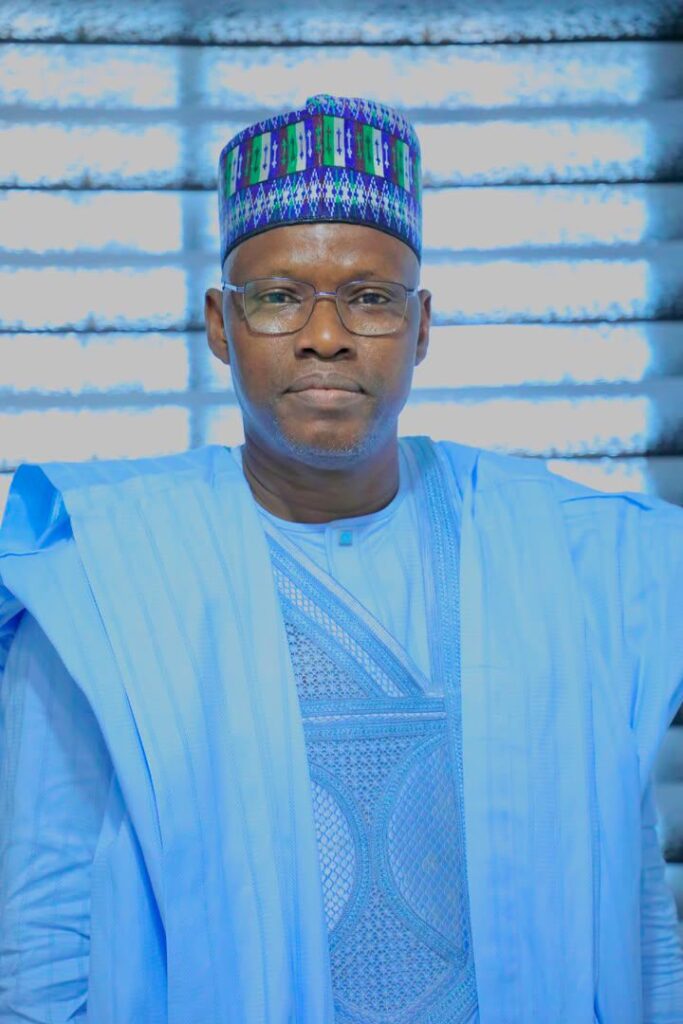
In every defining moment of a state’s history, leadership appointments become more than political exercises; they become declarations of priorities. Borno State, having endured years of insurgency, humanitarian crises, displacement, flooding, and the arduous task of rebuilding communities, requires leaders whose credentials have been tested not by political rhetoric but by service under the harshest conditions imaginable.
The nomination of Ali Isa as Deputy Governor is one such declaration. It is a statement that competence, courage, integrity, and sacrifice still matter in public service.
Predictably, the nomination has attracted criticism from certain quarters. Yet, much of the opposition has revealed more about the critics than about the nominee. Rather than presenting evidence of incompetence or misconduct, many have relied on conjecture, political sentiment, and personal preference. Such criticism is not constructive opposition; it is performative dissent, opposition for its own sake.
If the office of Deputy Governor is meant to complement executive leadership with experience, crisis management, administrative competence, and unwavering commitment to the people, then Ali Isa stands as one of the most qualified individuals Borno State could have chosen.
His record speaks with uncommon clarity.
Unlike many public officials whose achievements exist only in policy papers and ceremonial speeches, Ali Isa’s career has been forged on the frontlines of humanitarian emergencies. During periods when communities were devastated by insurgency and natural disasters, he was not an observer. He was an active participant in saving lives.
He traversed flooded communities in Dikwa, Kala Balge, and other affected areas to coordinate emergency interventions. He worked tirelessly to ensure that displaced families received food, shelter, and medical assistance despite enormous logistical and security challenges. His assignments frequently placed him in environments where insurgent attacks were a real and constant threat. Yet he remained steadfast because public service, to him, was never merely an occupation; it was a responsibility.
These experiences cannot be acquired in conference halls or political meetings. They are earned through years of courage, discipline, and selfless dedication.
Albert Schweitzer once observed that “The purpose of human life is to serve, and to show compassion and the will to help others.” Few public servants embody this philosophy more completely than Ali Isa.
His suitability extends beyond humanitarian response.
As Director of the Borno State Emergency Management Agency, he has demonstrated exceptional administrative capacity by coordinating government institutions, humanitarian partners, security agencies, development organisations, traditional leaders, and community structures. Such coordination requires strategic thinking, sound judgment, diplomacy, accountability, and the ability to make critical decisions under pressure—qualities indispensable to the office of Deputy Governor.
Borno today requires precisely this type of leadership.
The state is rebuilding communities, restoring livelihoods, strengthening resilience against climate-related disasters, improving service delivery, and consolidating peace after years of conflict. These challenges demand leaders who understand government from both policy and operational perspectives.
Ali Isa possesses this rare combination.
He understands the realities of displaced communities because he has worked directly with them.
He understands disaster management because he has coordinated emergency responses.
He understands development because he has partnered with national and international organisations in implementing interventions that restore hope to vulnerable populations.
He understands governance because he has translated government policy into measurable action.
This breadth of experience is not merely desirable; it is essential.
The Deputy Governor’s office is fundamentally an office of support, coordination, continuity, and problem-solving. It requires someone capable of stepping into complex situations with confidence and credibility. Ali Isa has repeatedly demonstrated that capacity throughout his public career.
The objections raised against his nomination also expose a troubling trend in contemporary politics: the substitution of evidence with emotion. In every healthy democracy, opposition serves an indispensable purpose by holding government accountable. However, accountability must be rooted in facts rather than personal disappointment or political exclusion.
If critics believe Ali Isa is unsuitable, the burden rests upon them to present objective evidence. They must identify failures of integrity, competence, or service significant enough to outweigh decades of distinguished public service. To date, such evidence has not been forthcoming.
Instead, the overwhelming evidence points in the opposite direction.
It reveals a public servant whose career has consistently prioritised the welfare of others above personal comfort.
It reveals a leader who has remained calm under extraordinary pressure.
It reveals an administrator trusted with some of the state’s most complex humanitarian responsibilities.
Most importantly, it reveals a man who has repeatedly demonstrated that leadership is measured not by titles held but by lives touched.
The philosopher Aristotle argued that “The whole is greater than the sum of its parts.” Borno’s progress depends upon assembling a leadership team whose collective strengths address the state’s unique challenges. In Ali Isa, the state gains not merely an experienced administrator but a crisis manager, humanitarian leader, development practitioner, and bridge-builder capable of strengthening the executive arm of government.
History consistently rewards societies that elevate merit above patronage. Conversely, societies that reject competence for political expediency inevitably bear the cost of poor governance.
Ali Isa’s nomination therefore represents more than an individual appointment. It represents an opportunity to affirm that public service, sacrifice, and professional excellence remain worthy qualifications for high office.
No leader is perfect, and Ali Isa himself would likely make no such claim. Yet perfection has never been the standard for leadership. Character, competence, courage, and commitment have always mattered far more.
By every reasonable measure, Ali Isa satisfies those standards.
Borno deserves leaders who understand its pain because they have shared in it; leaders who have walked through floodwaters, conflict zones, displacement camps, and devastated communities—not merely to witness suffering but to alleviate it.
Ali Isa has done precisely that.
The question, therefore, is no longer whether he is qualified.
The evidence has already answered that.
The real question is whether Borno will recognise and support a leader whose life has been defined by service rather than self-interest.
On that question, history will render its verdict.
For now, the nomination of Ali Isa stands not only as a wise political decision but as an affirmation that the highest offices of public trust should be entrusted to those who have already proven, through action rather than words, that they possess both the courage to lead and the humility to serve.
Borno could scarcely ask for a more suitable Deputy Governor.