
For more than a decade, the North-East of Nigeria has faced a complex combination of security challenges, displacement, damaged infrastructure, disrupted livelihoods and weakened economic activity. Rebuilding the region therefore requires more than restoring physical structures. It requires a coordinated development strategy capable of reconnecting communities, stimulating production, creating jobs and laying the foundations for long-term prosperity.
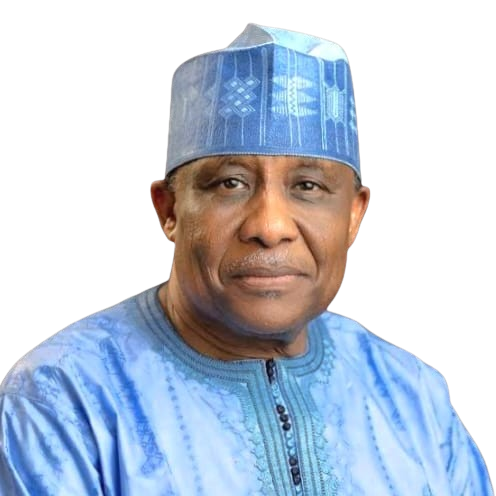
The North-East Development Commission (NEDC), under the leadership of its Managing Director and Chief Executive Officer, Dr. Mohammed G. Alkali, has continued to place infrastructure and economic development at the centre of its interventions.
The Commission’s emerging development agenda reflects a broader transition from emergency recovery to sustainable development. Roads and bridges are being used to improve physical connectivity, while proposed investments in renewable energy, rail transportation, aviation, electric mobility and enterprise financing are intended to create an interconnected economic ecosystem.
The objective is increasingly clear: move the North-East from recovery to prosperity by building the infrastructure, energy systems and economic opportunities required for sustainable growth.
Roads and Bridges: Reconnecting Communities and Markets
Transport infrastructure remains one of the most important foundations of regional economic development.
The NEDC has delivered more than 300 kilometres of roads and over 50 bridges, according to figures provided by the Commission. These interventions are designed to reconnect communities and restore important transportation corridors across the six states of the North-East.
The importance of these projects goes beyond the physical construction of roads.
A functioning road network can determine how quickly agricultural produce reaches markets, how easily patients access healthcare facilities and how efficiently students and teachers travel to educational institutions.
For traders and businesses, improved roads can reduce travel difficulties and contribute to more predictable movement of goods.
For farmers, connectivity can be particularly important. Agricultural production is often concentrated in rural communities, while many major markets and processing centres are located in towns and cities. Better roads can therefore help reduce the physical distance between producers and consumers.
Bridges play an equally important role by providing safe crossings and preventing communities from becoming isolated because of rivers, seasonal flooding or damaged infrastructure.
In this context, road and bridge construction represents not simply an infrastructure programme, but an investment in economic connectivity.
Additional ₦100 Billion for Roads and Bridges
To consolidate its interventions in the transport sector, the NEDC Governing Board approved an additional ₦100 billion for the construction and rehabilitation of strategic roads and bridges across the North-East.
The investment is intended to build upon the Commission’s existing infrastructure delivery and further strengthen connections between communities, agricultural production areas, commercial centres and emerging industrial clusters.
The wider economic significance lies in the possibility of creating stronger links between production and consumption.
When roads connect farmers to markets, businesses to suppliers and communities to services, infrastructure becomes part of the economic value chain.
The effectiveness of such investment, however, will ultimately depend on construction quality, proper maintenance, transparency and the ability of complementary sectors to take advantage of improved connectivity.
50MW Solar Mini-Grid Power: A ₦100 Billion Investment in Energy
Transport infrastructure alone cannot deliver sustainable economic transformation.
Reliable electricity remains one of the major requirements for modern economic activity. Businesses need energy to operate machinery, preserve products, provide services and use digital technology.
Recognising the importance of energy access, the NEDC Governing Board approved a ₦100 billion investment for the deployment of 50MW of renewable energy through solar mini-grids and distributed energy systems.
The proposed programme is expected to expand access to electricity while supporting the use of renewable energy technologies across the region.
For communities outside major urban centres, distributed energy systems can provide an opportunity to improve electricity access without relying exclusively on large-scale conventional grid expansion.
The potential economic applications are extensive.
Small businesses can use electricity for productive activities. Agricultural enterprises can employ power for processing and storage. Healthcare facilities can improve the reliability of essential equipment. Schools can benefit from electricity for digital learning and other educational technologies.
The programme therefore places energy at the centre of the region’s transition towards a more productive economy.
Powering Small Businesses and Local Industry
The relationship between electricity and entrepreneurship is particularly important in the North-East.
Micro, small and medium enterprises constitute an important part of local economies. From food processing and tailoring to welding, refrigeration, ICT services and small-scale manufacturing, businesses require dependable energy to operate efficiently.
Where electricity is unreliable or unavailable, enterprises may face higher operating costs and reduced productivity.
Renewable-energy infrastructure could help address some of these challenges while also supporting a gradual transition towards cleaner sources of power.
However, the long-term impact will depend on the affordability, reliability and sustainability of the systems deployed, as well as effective maintenance and community-level management.
The Proposed North-East Railway: A New Transport Corridor
Another major component of the emerging infrastructure vision is the advancement of the proposed North-East Railway.
A functional railway network could significantly change the way people and goods move across the region.
Rail transportation has the potential to support both passenger mobility and freight movement. For agricultural producers and industrial businesses, an efficient freight system could provide an alternative means of transporting large volumes of goods over longer distances.
The proposed railway is also expected to contribute to regional integration and strengthen the North-East’s position as a potential trade corridor linking different parts of Nigeria with neighbouring countries.
For a region with substantial agricultural and commercial potential, improved freight connectivity could help reduce some of the logistical constraints that affect the movement of goods.
A railway system could also complement road transportation rather than replace it. Roads can provide last-mile connections to farms, communities and businesses, while rail can potentially handle larger volumes of freight between major economic centres.
Building an Integrated Transport System
The railway proposal forms part of a broader transportation strategy that includes roads, bridges and aviation.
The importance of this approach is that no single mode of transportation can adequately serve all economic needs.
Roads provide flexibility and last-mile connectivity.
Railways can support large-scale passenger and freight movement.
Air transport can facilitate faster movement of people, high-value goods and emergency supplies over long distances.
When these systems are effectively connected, they can create a more integrated regional transportation network.
Such connectivity can reduce the time and cost associated with moving people and goods, potentially improving the competitiveness of businesses operating within the region.
Proposed North-East Regional Airline: Connecting the Region
The development of a North-East Regional Airline is another proposed initiative aimed at improving connectivity across and beyond the region.
Air connectivity can be particularly valuable for business travel, tourism, emergency response, cargo movement and interaction between investors and development institutions.
The availability of reliable regional air services could make travel between major cities more convenient and potentially strengthen economic relationships among the six North-East states.
It could also support the tourism sector by making destinations within the region more accessible to visitors.
For investors and development partners, improved connectivity can contribute to a more accessible business environment.
The success of such an initiative would, however, depend on factors including commercial viability, safety, professional management, airport infrastructure, route demand and long-term financial sustainability.
Electric Vehicles: Preparing the North-East for Sustainable Mobility
Transportation is undergoing a global transformation as countries increasingly explore cleaner and more energy-efficient mobility options.
The NEDC’s Electric Vehicle (EV) Programme seeks to position the North-East as part of Nigeria’s emerging transition towards electric transportation.
As part of the planned phased rollout, the programme is expected to deploy more than 10,000 electric vehicles, including electric taxis, 12-seater electric minibuses and larger-capacity electric buses.
The Commission has also indicated that vehicles are already in Nigeria ahead of the official launch.
The programme is designed to be supported by charging infrastructure and maintenance facilities.
The significance of electric mobility goes beyond replacing conventional vehicles.
A successful EV ecosystem requires charging stations, technicians, spare parts, technical training, battery management and appropriate operating models.
Consequently, the initiative could create opportunities for a new category of businesses and skilled workers.
Young people trained in electric-vehicle maintenance, battery systems, electrical engineering and related technologies could become part of an emerging clean-transport workforce.
The Economic Potential of Electric Mobility
Electric vehicles could also contribute to reducing dependence on conventional transport fuels over time.
For commercial transport operators, the economic value of electric mobility will depend largely on acquisition costs, electricity availability, charging infrastructure, maintenance requirements and battery performance.
This makes the planned EV programme closely connected to the NEDC’s renewable-energy strategy.
Reliable electricity and electric mobility can reinforce each other.
Solar-powered charging infrastructure, where technically and economically viable, could provide an additional link between renewable energy and transportation.
The result could be the development of a more integrated clean-energy and clean-transport ecosystem.
₦30 Billion NEDC–BOI MSME Development Fund
Infrastructure is only one side of economic development.
Communities also need businesses capable of taking advantage of improved roads, electricity and transportation.
This is where the proposed ₦30 billion NEDC–Bank of Industry (BOI) MSME Development Fund becomes significant.
The fund is designed to provide financing, business development services and capacity-building support for micro, small and medium enterprises, with particular attention to youth- and women-owned businesses.
MSMEs are important sources of employment and entrepreneurship across Nigeria.
By improving access to finance and business support, the fund could help enterprises acquire equipment, expand production, improve their operations and create additional employment.
The broader objective is to strengthen local economic capacity so that infrastructure investment produces wider economic benefits.
From Infrastructure to Industrialisation
The ultimate value of infrastructure is determined by what people and businesses are able to do with it.
A road is more valuable when it helps farmers reach markets.
Electricity is more valuable when it enables businesses to produce goods and provide services.
A railway becomes more economically significant when it efficiently moves agricultural and industrial products.
An airport becomes more useful when it facilitates investment, tourism and commerce.
Finance becomes more impactful when entrepreneurs use it to build sustainable enterprises.
This interconnected approach is central to the idea of moving from recovery to prosperity.
Agriculture as a Major Beneficiary
Agriculture remains one of the North-East’s major economic opportunities.
The region has extensive agricultural land and a large population engaged directly or indirectly in farming and related activities.
However, agricultural productivity alone is insufficient if farmers cannot efficiently move, process and market their products.
Roads can improve access to markets.
Electricity can support irrigation, processing, refrigeration and storage.
Rail can potentially facilitate bulk transportation.
MSME financing can help entrepreneurs establish processing and packaging businesses.
Improved air connectivity can support the movement of selected high-value or time-sensitive products.
Together, these interventions can strengthen agricultural value chains from production to consumption.
Supporting Trade and Regional Integration
The North-East’s geographical position also gives it potential importance in regional trade.
Improved roads, railways and aviation could strengthen connections between the region’s commercial centres and neighbouring countries.
This is particularly important because trade depends heavily on the ability to move goods efficiently and predictably.
Lower logistics costs can improve competitiveness, while better infrastructure can encourage businesses to expand their distribution networks.
The development of a connected regional economy could therefore have implications beyond individual states.
It could contribute to greater economic interaction among communities within the North-East and between the region and neighbouring markets.
Creating Opportunities for Young People
One of the most important measures of development is the extent to which it creates opportunities for young people.
The North-East has a large and growing youth population.
Infrastructure programmes can generate employment during construction, but the longer-term objective should be to create productive economic opportunities after projects are completed.
The combination of MSME financing, renewable energy, electric mobility, transportation infrastructure and improved connectivity could open opportunities in areas such as technology, logistics, manufacturing, agriculture, maintenance services, transport and renewable-energy development.
Skills development will therefore remain important.
Young people need access not only to jobs but also to the skills and financing required to create enterprises.
Moving Beyond Reconstruction
The North-East’s development story should not be defined exclusively by the challenges it has experienced.
Reconstruction remains necessary, but the region also requires a forward-looking economic strategy.
The transition from recovery to prosperity means rebuilding damaged infrastructure while simultaneously creating new systems that can support investment, entrepreneurship and productivity.
This is why the combination of roads, bridges, renewable energy, rail transportation, aviation, electric mobility and MSME financing is significant.
Each intervention addresses a different constraint, but their greatest potential may come from how they work together.
The Importance of Implementation and Accountability
Large-scale development programmes require careful implementation.
For infrastructure investments to deliver their intended benefits, projects must be properly planned, competitively executed, monitored and maintained.
The same applies to financial programmes.
MSME funds must reach eligible businesses under transparent and sustainable financing arrangements.
Renewable-energy projects require reliable maintenance systems.
Electric vehicles require charging networks and technical support.
Rail and aviation projects require strong safety and operational standards.
Sustained public confidence will depend not only on announcing projects but on demonstrating measurable outcomes.
Clear reporting, independent monitoring and community engagement can help ensure that investments translate into tangible improvements in people’s lives.
A New Chapter for the North-East
The North-East is at a point where reconstruction can increasingly be connected to a broader vision of economic transformation.
The delivery of more than 300 kilometres of roads and over 50 bridges, the additional ₦100 billion road and bridge investment, the proposed ₦100 billion renewable-energy programme for 50MW, the advancement of the North-East Railway, the proposed Regional Airline, the rollout of the Electric Vehicle Programme, and the ₦30 billion NEDC–BOI MSME Development Fund collectively point towards an infrastructure-led approach to regional development.
These initiatives should not be viewed as isolated projects.
They are components of a wider development ecosystem in which transportation connects markets, electricity powers businesses, finance supports entrepreneurs and technology creates new forms of economic activity.
The journey from recovery to prosperity will require patience, effective implementation and continued investment.
It will also require collaboration among government institutions, state governments, local communities, private businesses, development partners and citizens.
If these elements are effectively coordinated, infrastructure can become more than a symbol of reconstruction. It can become the foundation upon which a more productive, connected and competitive North-East is built.
The vision is ultimately about people: farmers who can reach markets, entrepreneurs who can access finance, students who can travel safely, businesses that can obtain reliable electricity, workers who can acquire new skills and communities that can participate in a growing regional economy.
For the North-East, the transition from recovery to prosperity is therefore not simply about rebuilding what was lost.
It is about building what comes next.