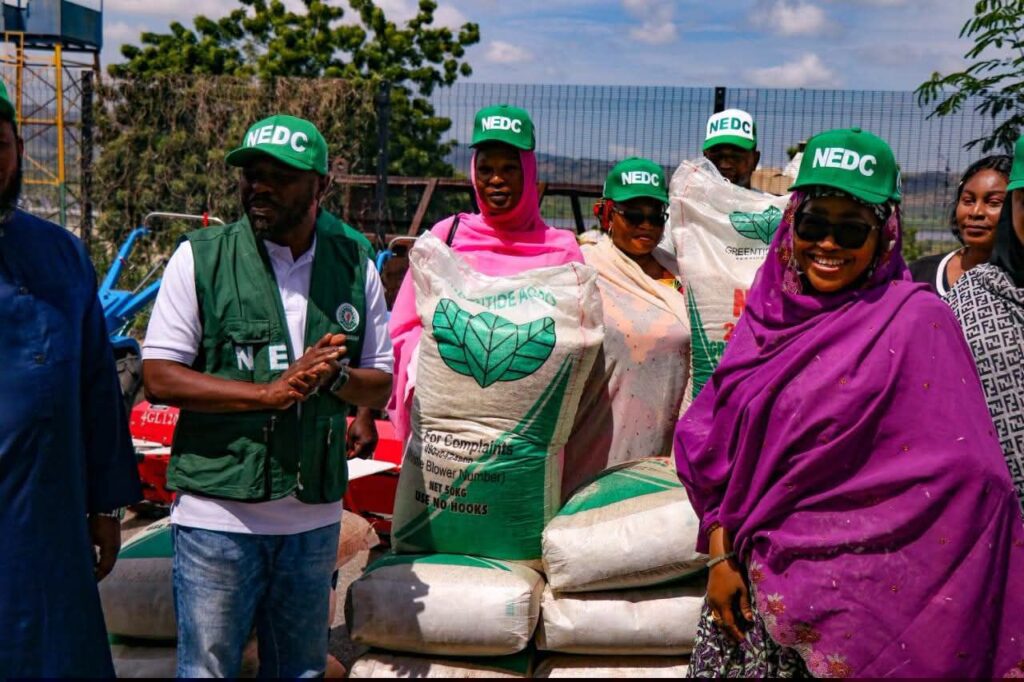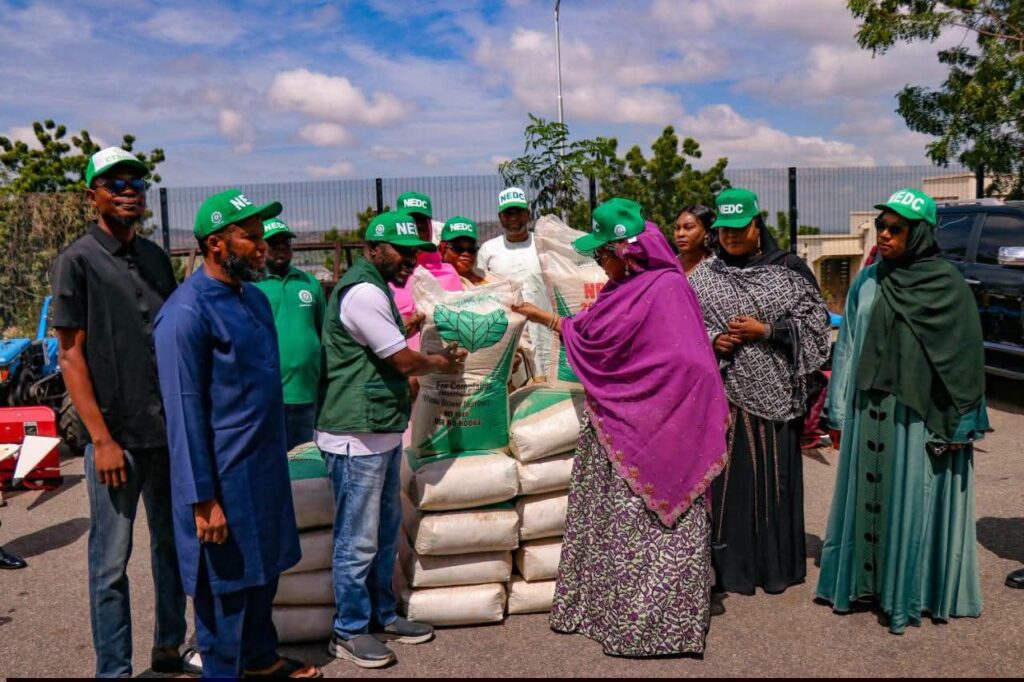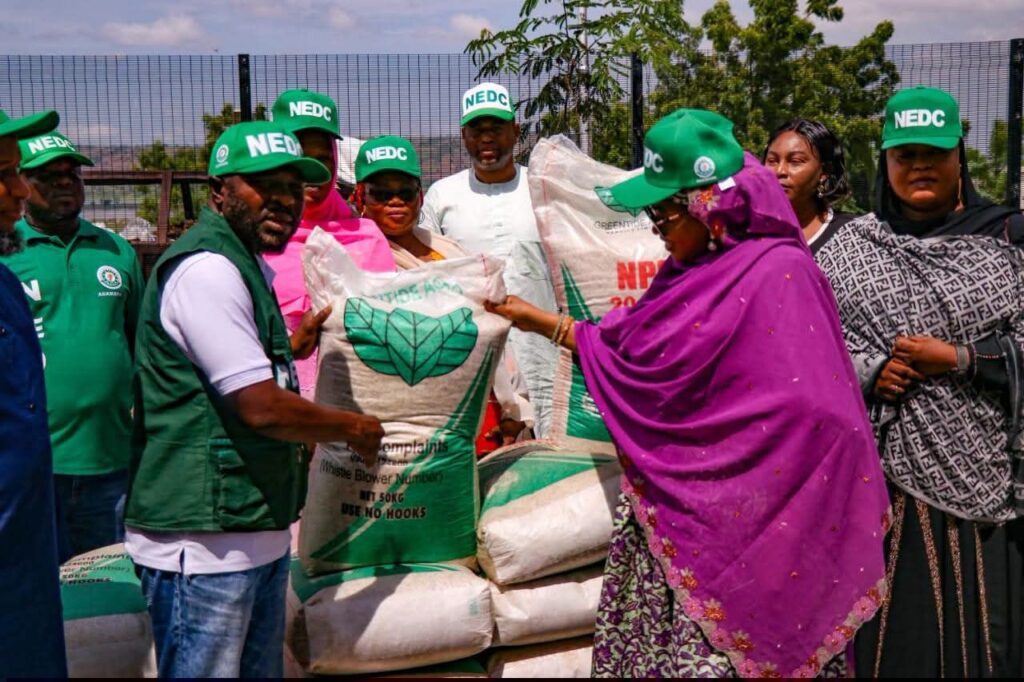
The North East Development Commission (NEDC), under the leadership of its Managing Director and Chief Executive Officer, Dr Mohammed Goni Alkali, has reinforced its commitment to food security and women’s economic empowerment through a strategic partnership with the Office of the First Lady of Adamawa State, resulting in the distribution of 1,000 bags of 50kg NPK fertiliser to vulnerable women farmers across the state.
The fertiliser distribution programme, officially flagged off on Thursday at the Government House in Yola, marks another milestone in the Commission’s efforts to improve agricultural productivity, enhance rural livelihoods, and support vulnerable households through sustainable agricultural interventions.
The initiative was inaugurated by the Wife of the Executive Governor of Adamawa State, Her Excellency, Haj. Lami Ahmadu Fintiri, who described the intervention as timely and impactful, particularly as farmers prepare for the current cropping season. She noted that access to quality farm inputs remains essential to improving crop yields, strengthening household food security, and reducing poverty among rural families.
The First Lady expressed profound appreciation to the North East Development Commission for its sustained commitment to the socio-economic development of Adamawa State. She commended the Commission for consistently implementing programmes that address the needs of vulnerable communities while complementing the development priorities of the state government.
According to her, the Commission has continued to distinguish itself as a dependable development partner whose interventions are restoring livelihoods, rebuilding communities affected by insurgency, and creating opportunities for inclusive growth across the North-East region.
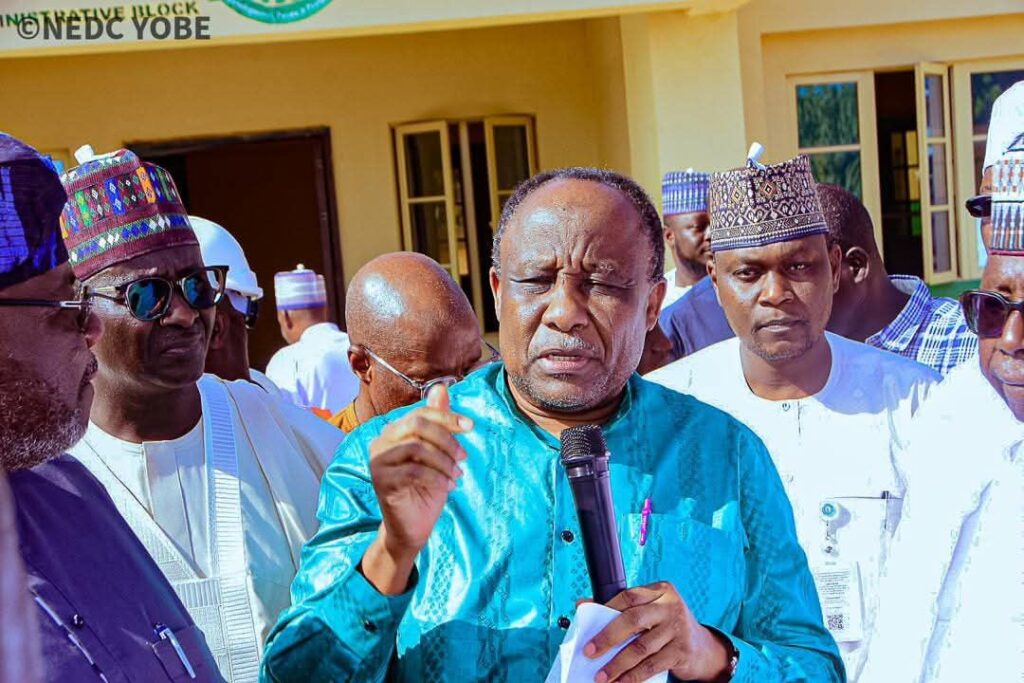
Representing the Commission at the event, the Adamawa State Coordinator of the NEDC, Barr. Khalifa Muhammad Lawan, reaffirmed the Commission’s dedication to supporting initiatives that improve the welfare of women and vulnerable groups. He commended the First Lady for her unwavering commitment to women’s empowerment, agricultural development, and social inclusion, describing her as a passionate advocate for the welfare of rural communities.
Barr. Lawan assured the First Lady of the Commission’s readiness to sustain its collaboration with her office and the Adamawa State Government in implementing programmes that directly improve the lives of citizens. He emphasised that empowering women farmers with essential agricultural inputs remains one of the most effective ways of boosting food production, enhancing household incomes, and stimulating local economic development.
The event attracted senior government officials, development partners, traditional leaders, representatives of women-focused civil society organisations, and other critical stakeholders, underscoring the broad support for initiatives aimed at strengthening agricultural productivity and improving livelihoods.
The fertiliser distribution forms part of the North East Development Commission’s broader agricultural support strategy designed to increase food production, promote climate-resilient farming practices, and strengthen agricultural value chains throughout the region. By ensuring that vulnerable women farmers have timely access to quality farm inputs, the Commission seeks to improve farm output, enhance economic resilience, and reduce food insecurity in rural communities.
The intervention is also aligned with the Federal Government’s Renewed Hope Agenda, which places strong emphasis on food security, agricultural transformation, women’s empowerment, and inclusive economic growth. Furthermore, the initiative advances the objectives of the NEDC’s 10-Year Strategic Master Plan, particularly Pillar Two, which prioritises sustainable agriculture, livestock development, climate-smart farming, and the expansion of agricultural value chains as critical drivers of regional recovery and long-term prosperity.
Beyond the immediate provision of fertiliser, the programme reflects the Commission’s people-centred development philosophy, which focuses on creating lasting opportunities for vulnerable populations through targeted interventions that improve livelihoods and strengthen community resilience.
As women constitute a significant proportion of the agricultural workforce across the North-East, empowering them with essential production inputs is expected to generate far-reaching socio-economic benefits, including increased crop yields, improved household nutrition, enhanced family incomes, and stronger food systems.
Through strategic partnerships such as this, the North East Development Commission continues to fulfil its mandate of accelerating recovery, rebuilding livelihoods, and fostering sustainable socio-economic development across the North-East, ensuring that no vulnerable community is left behind in the region’s journey towards lasting peace, resilience, and prosperity.