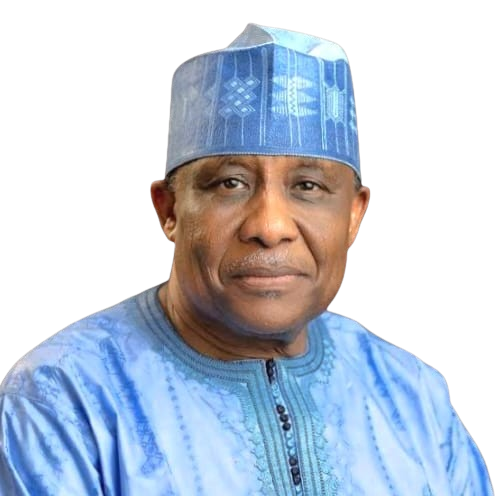
The North-East Development Commission (NEDC), under the leadership of its Managing Director and Chief Executive Officer, Dr. Mohammed Goni Alkali, is advancing an ambitious electric mobility programme designed to modernise transportation, stimulate industrial development and create new economic opportunities across Nigeria’s North-East.
The programme is scheduled for official commissioning on November 24, 2026, marking a significant milestone in the Commission’s efforts to introduce cleaner transportation technology and strengthen the region’s industrial capacity.
The initiative, which combines an electric vehicle mini-assembly facility in Maiduguri with plans for regional deployment of electric tricycles, taxis and buses, represents an important step towards diversifying the region’s economy and embracing emerging transportation technologies.
More importantly, the programme reflects a development philosophy that recognises transportation, energy, technology and industrialisation as interconnected drivers of economic growth.
A LANDMARK COMMISSIONING ON NOVEMBER 24
The scheduled commissioning of the electric mobility project on November 24, 2026, is expected to bring the Commission’s initiative into greater public focus.
Beyond the unveiling of an electric vehicle assembly facility, the occasion represents an important opportunity to demonstrate the practical direction of NEDC’s investment in technology-driven development.
Under Dr. Alkali’s leadership, the initiative seeks to position the North-East to participate in the emerging electric mobility industry while creating opportunities for technical skills development, employment, transportation services and private-sector participation.
The commissioning will also provide an opportunity for stakeholders to assess the project’s readiness, operational arrangements and the next phase of regional deployment.
MAIDUGURI EMERGES AS A CENTRE FOR ELECTRIC VEHICLE ASSEMBLY
A major milestone in the initiative is the establishment of an electric vehicle mini-assembly facility in Maiduguri, Borno State.
During an inspection of the facility on August 13, 2026, the Minister of Regional Development, Engr. Abubakar Momoh, confirmed that the Federal Executive Council had approved the project and that assembly activities were already taking place.
The minister expressed satisfaction with the progress, reporting that nearly all the targeted vehicles were on the ground and that electric taxis and buses were also available at the facility.
The inspection took place at the University of Maiduguri Plant section, where Dr. Alkali explained that the Commission’s objective was to provide transportation solutions that would improve the lives of residents and support farming and marketing activities.
The project is being implemented under the NEDC, with Attahir Enterprises Nigeria Limited identified in subsequent stakeholder engagements as a project partner.
The development is significant because it introduces an opportunity for local assembly, technical training and the gradual development of an electric mobility ecosystem within the North-East.
However, local assembly should not be confused with complete vehicle manufacturing. The proportion of locally sourced components, domestic battery production and the depth of technology transfer have not yet been publicly established.
This distinction will be important in assessing the project’s long-term industrial value.
10,330 VEHICLES: THE REGIONAL MOBILITY PLAN
The more detailed deployment plan reported during the October 24 Bauchi stakeholder engagement comprises:
Vehicle category Planned quantity
Electric tricycles 10,000
Electric taxis 300
Electric buses 30
Total 10,330
The vehicles are intended for deployment across Adamawa, Bauchi, Borno, Gombe, Taraba and Yobe.
According to the project partner, the buses and taxis are primarily intended for urban transportation, while the tricycles will serve local government areas and rural communities.
The proposed operating arrangements include driver training, charging support and eventual handover to state governments for distribution to beneficiaries.
A PROGRAMME MOVING TOWARDS IMPLEMENTATION
An important development is the Commission’s engagement with transport operators and other stakeholders.
On October 24, 2026, the NEDC held a two-day stakeholder engagement in Bauchi. On November 4, another sensitisation workshop took place in Damaturu, Yobe State.
These engagements demonstrate that the Commission is preparing the institutional and operational framework for deployment.
However, the final beneficiary-selection arrangements and a comprehensive state-by-state distribution timetable have not been publicly confirmed.
INFRASTRUCTURE, CHARGING AND ENVIRONMENTAL SUSTAINABILITY
For the programme to succeed, the availability of charging facilities will be just as important as the vehicles themselves.
The NEDC has discussed charging infrastructure, including plans for at least two or three charging stations in each state, according to the Adamawa State Coordinator’s October engagement.
The project partner also reported a range of up to 300 kilometres on a full charge and two charging units for each tricycle. These are stated specifications, not independently verified real-world performance figures.
Electric mobility also offers potential environmental benefits. The International Energy Agency’s 2026 analysis estimates that medium-sized battery electric cars have more than 55% lower lifecycle greenhouse gas emissions than comparable petrol vehicles under its stated-policy assumptions. Actual savings in Nigeria will depend on electricity generation, vehicle usage and battery management.
NOVEMBER 24: A NEW CHAPTER IN NORTH-EASTERN DEVELOPMENT
As the November 24, 2026 commissioning approaches, the NEDC electric mobility programme represents an important addition to the Commission’s broader development agenda.
Its significance extends beyond introducing electric vehicles. It is about creating an enabling environment for technology adoption, developing local technical capacity, improving transportation options and opening new economic opportunities for the region’s growing population.
For the North-East, the real measure of success will ultimately be the programme’s ability to translate its ambitious plans into accessible transportation, sustainable operations, meaningful employment and measurable industrial growth.
Under Dr. Mohammed Goni Alkali’s leadership, the initiative reflects an effort to move the region beyond conventional recovery interventions towards innovation, economic diversification and long-term prosperity.
The November 24 commissioning is therefore more than the unveiling of an electric mobility project; it is an important milestone in the North-East’s journey towards a more technologically driven and economically diversified future.