Reliable electricity remains one of the most important foundations of economic development. From hospitals and schools to markets, industries and small businesses, access to dependable power determines the pace at which communities can grow and prosper.
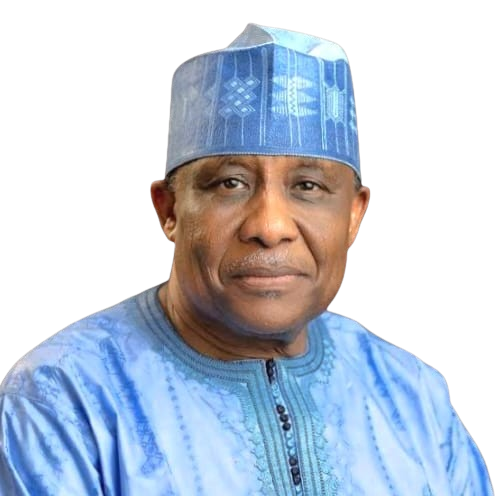
Recognising this reality, the North-East Development Commission (NEDC), under the leadership of its Managing Director and Chief Executive Officer, Dr. Mohammed Goni Alkali, is advancing an ambitious renewable energy programme designed to address electricity challenges and support sustainable economic transformation across the six North-Eastern states.
In a significant development announced in July 2026, the NEDC Governing Board approved a ₦100 billion investment for the deployment of a 50-megawatt solar mini-grid programme across the region.
The initiative represents a major step towards expanding electricity access and creating the energy foundation required to support industrialisation, agricultural processing, healthcare delivery, education and entrepreneurship.
POWER AS THE FOUNDATION OF DEVELOPMENT
For Dr. Alkali, electricity is not simply an infrastructure project; it is an economic necessity.
The Commission’s approach recognises that investments in roads, schools, hospitals and markets must be supported by reliable energy to deliver their full potential.
A hospital without dependable electricity faces difficulties operating essential medical equipment. Schools require power for laboratories, digital learning and administrative operations, while businesses depend on electricity to reduce production costs and remain competitive.
The proposed 50MW solar mini-grid programme is therefore designed to support critical public facilities, commercial centres, industrial parks, markets and communities across the North-East.
By adopting modular renewable energy systems, the Commission seeks to provide electricity solutions suited to different community needs, including locations where conventional grid expansion may be difficult or economically challenging.
A REGIONAL ELECTRIFICATION VISION
Beyond the immediate 50MW programme, the NEDC has outlined a broader regional electrification strategy aimed at achieving universal electricity access across the North-East by 2030.
Working with the Rural Electrification Agency and other development partners, the Commission has identified an estimated investment requirement of US$4.29 billion to extend electricity access to approximately 4.26 million households and more than 218,000 identified unelectrified communities.
The proposed strategy combines three major approaches:
- Solar home systems for approximately 2.1 million households.
- National grid connections for about 438,000 households.
- Renewable energy mini-grids for approximately 1.7 million households.
This diversified approach demonstrates an understanding that the electricity challenges of the North-East require flexible solutions rather than reliance on a single energy delivery model.
BOOSTING AGRICULTURE AND INDUSTRIALISATION
One of the most important expected benefits of the solar investment is its potential contribution to agricultural and industrial development.
The North-East has considerable agricultural potential, but farmers and agro-processors often face challenges associated with inadequate electricity, storage facilities and processing infrastructure.
Reliable power can support irrigation systems, cold storage, food preservation, milling, packaging and other value-chain activities.
For small and medium-sized enterprises, access to affordable electricity could reduce dependence on expensive alternative energy sources, improve productivity and create opportunities for business expansion.
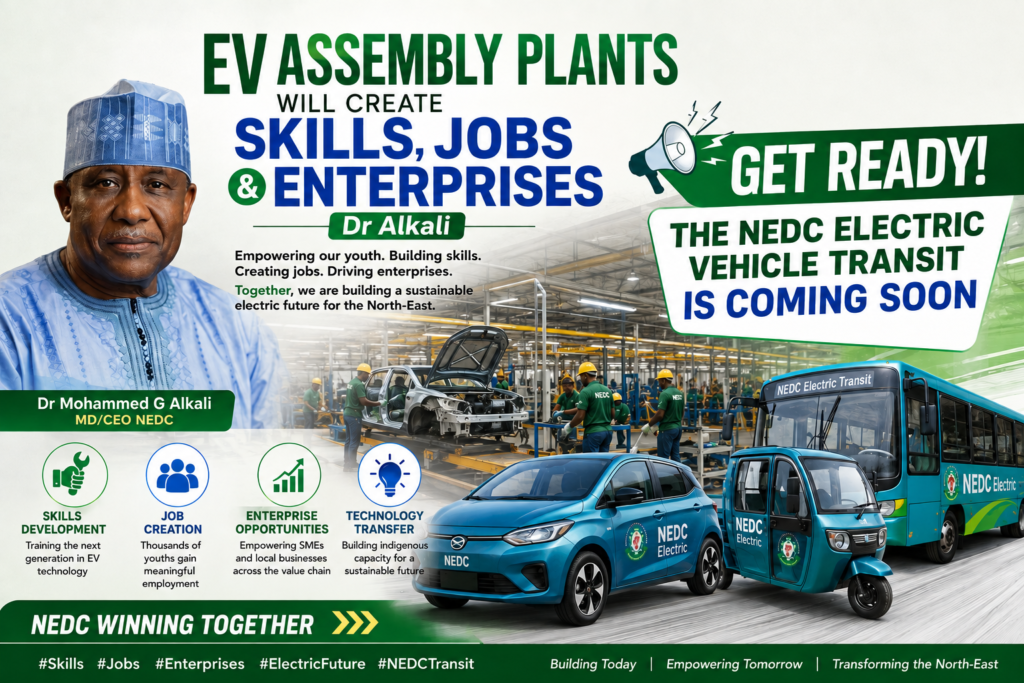
The programme also aligns with the Commission’s wider industrialisation agenda, particularly its emerging electric mobility and manufacturing initiatives.
SUPPORTING HEALTHCARE AND EDUCATION
The impact of electricity extends beyond commercial activities.
Healthcare facilities require dependable energy to operate diagnostic equipment, laboratories, operating theatres, refrigeration systems and other essential medical services.
Similarly, educational institutions need reliable electricity to support digital learning, research, vocational training and technical education.
By extending renewable energy solutions to essential public infrastructure, the NEDC is seeking to strengthen the effectiveness of its wider development investments.
GREEN JOBS AND TECHNOLOGY TRANSFER
The renewable energy programme also presents opportunities for employment creation and technical capacity development.
The installation, operation and maintenance of solar systems require electricians, engineers, technicians, project managers and other skilled professionals.
With appropriate training and local participation, young people across the region could benefit from emerging opportunities in renewable energy technology.
The development of local technical expertise will also be important in ensuring that installed facilities remain functional and sustainable over the long term.
DR. ALKALI’S DEVELOPMENT PHILOSOPHY: CONNECTING INVESTMENTS TO IMPACT
The proposed solar investment reflects the broader development philosophy guiding the NEDC under Dr. Mohammed Goni Alkali.
Through the North-East Stabilisation and Development Master Plan, the Commission is pursuing an integrated approach that connects infrastructure, energy, education, healthcare, agriculture, entrepreneurship and industrialisation.
The underlying objective is to ensure that individual projects contribute to wider economic and social development.
The solar mini-grid initiative is particularly strategic because it can support several other sectors simultaneously, making electricity an enabling factor for regional transformation.
CONCLUSION: A BRIGHTER FUTURE FOR THE NORTH-EAST
The approval of the ₦100 billion solar investment and the broader 50MW mini-grid programme represent an important development in the North-East’s journey towards energy security and economic recovery.
However, the ultimate success of the initiative will depend on effective implementation, transparent procurement, quality infrastructure, reliable maintenance arrangements and measurable improvements in electricity access.
Under Dr. Mohammed Goni Alkali’s leadership, the NEDC is pursuing a development agenda that recognises energy as a catalyst for economic growth and improved living standards.
For the millions of people across Adamawa, Bauchi, Borno, Gombe, Taraba and Yobe, the promise of reliable electricity represents more than illumination. It represents better healthcare, stronger businesses, improved education, industrial opportunities and a more prosperous future.
The North-East is not just seeking electricity; it is building the foundation for a more productive and economically competitive future.